Curly hair is a texture that demands attention, offering volume that straight hair can only dream about. This year, the shift is toward soft, face-framing layers and lived-in color that let your natural curl pattern do the talking rather than fighting it into submission.
This roundup of 32 Curly Hair Hairstyles runs the gamut from wash-and-wear air-dried looks to salon-worthy updos, covering all lengths, densities, and commitment levels. Whether your struggle is fine curls that fall flat by lunch or a visible grow-out line that arrives too fast, there is a style here that puts your texture front and center without requiring a second set of hands.
Shoulder Length Layers With Face Framing Pieces
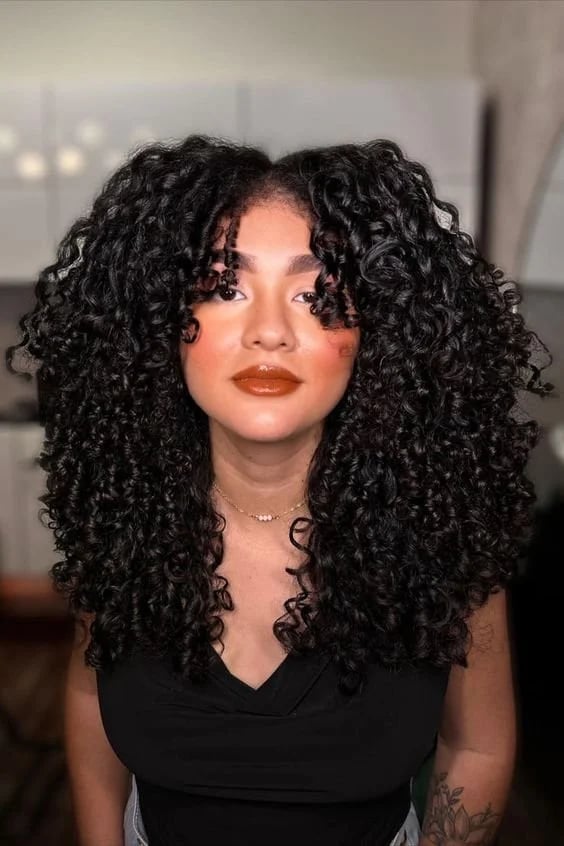
Shoulder-length layers with face-framing pieces do exactly what they sound like: the shortest curl starts around the jaw and the rest falls past the collarbone, which means no curl gets lost in the crowd. Thick, black hair with a natural curl pattern holds this shape without product, though a curl cream applied to damp strands helps the front pieces land where they should. A middle part draws the eye down, so round or square faces get some length-based softening. Ask your stylist for: shoulder length layers with face-framing pieces. A trim every six to eight weeks keeps the front pieces from turning into accidental bangs.
Chin Length Bob With Full Curly Bangs
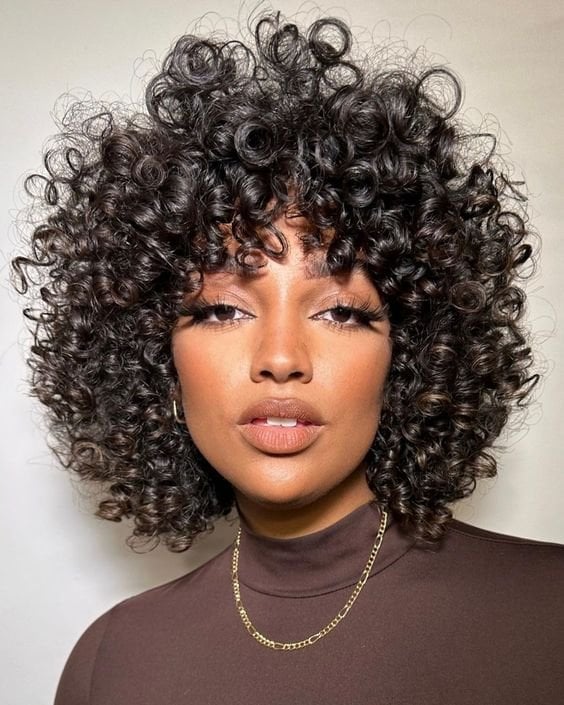
Can a chin-length bob with full curly bangs actually work on dense, dark brown coils? Yes, if the stylist cuts the bangs when the hair is dry and in its natural curl. The bob sits at the chin, the bangs cover the forehead, and the middle part keeps everything symmetrical. Thick, curly texture needs the weight removed through the interior so the shape doesn’t turn triangular. Ask your stylist for: chin length curly bob, full curly bangs. This is a salon cut: the risk of the bangs springing up too short is real, so let a professional handle the dry scissors.
Collarbone Layers With Blonde Highlights
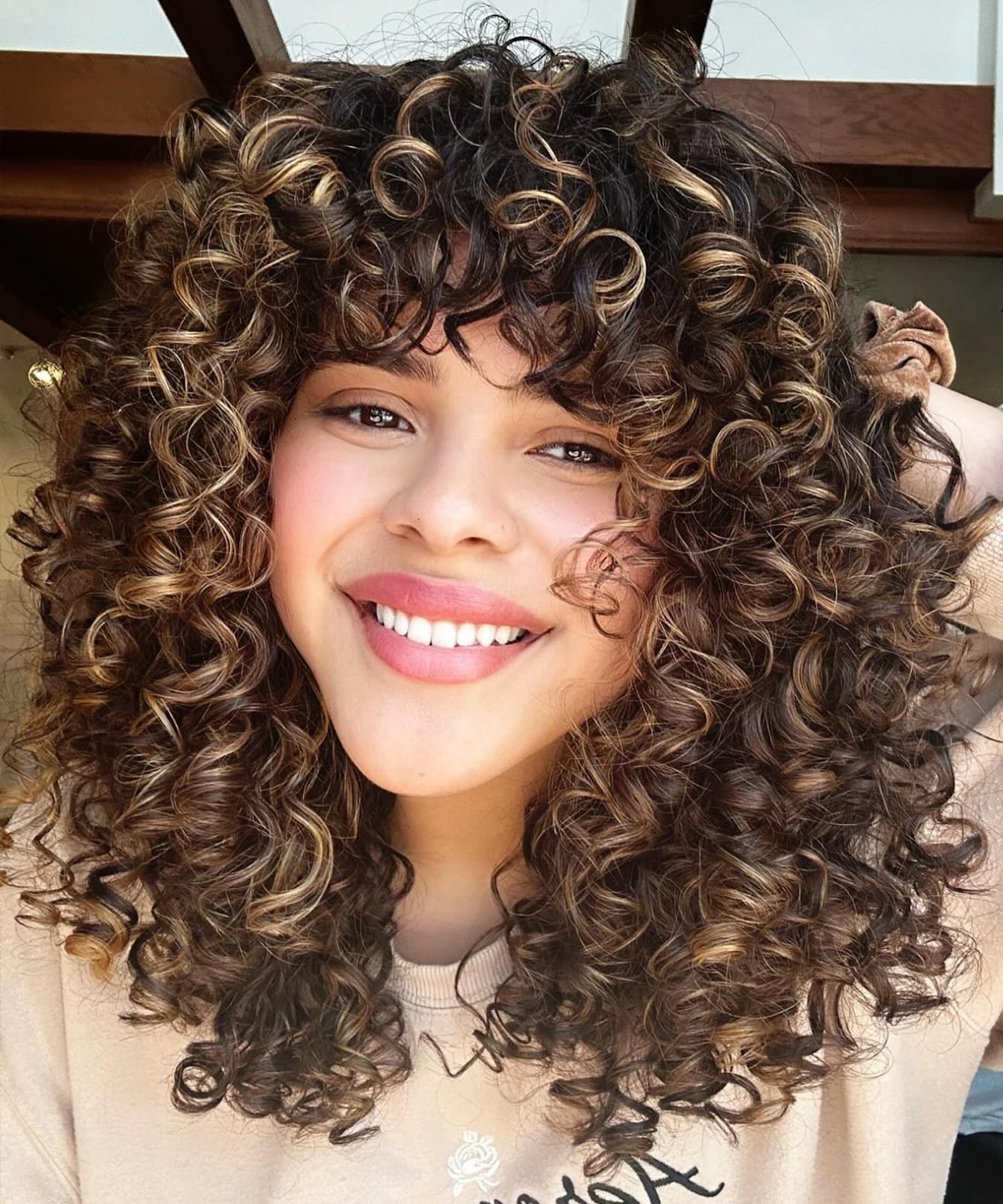
A collarbone-length cut on thick, curly hair already has movement, but adding blonde highlights against a dark brown base creates dimension that the curls can show off. The highlights are placed through the mid-lengths and ends, so each coil reflects light differently. Full bangs keep the front from feeling too heavy. Ask your colorist for: dark brown with blonde highlights, collarbone length layers with full bangs.
Styling is straightforward: a heat protectant before blow-drying with a diffuser keeps the curls defined and the color glossy. Plan for a trim every six to eight weeks and a gloss session every fourth week to keep the blonde from turning brassy.
Short Curly Pixie With Side Swept Bangs
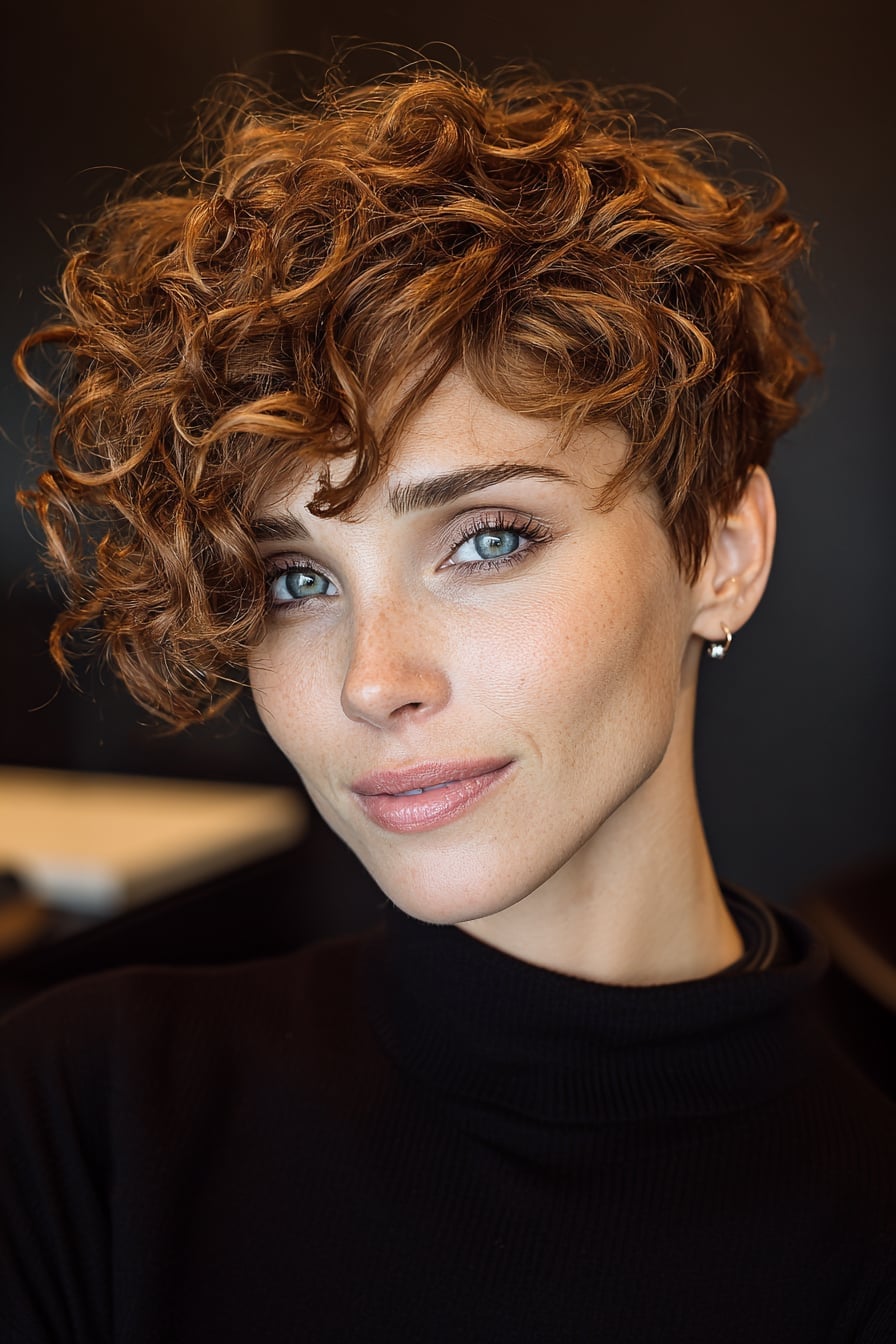
A short curly pixie with side-swept bangs is a volume-first design: the hair is cut short at the ears and nape, with the longest piece sweeping across the forehead. The reddish-brown base with subtle lighter highlights adds depth without needing a full color service. Thick, curly texture gives the pixie its shape, but the side-swept bangs require a small amount of daily attention to train them in the right direction. Ask your stylist for: short curly pixie, side-swept bangs, reddish-brown with subtle highlights. The honest downside: a trim is needed every four weeks or the shape loses its intent.
Mid-Back Loose Curls With Side Part
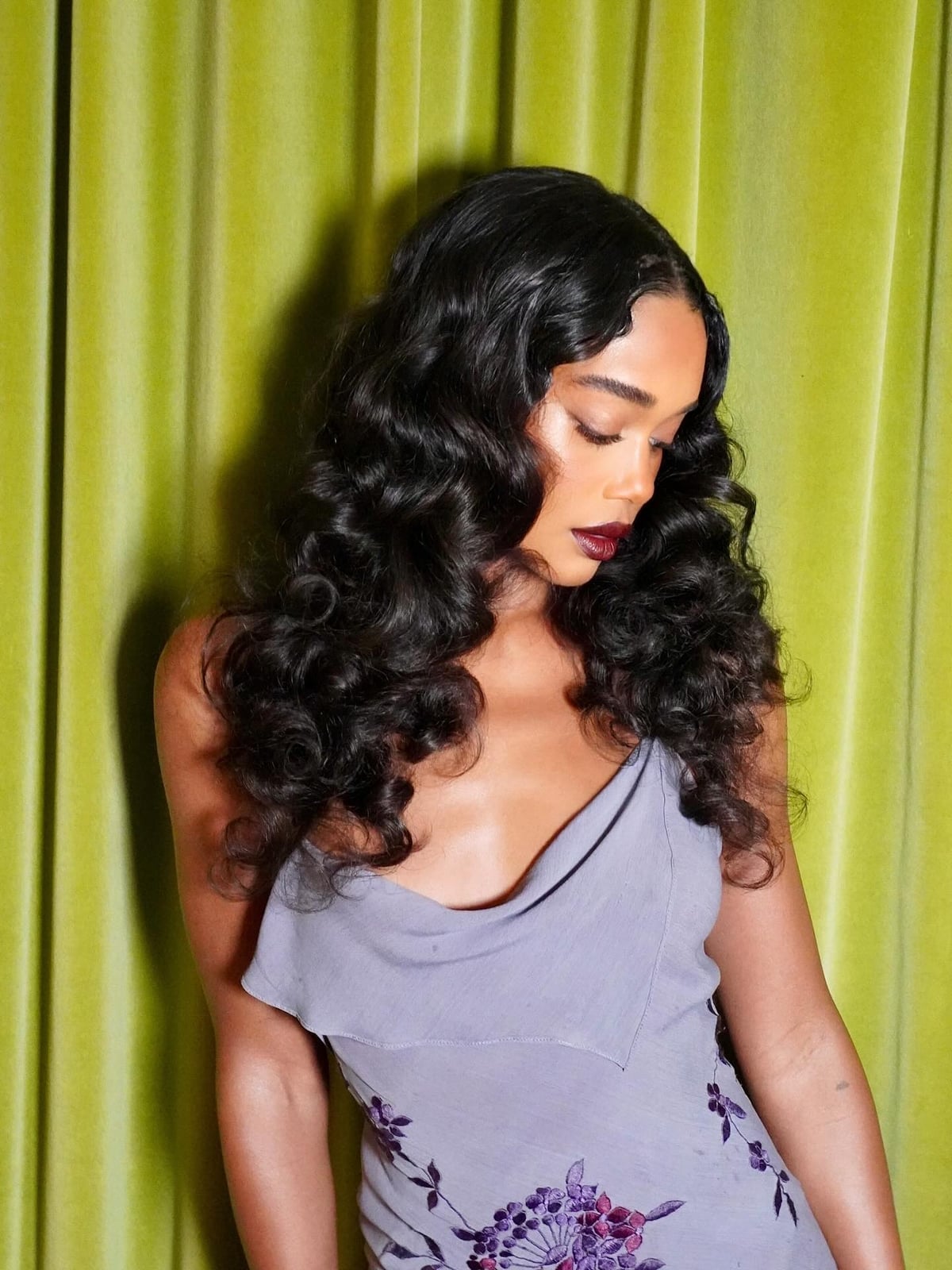
A polished blowout on mid-back length curls is a different animal than air-dried texture. Here the hair is dark brown with warm highlights, styled into loose, voluminous curls with a side part that creates asymmetry and lift at the root. The result is glossy and bouncy, more suited to an evening occasion than a Tuesday errand. Thick density holds the curl shape for the duration, which a finer texture might not. Ask your stylist for: mid-back length loose curls, side part, dark brown with warm highlights. This is a salon-dependent style: the blowout requires a round brush and a nozzle, and the hold lasts about a day before the curls relax.
Mid-Back Layers With Natural Volume
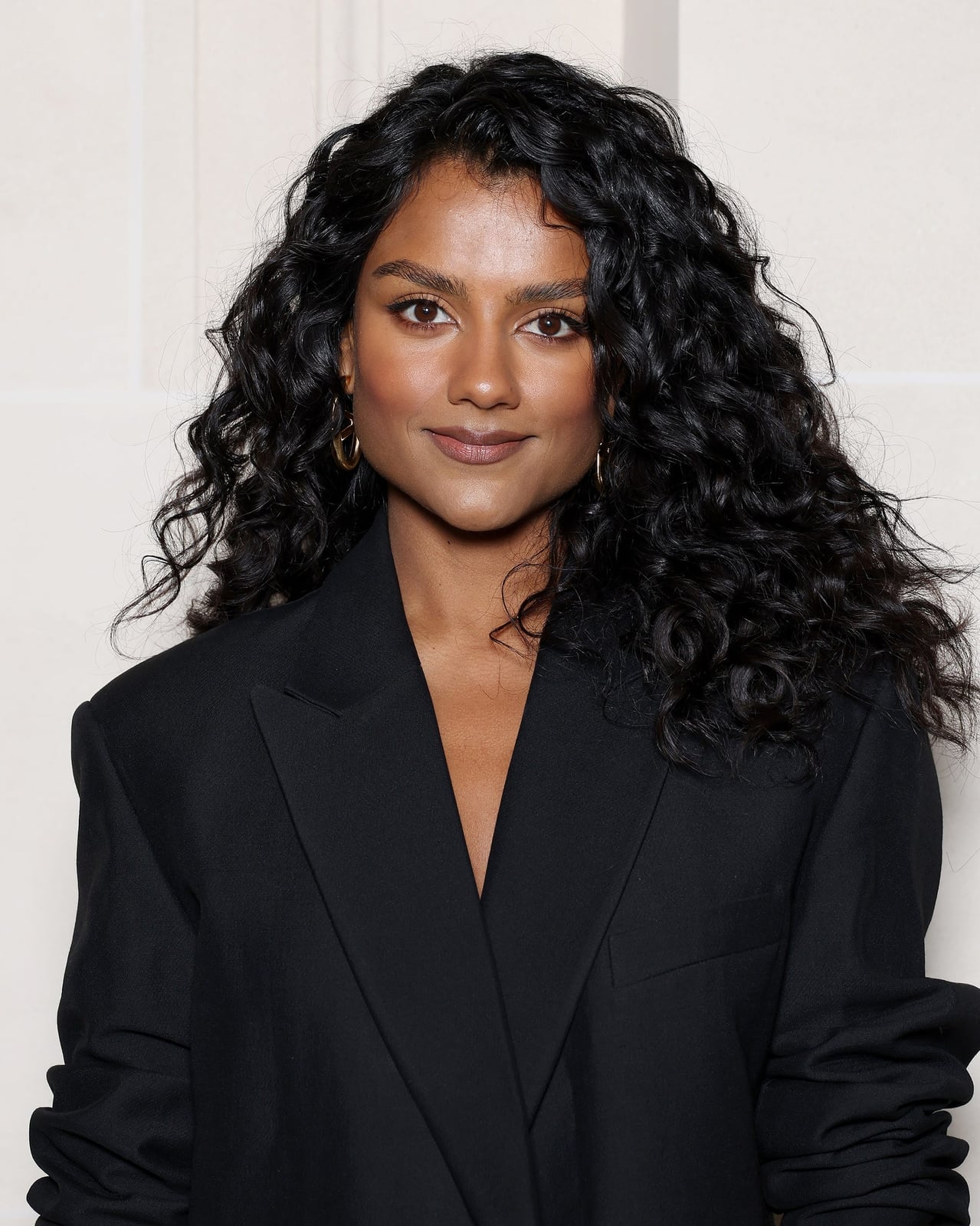
Mid-back length and thick with a middle part, this cut uses layers to keep the shape from turning into a single triangle. The dark brown base with subtle highlights adds depth without looking busy. A middle part can help elongate a round face, though it works with most structures. Ask your stylist for: mid-back layers, natural air-dried texture, middle part.
To get this finish at home, apply a leave-in conditioner and a curl enhancer to damp hair, then leave it alone. No diffuser, no touching. The layers do the work of distributing volume so it does not all sit at the ends. A trim every eight to ten weeks keeps the weight balanced and the shape clean.
Collarbone Blonde Curls With Middle Part
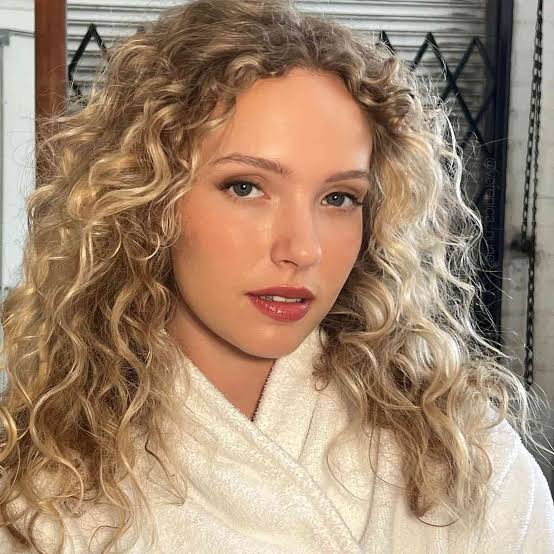
Blonde and curly at collarbone length with a middle part is a combination that leans on contrast: the light color catches the curl definition, and the part keeps the volume from reading as one solid mass. The hair is thick, so the blonde reads as bright rather than sheer. This length and part generally suit oval and heart-shaped faces best, since the line hits below the jaw without adding width at the cheeks. Ask your colorist for: collarbone length blonde curly hair, middle part, natural air-dried style. A sulfate-free shampoo and a moisturizing conditioner will keep the tone from turning brassy and the curls from drying out. Plan a gloss treatment every six to eight weeks to maintain the blonde intensity.
Collarbone Salt And Pepper Bob

How does a stylist build a bob that is both voluminous and refined on thick curly hair? The answer is layers cut into the interior, not just the perimeter. This collarbone-length version uses a middle part and a blowout to smooth the curl pattern slightly while keeping the body. The salt-and-pepper base gets lighter streaks woven through the top sections, so the gray appears as intentional highlights rather than grown-out color. Ask your colorist for: collarbone salt and pepper curly bob, middle part, voluminous blowout. The blowout does not last more than a day or two on thick curls, so this is a wash-and-style-each-time look. A purple shampoo used once a week keeps the silver tones clean.
Short Mohawk With Undercut
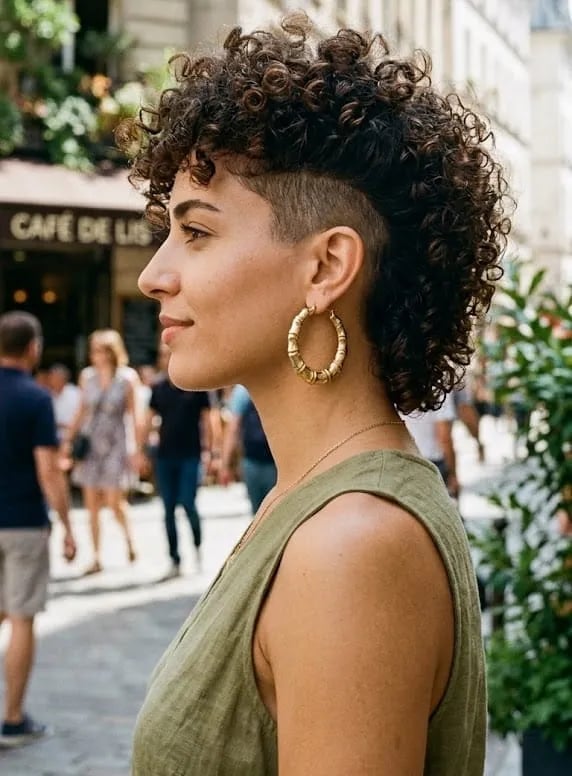
The remaining hair is slicked back for a sculpted finish that looks deliberate. Ask your stylist for: short curly mohawk with undercut, slicked back. This is a salon-dependent style: the undercut needs a clipper every two to three weeks to stay sharp, and the mohawk section requires a strong-hold gel or pomade to keep the curls in place. The DIY version is limited to maintaining the top once the undercut is established.
Shoulder Length Shag With Curtain Bangs
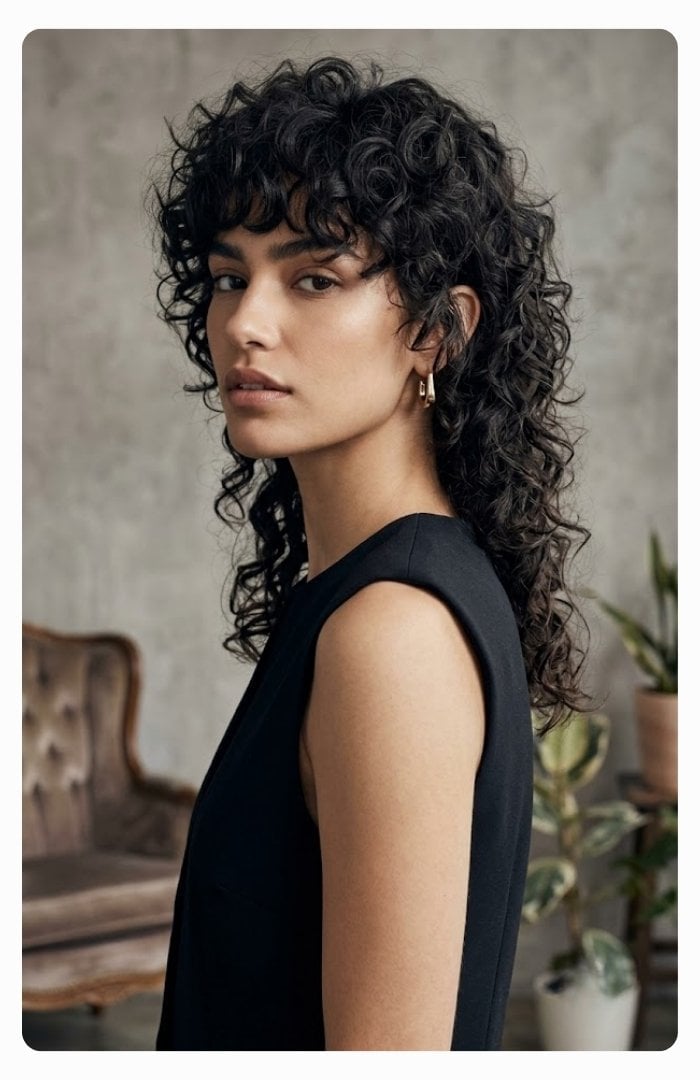
A shag cut on thick curly hair works because the layers create a graduated shape that moves instead of sitting flat. The curtain bangs are cut to open at the middle, framing the face without committing to a full fringe. The side parting adds asymmetry, and the blowout smooths the cuticle for a salon-done finish. Ask your stylist for: shoulder length shag, curtain bangs, dark brown curly hair. The upkeep is moderate: a trim every six to eight weeks prevents the layers from losing their shape, and a texturizing spray on dry hair will revive the lived-in texture between washes.
Chin Length Bob With Defined Curls, Dark Brown With Subtle Highlights
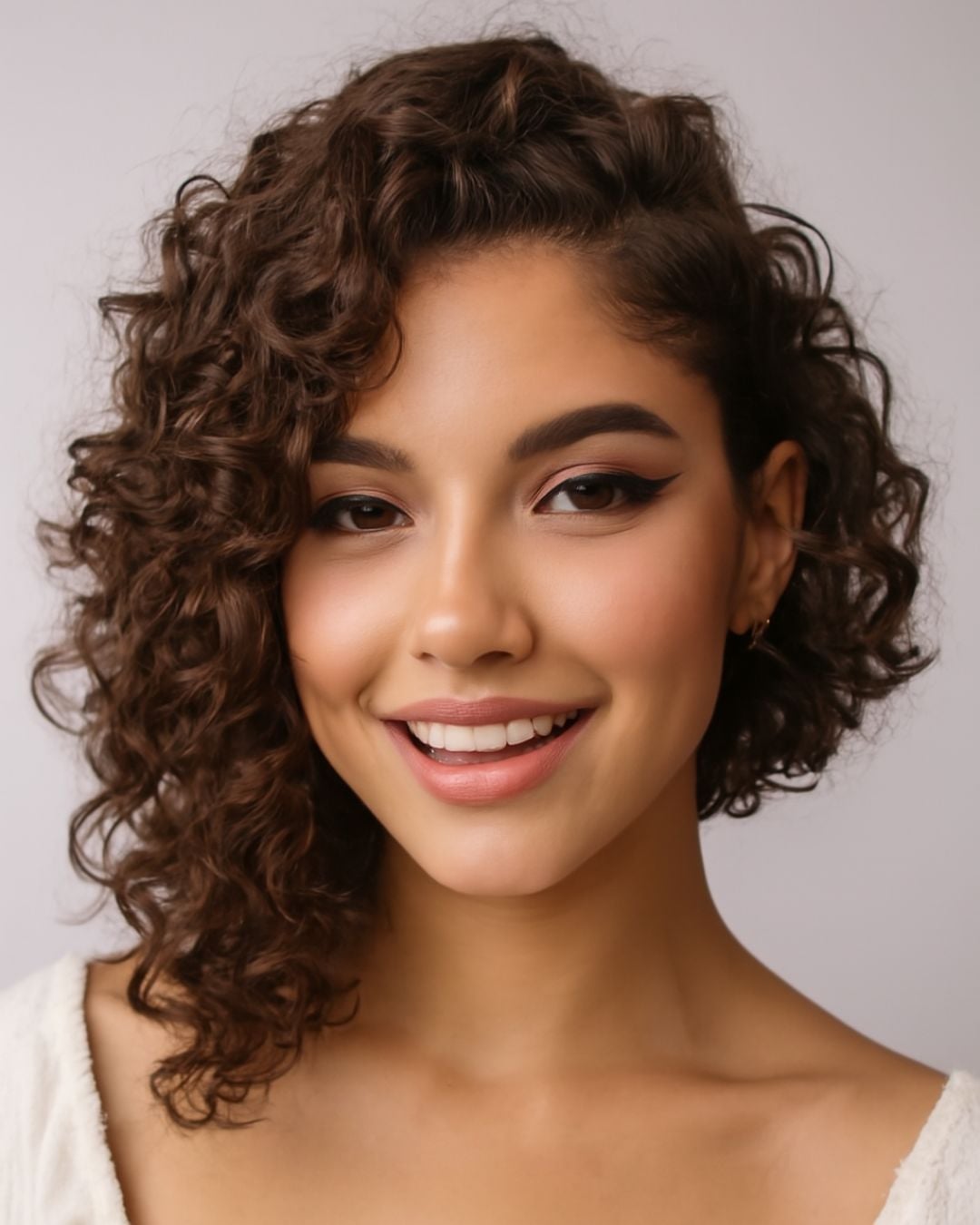
Why do some chin-length bobs on curly hair look heavy while others float? The mistake is cutting the perimeter too blunt, which traps medium-density curls in a solid block. This dark brown version with subtle lighter highlights uses a side part and air-dried definition to keep the shape light. Ask your stylist for: chin length curly bob, defined curls, dark brown with subtle highlights. The trade-off is that you trade volume at the root for that polished, glossy finish, so a trim every six weeks is non-negotiable to maintain the line.
Collarbone Layers With Brown Blonde Highlights, Face-Framing Bangs
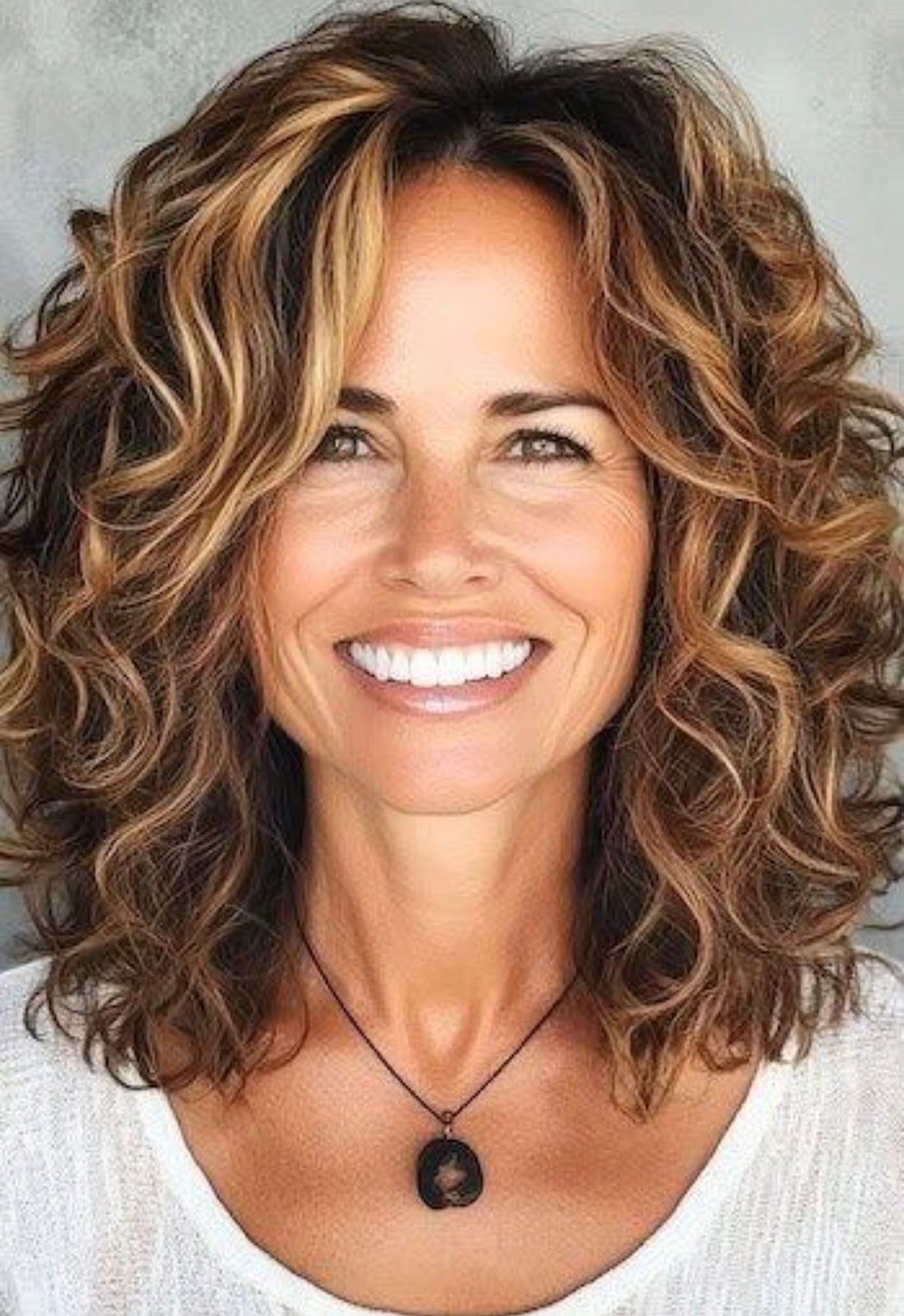
A collarbone-length cut with face-framing bangs relies on the highlights to do more than add color. The technique places blonde pieces through the top and front layers, which lifts the eye and stops the brown base from reading as one solid block. Ask your colorist for: collarbone length layers, face-framing bangs, brown and blonde highlights.
On wavy-curly hair with medium density, the middle part and soft blowout keep the shape symmetrical without splitting the curl pattern. The bangs graduate from the cheekbone down, so they blend into the layers rather than sitting as a separate curtain. A toning appointment every eight weeks holds the blonde at a neutral warmth rather than letting it drift toward orange.
Collarbone Salt And Pepper Bob Volume, Middle
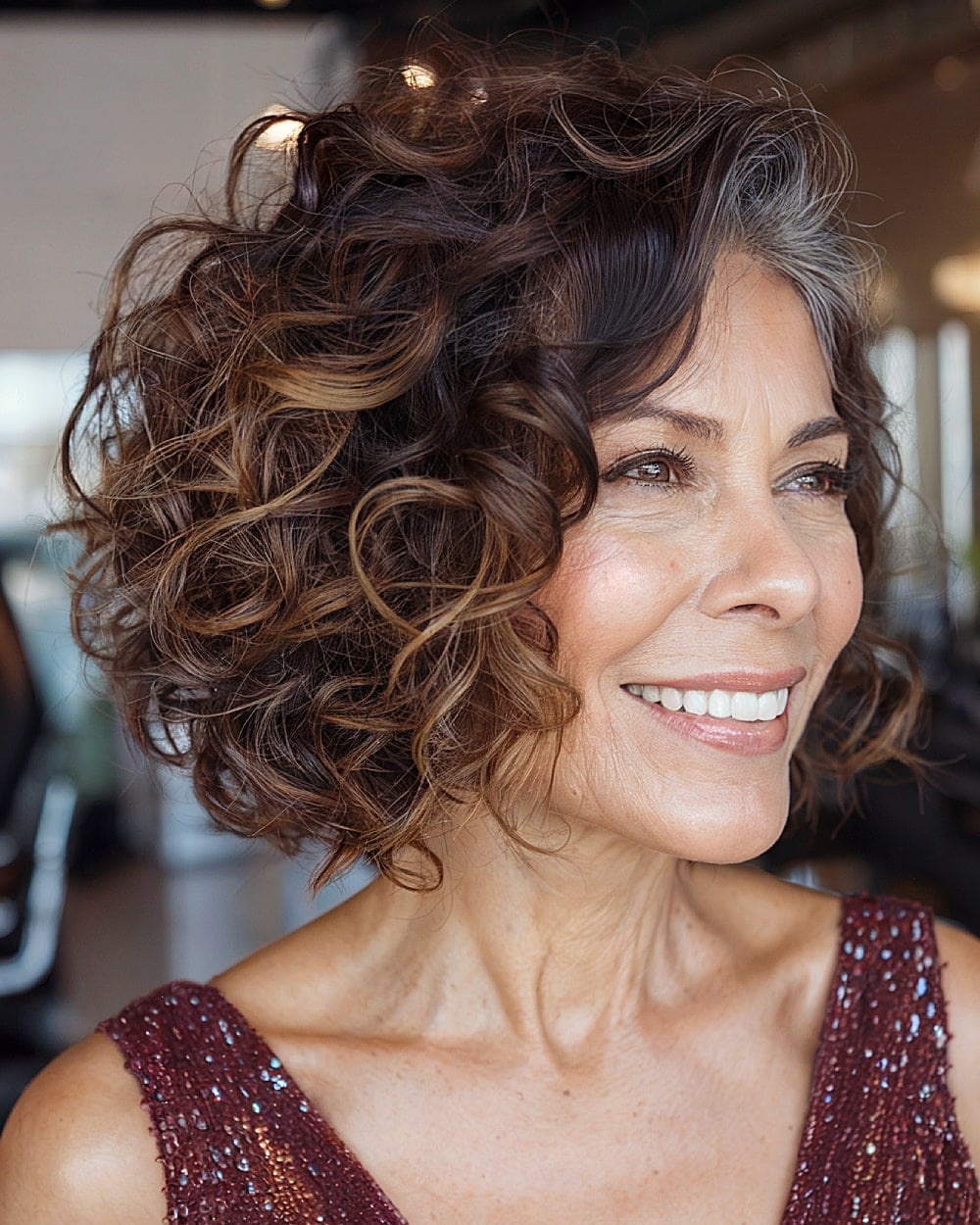
A voluminous salt-and-pepper bob and a simpler one-length gray bob share the same starting point, but they are not the same finish. The difference is the blowout: a middle part and lifted roots create the rounded shape that a flat-ironed bob cannot deliver. Ask your stylist for: collarbone length salt and pepper curly bob, middle part, voluminous blowout. Thick curly hair holds the volume through the day, while finer gray hair would need a root-lifting spray to get close to this. The DIY version tends to collapse at the crown, which is why this one belongs in a salon chair every six to eight weeks.
Collarbone Layers With Blonde Balayage, Middle

Blonde balayage on a brown base is a design choice that works best when the layers are cut to follow the curl, not fight it. The lighter strands sit on the surface of the curls rather than inside them, which keeps the contrast soft. Ask your colorist for: collarbone length layers, face-framing bangs, brown with blonde balayage.
Medium-density curly hair at this length benefits from the balayage because the hand-painted placement adds dimension without lifting every curl to the same shade. The face-framing bangs frame the sides, drawing attention to the cheek area. A gloss treatment every six weeks prevents the blonde from dulling into a beige tone and keeps the brown base from grabbing unwanted warm tones.
Collarbone Layers With Air Dried Curls
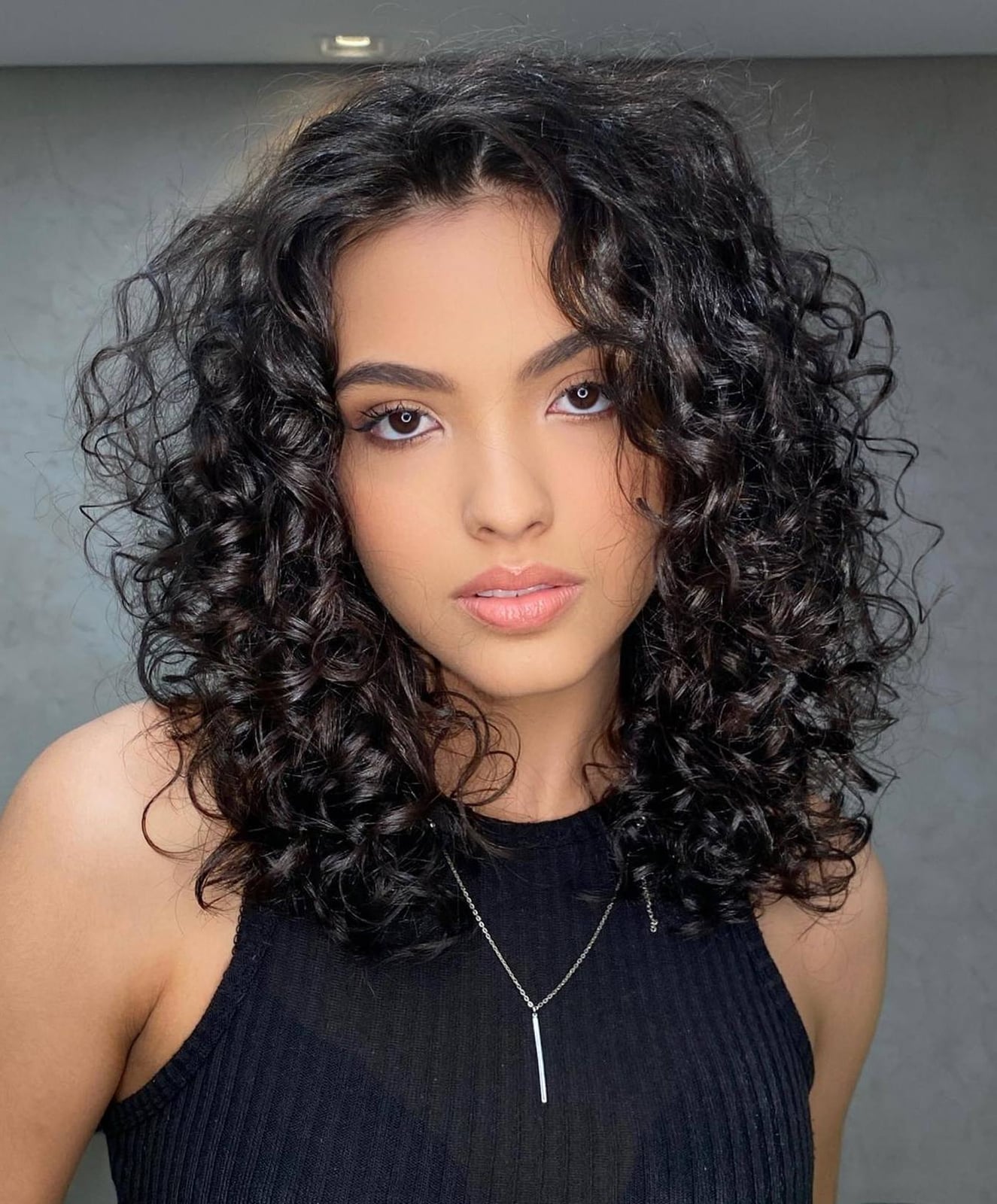
Air dried curls at collarbone length depend on the order of application. Start with a leave-in conditioner on soaking wet hair, then a curl cream, then scrunch from the ends upward. Ask your stylist for: collarbone length layers, air dried defined curls, middle part. The subtle layers prevent the hair from drying into one heavy curtain, which is the main reason air dried curls look weighed down.
A trim every eight weeks keeps the ends from tangling into each other. A satin scarf or pillowcase reduces friction while the hair dries, which preserves the definition you scrunched in. The hold is moderate: expect the curls to relax slightly by midday, but the shape stays intact without re-wetting.
Textured Pixie With Side Swept Bangs, Ear
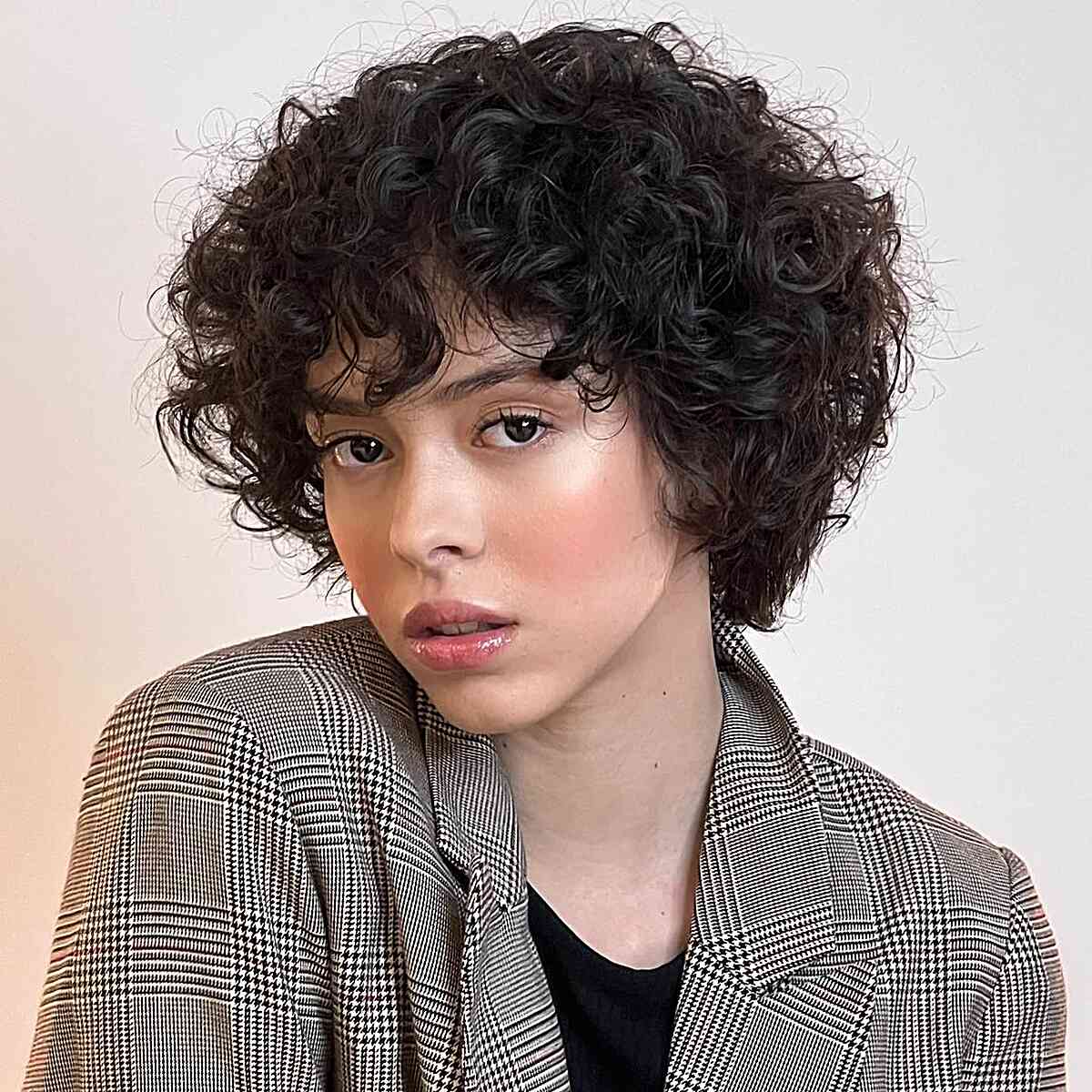
How much hair does a pixie cut actually need? For thick, curly textures, enough to avoid a forced silhouette. This ear-length version uses short, side-swept bangs and layers that follow the natural curl pattern. Ask your stylist for a textured pixie cut with short curly bangs swept to the side. The real drawback: you will need a trim every four to six weeks to keep the shape defined. A dab of styling wax on dry curls adds definition and keeps the texture piecey, not puffy.
Shoulder Length Air Dried Curls
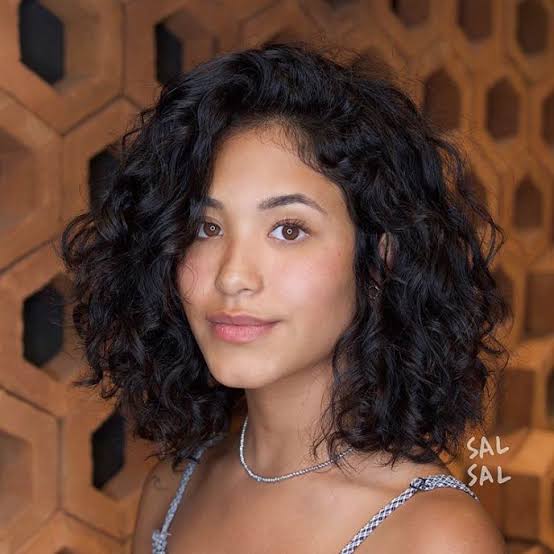
An air-dried finish on shoulder-length hair is a gamble that usually pays off when the curl pattern has medium density. This dark brown style works because the cut uses subtle layers that give each curl somewhere to land without creating a triangle silhouette. Ask your stylist for shoulder length air dried curls with a side part and natural texture. On damp hair, a curl-defining cream and a quick scrunch are the only moves required. Then do not touch it until it is dry. A trim every six to eight weeks prevents the ends from looking stringy.
Collarbone Blonde Layers With Curtain Bangs
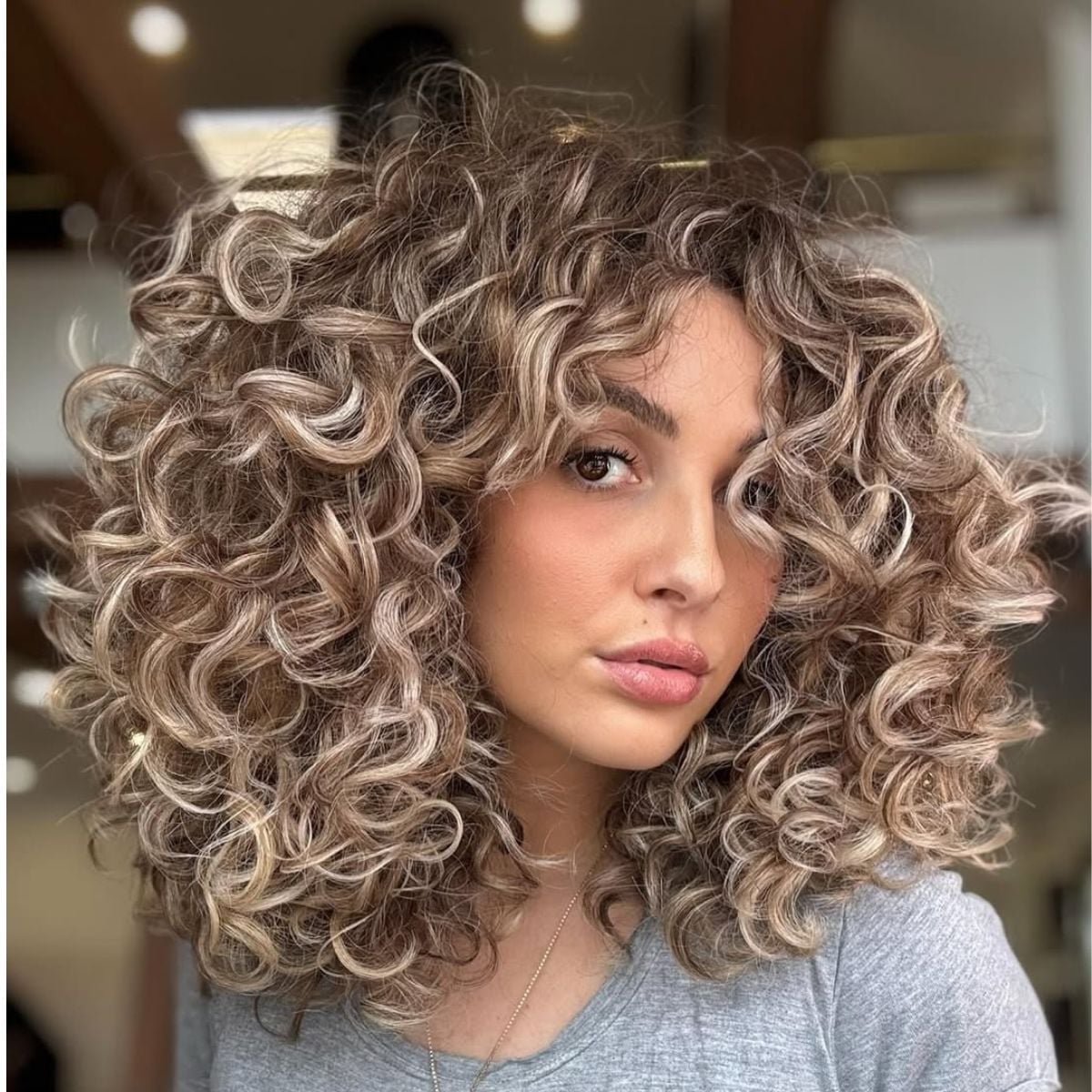
A collarbone length on thick, curly blonde hair needs strategic layering to keep the weight from pulling the curl straight. The technique here uses face-framing layers that start below the chin and curtain bangs that blend into the sides, so the movement looks built-in, not accidental. Ask your stylist for collarbone length blonde layers with curtain bangs and face-framing layers. A middle part and a voluminous blowout with a round brush at the roots make this style work for both a weekday meeting and a Saturday dinner. The highlights add dimension that keeps the shape from reading as one solid block.
This is a salon-dependent look. The layering and bang placement require a stylist who understands how much curl will spring up after a wash.
Collarbone Black Curls With Deep Side Part
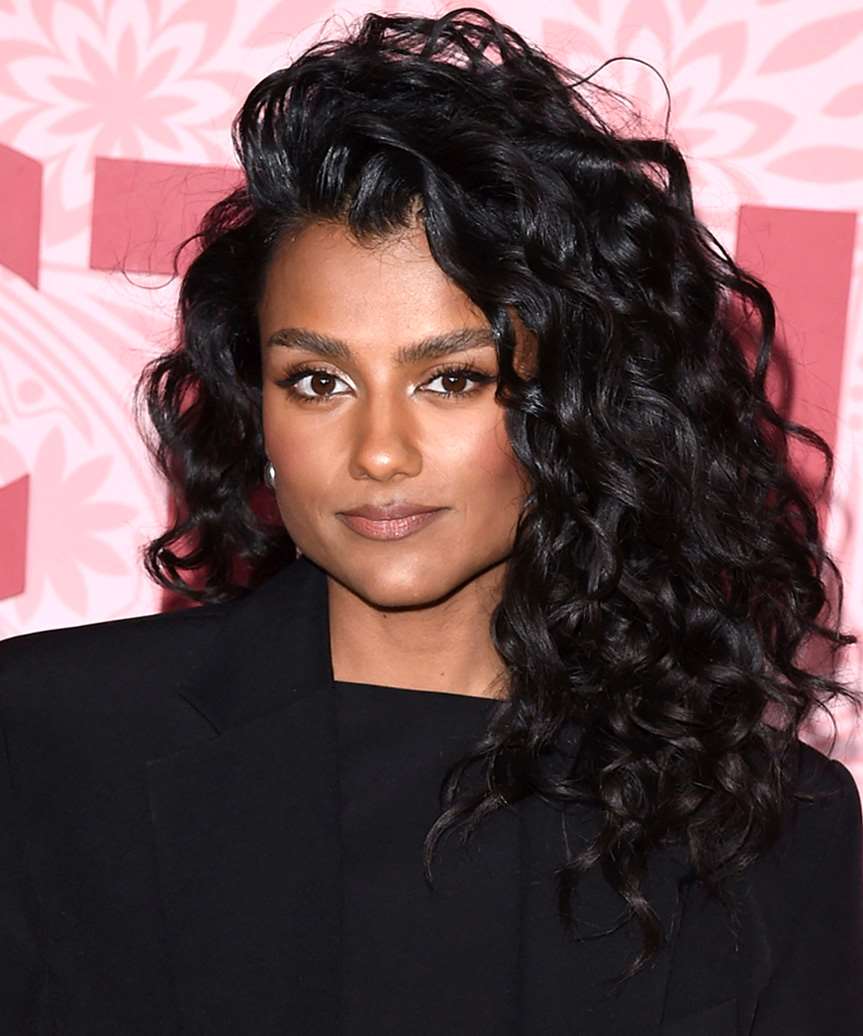
Who actually looks best in collarbone-length black curls with a deep side part? Anyone with medium-density hair who wants the part to create real volume on one side without resorting to teasing. The loose wave pattern here keeps the hair from feeling heavy, and the glossy finish gives the black color a reflective quality that flat textures miss. Ask your stylist for collarbone length black curly hair with a deep side part and loose waves. A shine serum applied to dry curls is the only styling step needed. A trim every six to eight weeks keeps the ends from fraying.
Shoulder Length Afro With Auburn Highlights
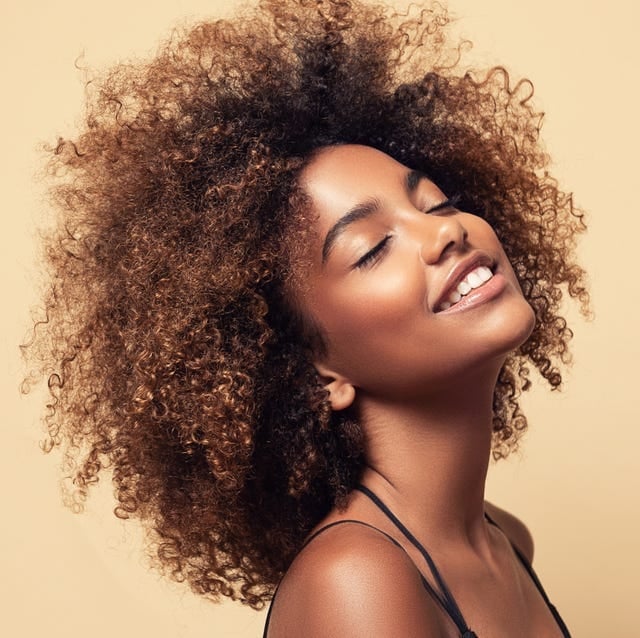
A shoulder-length afro with auburn highlights is a color and shape combination that works because the warm tones have room to show through the dense texture. The middle parting keeps the rounded silhouette balanced instead of lopsided.
To get close to this at home, start with damp, detangled hair. Apply a leave-in moisturizer from roots to ends. Use a wide-tooth pick to lift the roots gently, working in small sections. Let the hair air-dry completely before touching it again. The auburn highlights are a salon job, but the air-dried shape is entirely DIY. A daily moisture spray keeps the curls from feeling dry by midday. Ask your stylist for a shoulder length afro with natural air-dried style and dark brown with auburn highlights.
Mid-Back Layers With Balayage
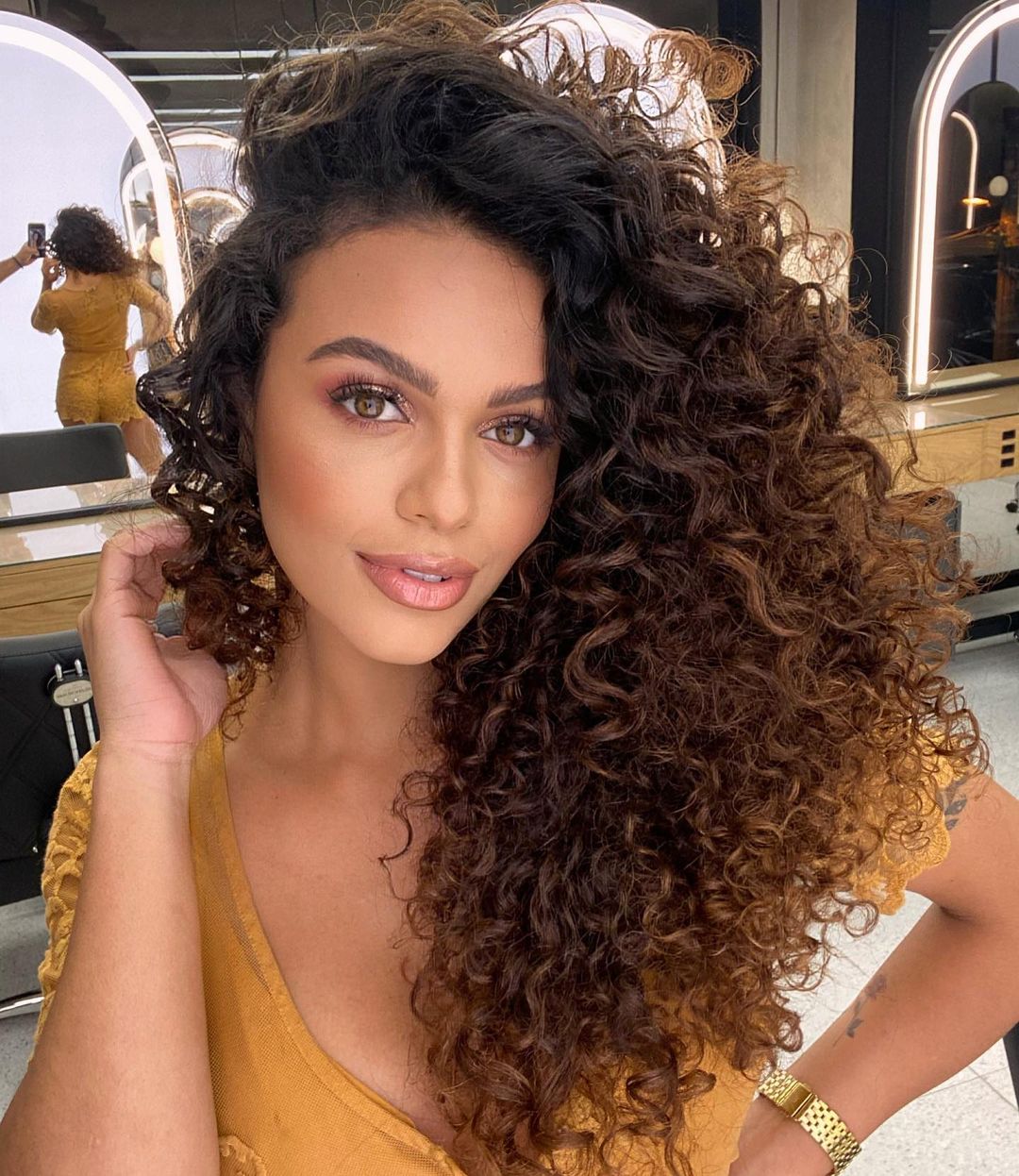
Balayage on thick curly hair works because the hand-painted color lands where the curls naturally fall, not in straight lines. A middle part and mid-back length let the weight of the hair pull the curls downward, which keeps the volume at the ends. Ask your colorist for: mid-back length layers, dark brown with balayage, voluminous curls. This is a salon project, not a kitchen-table experiment. The colorist paints each section by eye, then the cut removes bulk without sacrificing length. A trim every eight to ten weeks keeps the shape balanced.
The blowout is the part you control at home. A heat protectant spray before you dry prevents the balayage from warming up unevenly, and a shine serum on the ends stops the curls from looking dry. The hold is in the layers, not a product. Expect the style to last until your next wash, about three to four days if you refresh the roots with a dry shampoo.
Collarbone Bob With Layers And Curtain Bangs, Dark Brown

Does a collarbone bob with curtain bangs hold its shape after a blowout, or does it deflate by lunch? The answer depends on how you dry the bangs. A diffuser on low heat, aimed at the curtain sections first, sets the bend before the rest of the hair is dry. The deep brown color reads as solid here, which means no root line to manage, but it also means any frizz shows immediately. Ask your stylist for: collarbone length bob with layers, curtain bangs, deep brown. The real drawback is the six-week trim cycle: the bob loses its architecture fast once the ends brush the shoulders. Good for fall and winter when a blowout feels like a treat, less ideal for humid July mornings when the curtain bangs want to separate into two independent spirals.
Mid-Back Layers With Blonde Highlights

Blonde highlights on a dark brown base create dimension that makes thick, mid-back curly hair look like it has movement even when it is still. The technique involves weaving fine sections from the root to the mid-lengths, then pulling the color through to the ends. A middle part splits the volume evenly, which prevents the hair from piling on one side. Ask your colorist for: mid-back length layers, dark brown with blonde highlights, voluminous blowout. At home, a heat protectant is essential because the highlighted strands are more porous and snap faster under heat. A round brush on the crown sections adds lift that the curls cannot generate on their own at this length. A trim every eight to ten weeks keeps the ends looking full and not wispy.
Collarbone Layers With Subtle Highlights, Middle
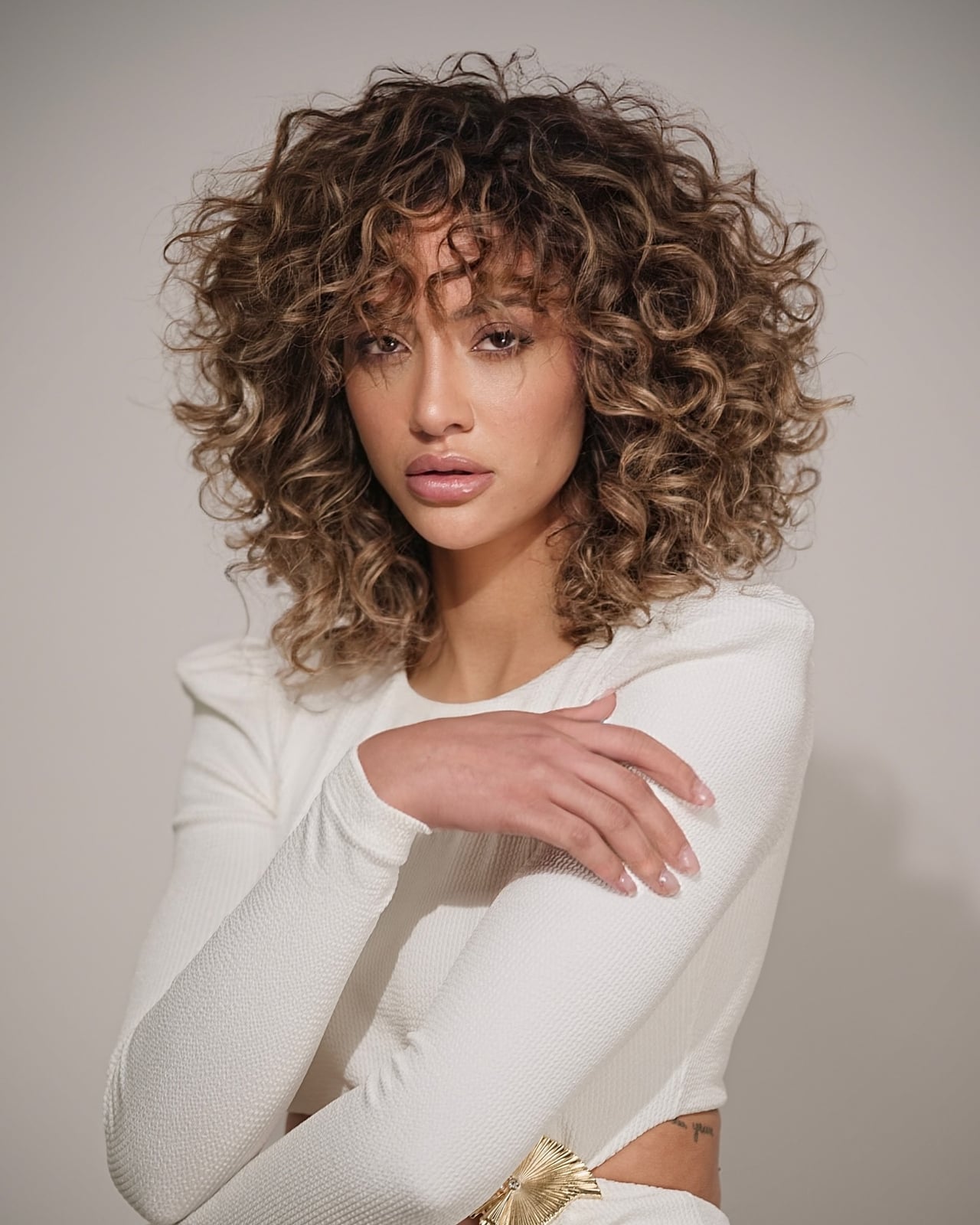
Collarbone length is the sweet spot for thick curly hair that wants definition without commitment. The layers here reduce the weight so the curls form distinct spirals rather than a single mass, and the subtle highlights add a glossy finish without a strong root line. The middle part works with the natural symmetry of the face, elongating rounder shapes and balancing a longer jawline. Ask your stylist for: collarbone length layers, medium brown with subtle highlights, defined curls. This cut suits hair that is medium to thick in density; fine hair would lose shape too fast at this length. A shine serum on dry hair locks the gloss in place, and a trim every six to eight weeks keeps the layers from growing into a shapeless curtain.
Shoulder Collarbone Layers With Curtain Bangs, Middle
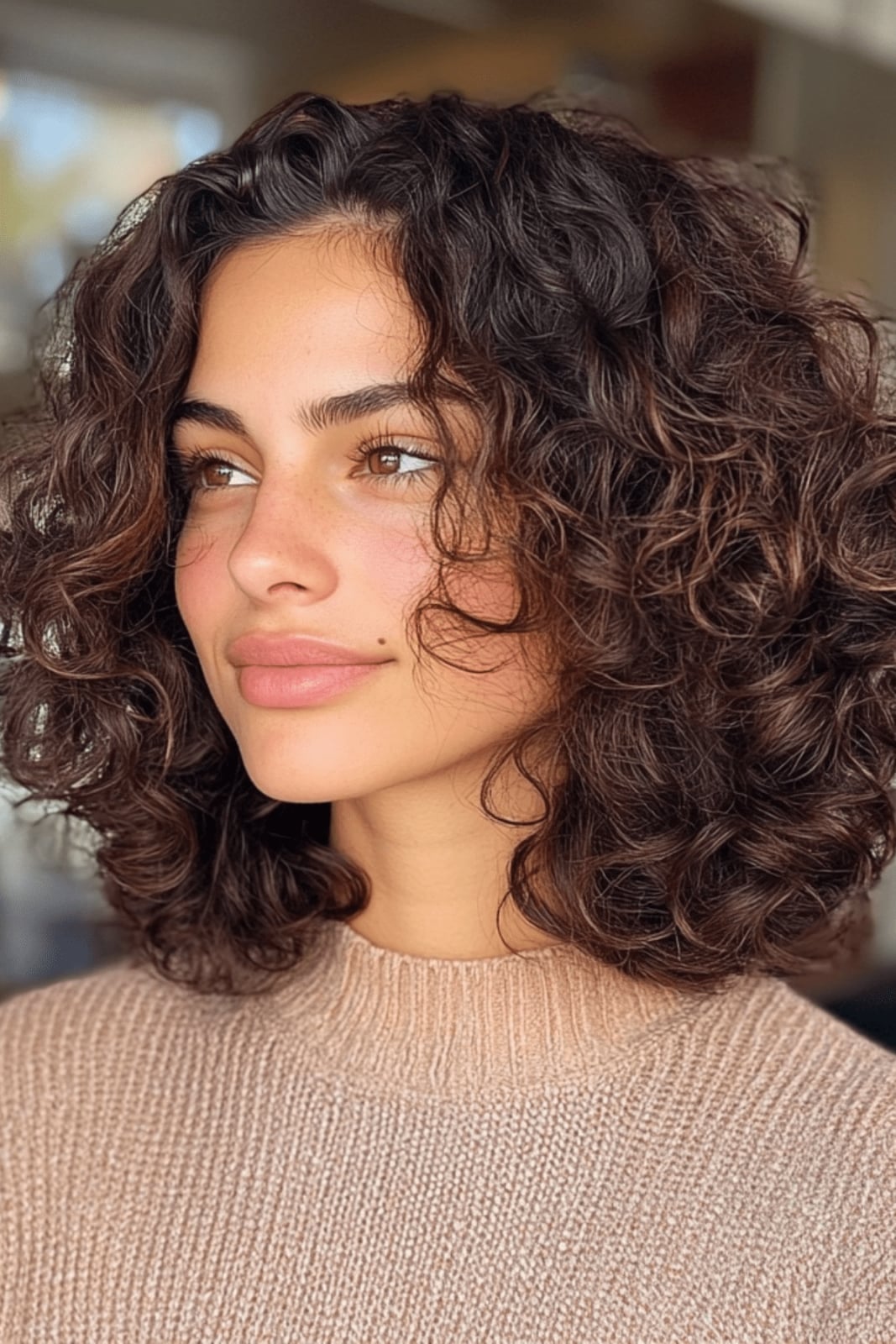
A salon cut with face-framing layers and curtain bangs is a precise thing; the DIY version tends to result in one side being two inches shorter than the other. The layers here are cut to fall just past the collarbone, with the curtain bangs grazing the cheekbones. The subtle highlights add depth without changing the base dark brown color. Ask your stylist for: collarbone length layers, curtain bangs, dark brown with subtle highlights. If you are tempted to trim the curtain bangs at home, wait until after the first salon appointment. The stylist cuts them dry to account for curl shrinkage, which is hard to replicate in a bathroom mirror. A texturizing spray on dry hair helps the layers separate without crunch, and a trim every six weeks keeps the bangs from creeping toward your chin.
Shoulder Length Layers With Side Part
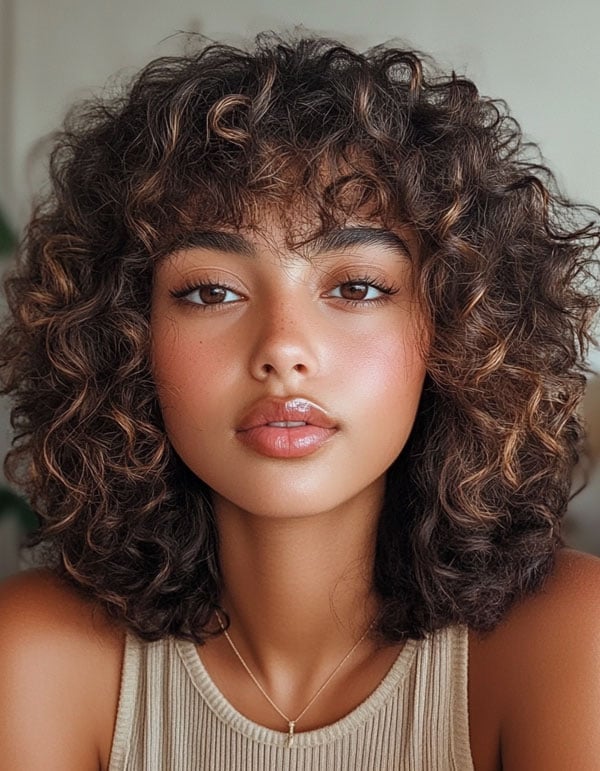
The design makes a quiet promise: you can air dry this and still look like you tried. Shoulder-length layers on thick, curly brunette hair let the natural pattern stack without fighting it, and a side part adds lift right where gravity pulls hardest. The subtle highlights keep the dimension from reading as one flat mass.
Ask your stylist for: shoulder length layers, side part, brunette with highlights. A leave-in conditioner and a scrunch are the only tools required; air dry or use the diffuser on low heat. Plan on a trim every six to eight weeks to maintain the shape through the growth cycle.
Collarbone Layers With Blonde Highlights, A Woman With Medium Density
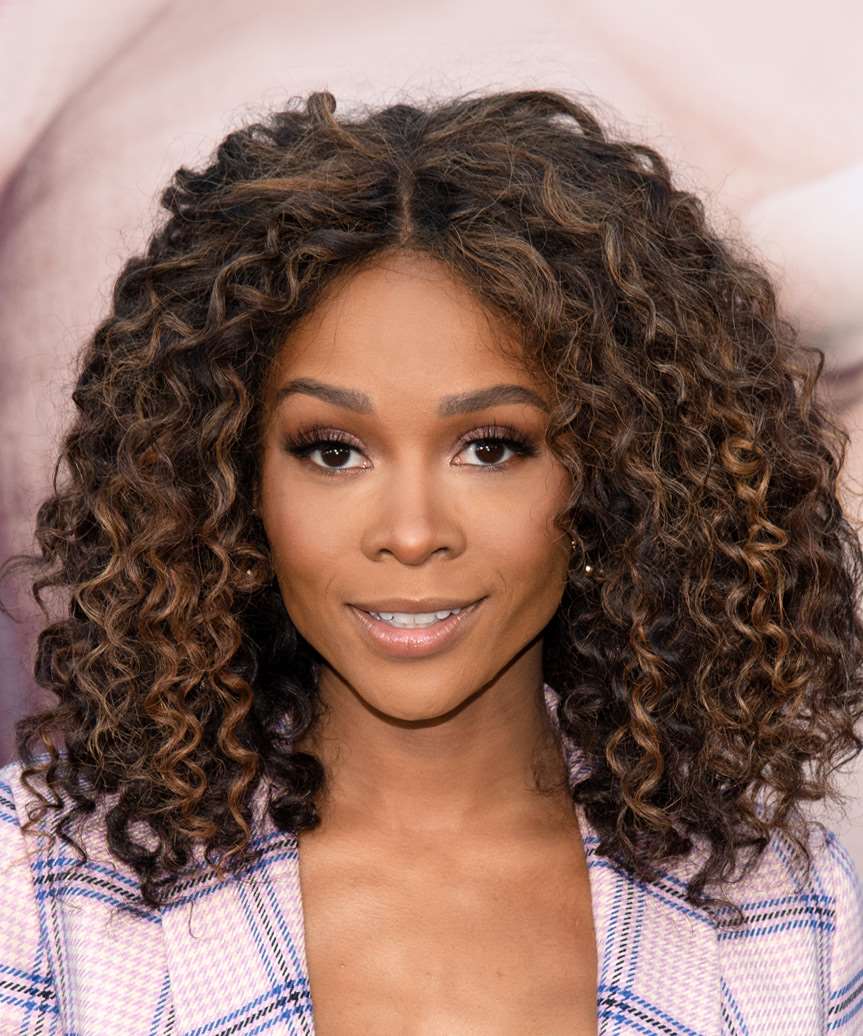
Blonde highlights on dark brown curls require a balayage technique that paints each section by hand, avoiding the stripe effect that foils can leave on medium-density texture. The collarbone length keeps the layers visible without sacrificing curl bounce, and the middle part lets the color break evenly across both sides.
Ask your colorist for: dark brown base with blonde balayage highlights. A blowout with a round brush and a heat protectant defines the gloss; a shine spray at the end seals it. The soft layers mean the grow-out stays relatively forgiving between six- to eight-week trims.
Collarbone Gray Curls With Silver Highlights
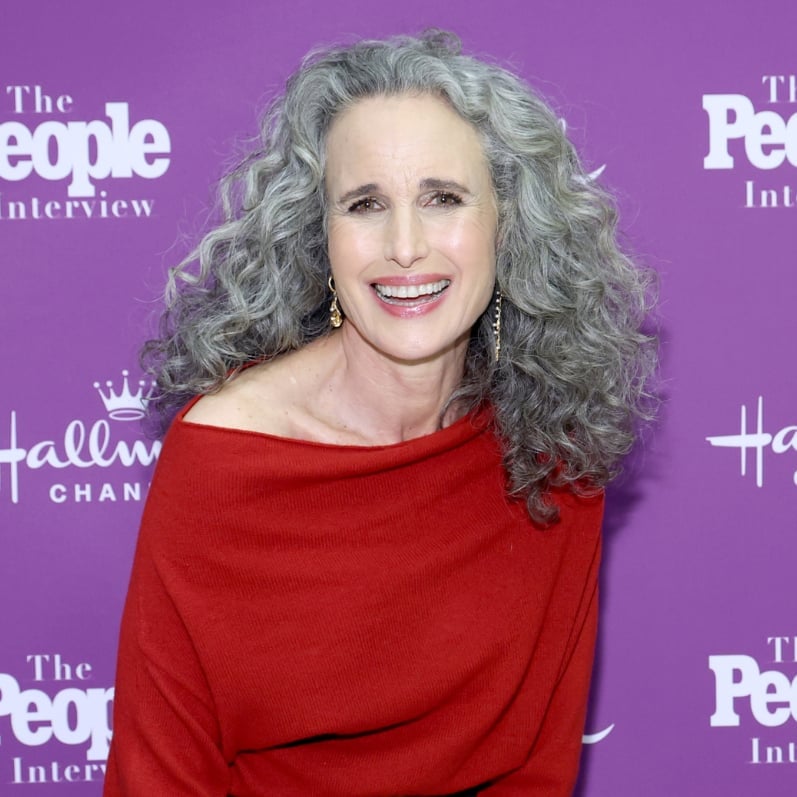
Who actually wears gray curls with silver highlights? Anyone who wants the contrast to look deliberate. The silver pieces lift the base gray so it catches light instead of disappearing, and the side part creates enough volume on thick, curly hair to balance a longer face shape. A purple toning shampoo keeps the silver from warming into yellow between salon visits. Ask your colorist for: silver highlights on a gray base, side part, voluminous blowout. This salon-dependent length needs a trim every six to eight weeks to keep the layers from forming a single dense wedge.
Shoulder Length Air Dried Natural Curls, Close-Up Take

Air drying thick, shoulder-length curls is less about patience and more about product order. Use a curl enhancer on soaking-wet hair, scrunch upward from the ends, and walk away. The side part breaks up the round silhouette that all-one-length curls can create. Ask your stylist for: shoulder length layers, side part, air dried natural curls. A trim every six to eight weeks keeps the ends from tangling, which is the only real maintenance this style demands.
Mid-Back Updo With Curly Bangs
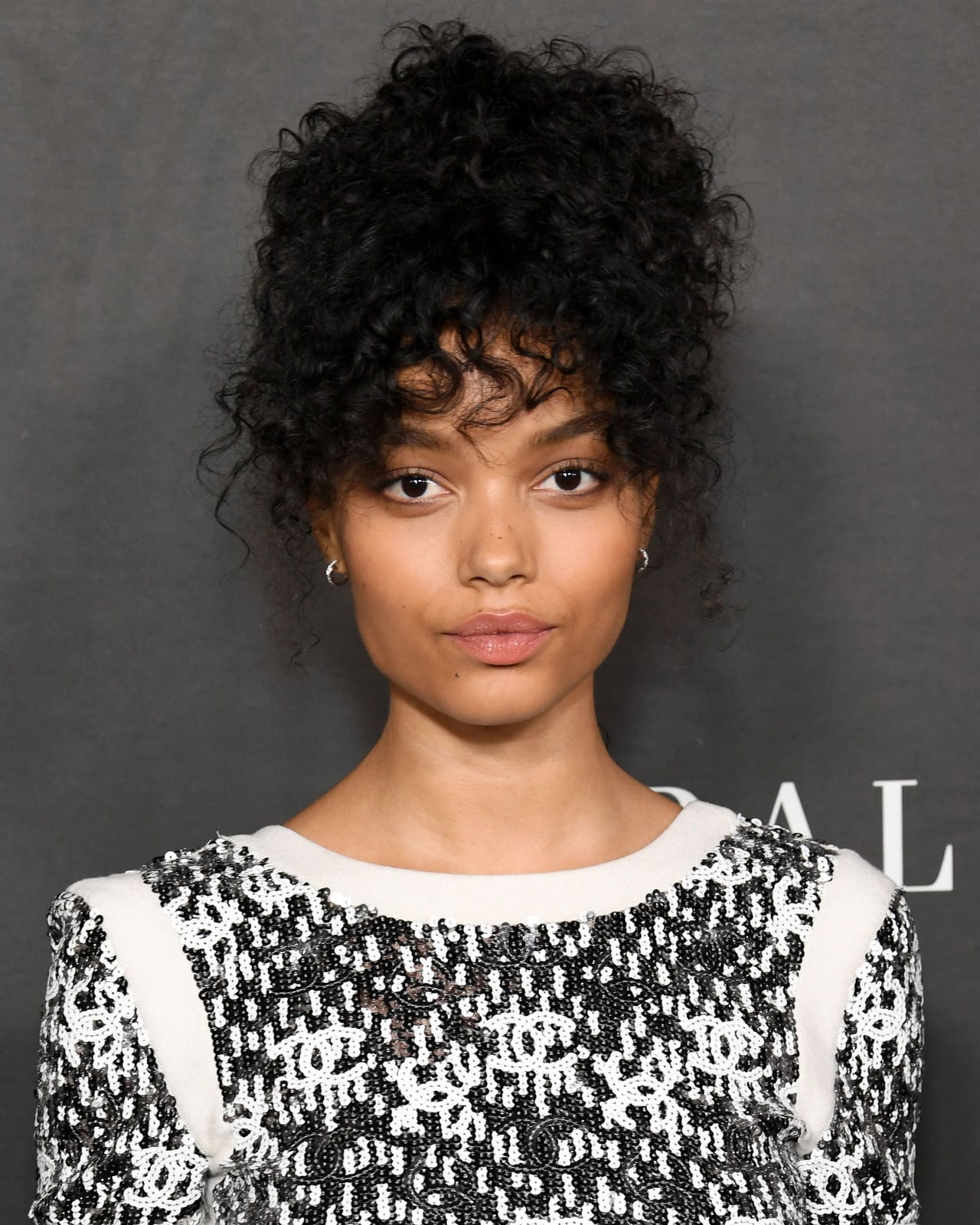
A voluminous updo on mid-back length, thick black curls reads as formal without trying to hide the texture. The curly bangs are the key detail: they soften the pulled-back silhouette and keep the look from skewing too severe. The middle part anchors the volume at the crown, which makes the style work for oval and heart-shaped faces.
Ask your stylist for: mid-back length updo with curly bangs, middle part. This is a salon project for a special occasion; expect about an hour in the chair for pinning and shaping. The bangs should be cut at a separate appointment so they have the right weight to hold their curl when pinned back.
Collarbone Red Curls With Curtain Bangs
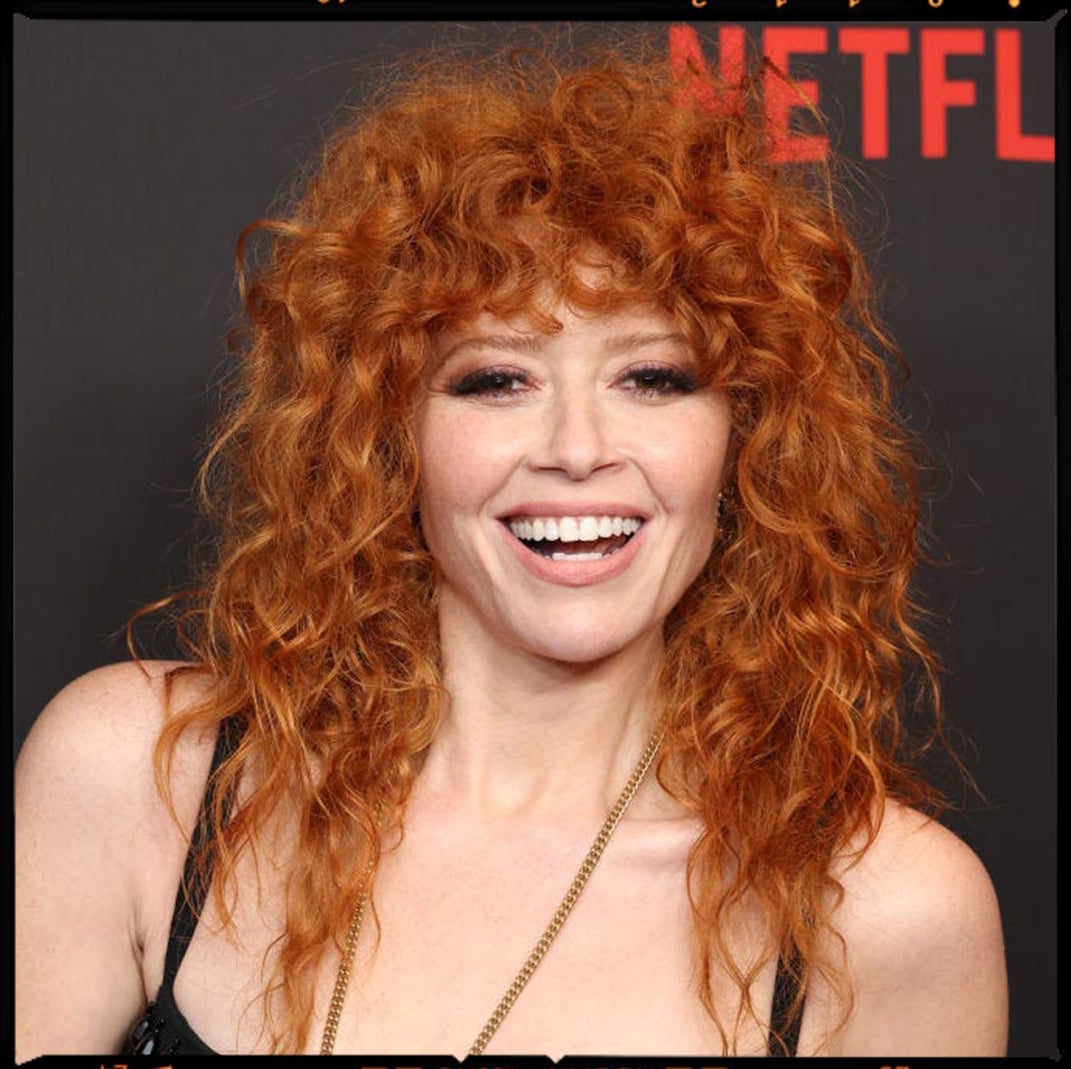
Can a red this vibrant actually hold up to daily life? With thick, curly collarbone-length hair, the answer is yes, provided you accept a few ground rules. The red base with subtle blonde highlights needs color-safe shampoo and a cool rinse every wash to keep the brass away. Ask your colorist for: collarbone length red curly hair, curtain bangs, blonde highlights. Those soft, face-framing layers and curtain bangs soften the line around the jaw, which is useful if your face tends toward angular. The realistic drawback: red fades faster than most shades, so expect a gloss treatment or root touch-up every six to eight weeks to keep it looking fresh rather than grown out.
Mid-Back Updo With Cascading Curls
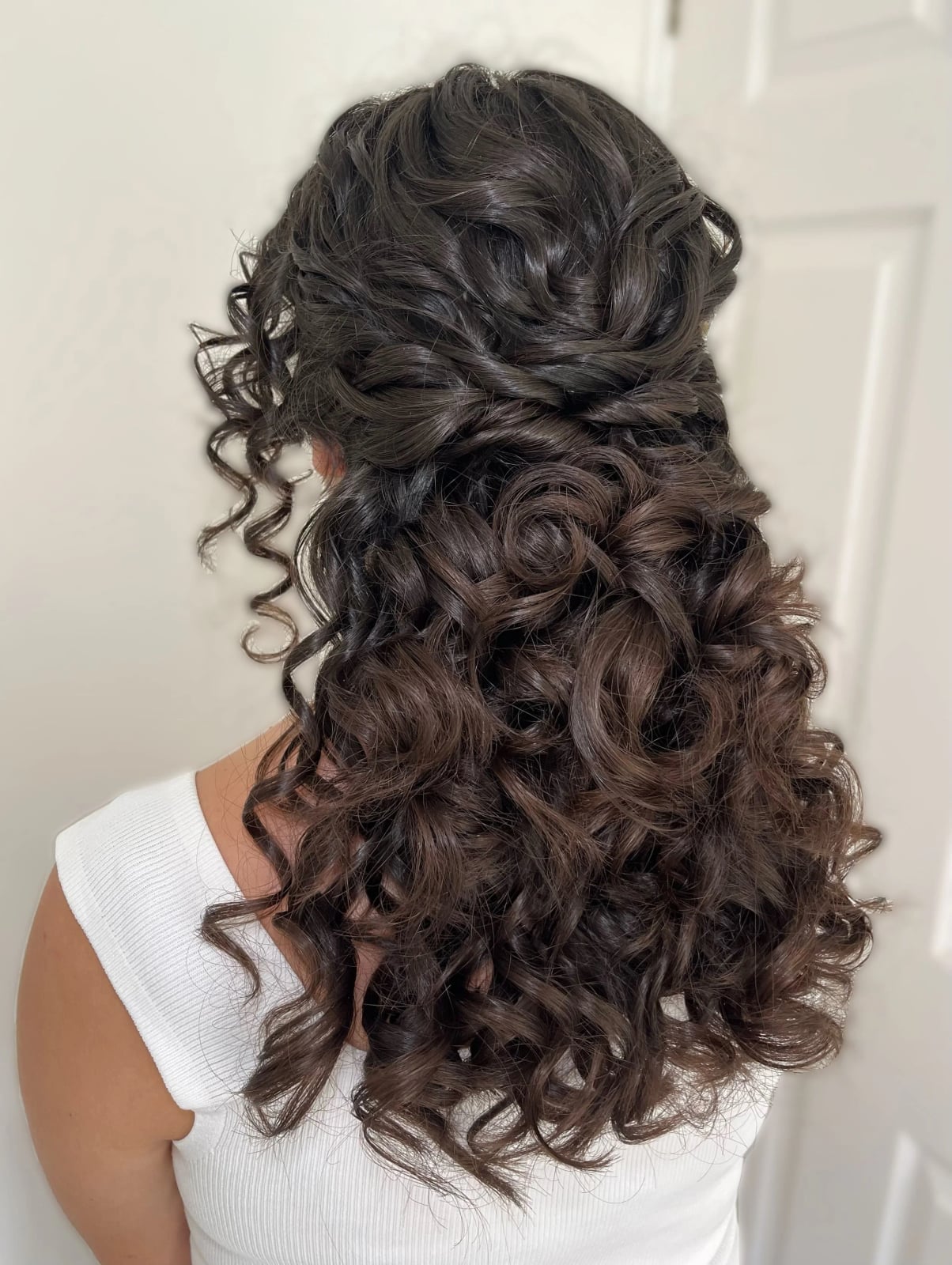
The design here relies on the natural grip of thick, curly hair to hold its shape without a can of hairspray. The stylist sections the mid-back length dark brown hair into twisted panels that are pinned at the crown, then leaves a few loose curls to cascade down the nape. Ask your stylist for: mid-back length elegant updo, dark brown hair, cascading curls. Because there are no bangs, the face is completely open, which works well for most face shapes as long as the crown has enough volume. This is a salon-only build: the twists need even tension and the cascading pieces require precise placement to avoid looking like a pile of pins. A few tendrils left out at the temples soften the whole thing.
Final Thoughts
For maximum curl definition, layered cuts that remove weight work best on thick hair. If your curls are on the finer side, a blunt baseline with minimal layers keeps density where you need it. And for the love of your hairline, trim the ends on a schedule.
- Trim every 6-10 weeks to maintain shape and prevent split ends.
- Deep condition weekly to combat dryness and enhance curl definition.
- Use a microfiber towel or cotton t-shirt to dry hair, minimizing frizz.
- Apply curl-defining cream or mousse to damp hair before air-drying or diffusing.
Embrace your natural texture; the right style will make it shine.