Green hair used to mean one thing: a single, shouty shade from root to tip. Now it’s a spectrum, from a deep teal that reads almost black in low light to a seafoam balayage that catches the sun.
These 32 ideas cover the full range, from a low-commitment brown with green highlights to a full-on neon pixie. Whether your hair is fine, curly, short, or long, there is a green here that works with your cut, not against it. No more scrolling past looks that only work on someone else’s hair type.
Neon Green Pixie With Undercut
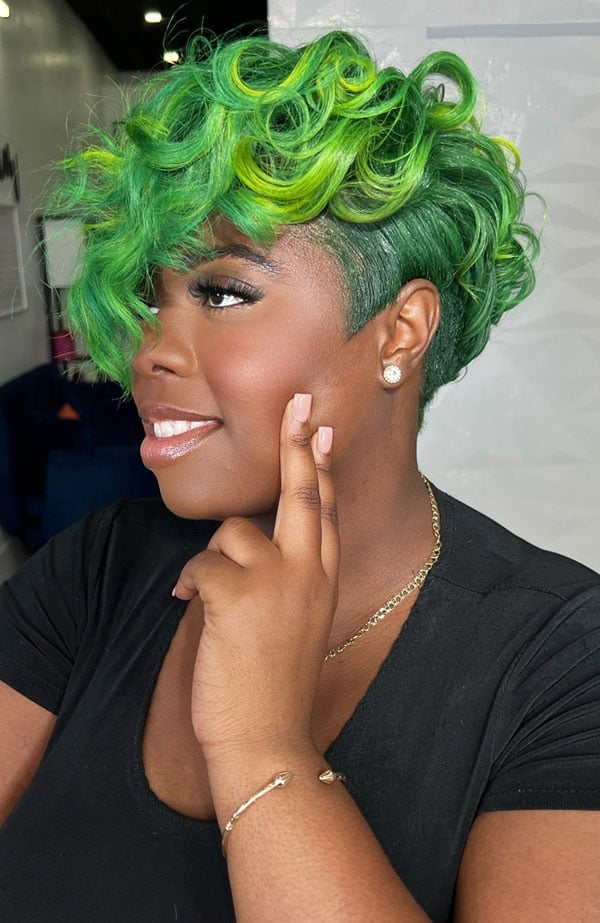
A sculpted pixie with an undercut is a study in controlled volume, and the neon green with yellow highlights makes sure nobody misses the point. The asymmetrical bangs and fine, curly texture create that deliberate shape, but the undercut is doing the real work, keeping the bulk off the sides so the top can lift without looking top-heavy. Fine, curly hair handles this structure best, and the cut needs a refresh every four weeks to hold the undercut line. Ask your stylist for: neon green pixie with undercut and sculpted curls.
Electric Green Choppy Pixie
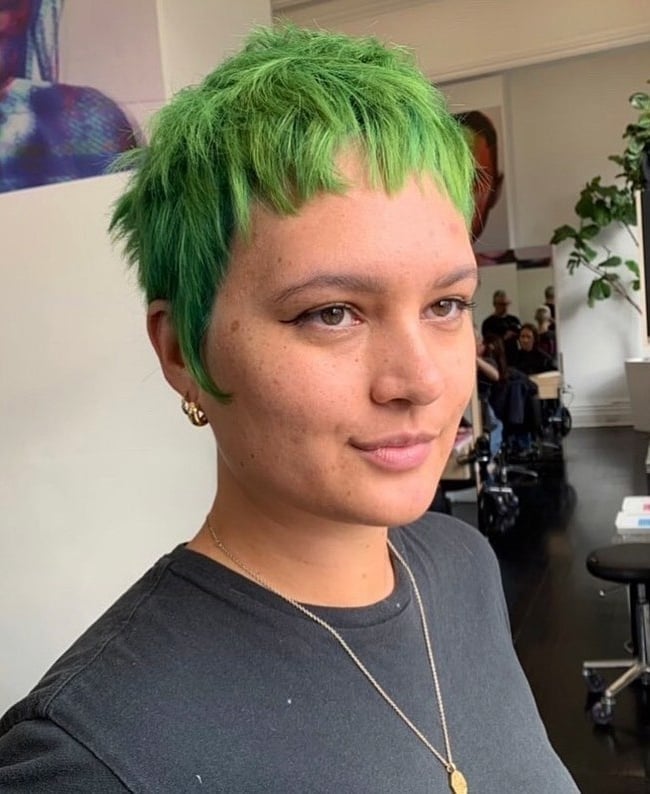
Ever wondered how to get a pixie that looks sharp and not just shorn? The trick is in the choppy texture and the short, piecey bangs. The electric green color is uniform, so the cut creates the volume and lift that fine, straight hair usually lacks. The bangs hit above the brow, which keeps the whole thing modern rather than severe. Ask your stylist for: electric green choppy pixie with short piecey bangs.
Bright Green Textured Shag
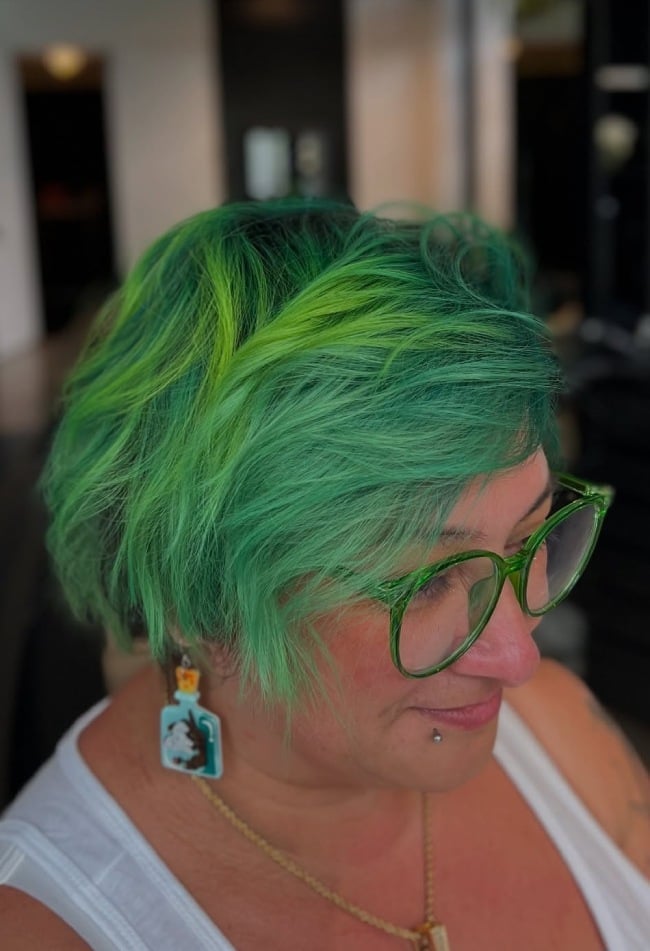
A shag at ear length relies on texture to keep it from looking like a bowl cut, and the bright green uniform color means every layer is visible. The short bangs and side parting set the direction, while the tousled waves add movement without requiring a curling iron. Fine, wavy hair air-dries into this shape with minimal effort, but a texturizing spray on dry hair helps the lived-in look last through day two. Ask your stylist for: bright green shag with short bangs and textured styling.
Deep Teal Green Curly Bob
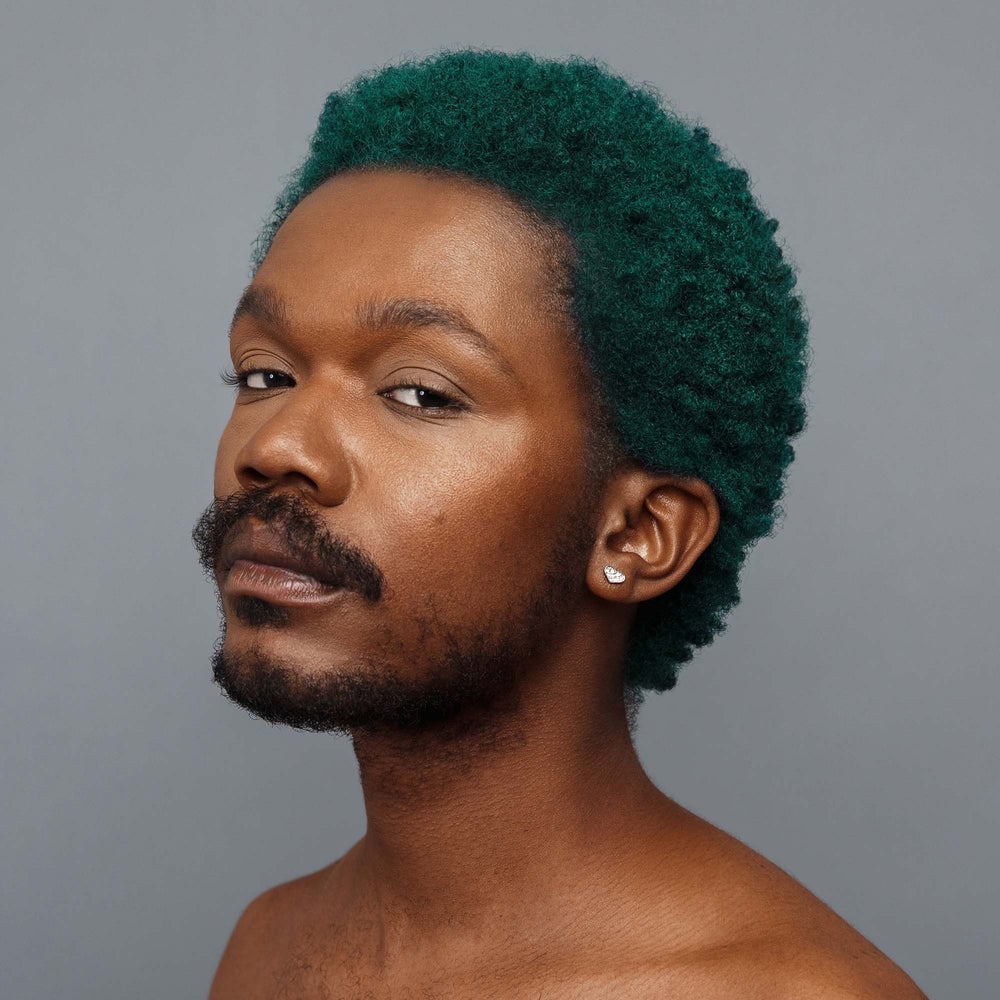
If you are torn between a sleek bob and a curly one, this deep teal green cut settles it: the middle part and air-dried texture keep it soft, while the fine curls add volume that a blunt cut cannot give. No bangs means the face is fully visible, and the ear-length layers let the curls spring up instead of weighing down. The color is deep enough to read as sophisticated, which makes this an easier sell in an office than the neon options. Ask your stylist for: short curly bob in deep teal green, air-dried.
Ash Green Undercut With Curls
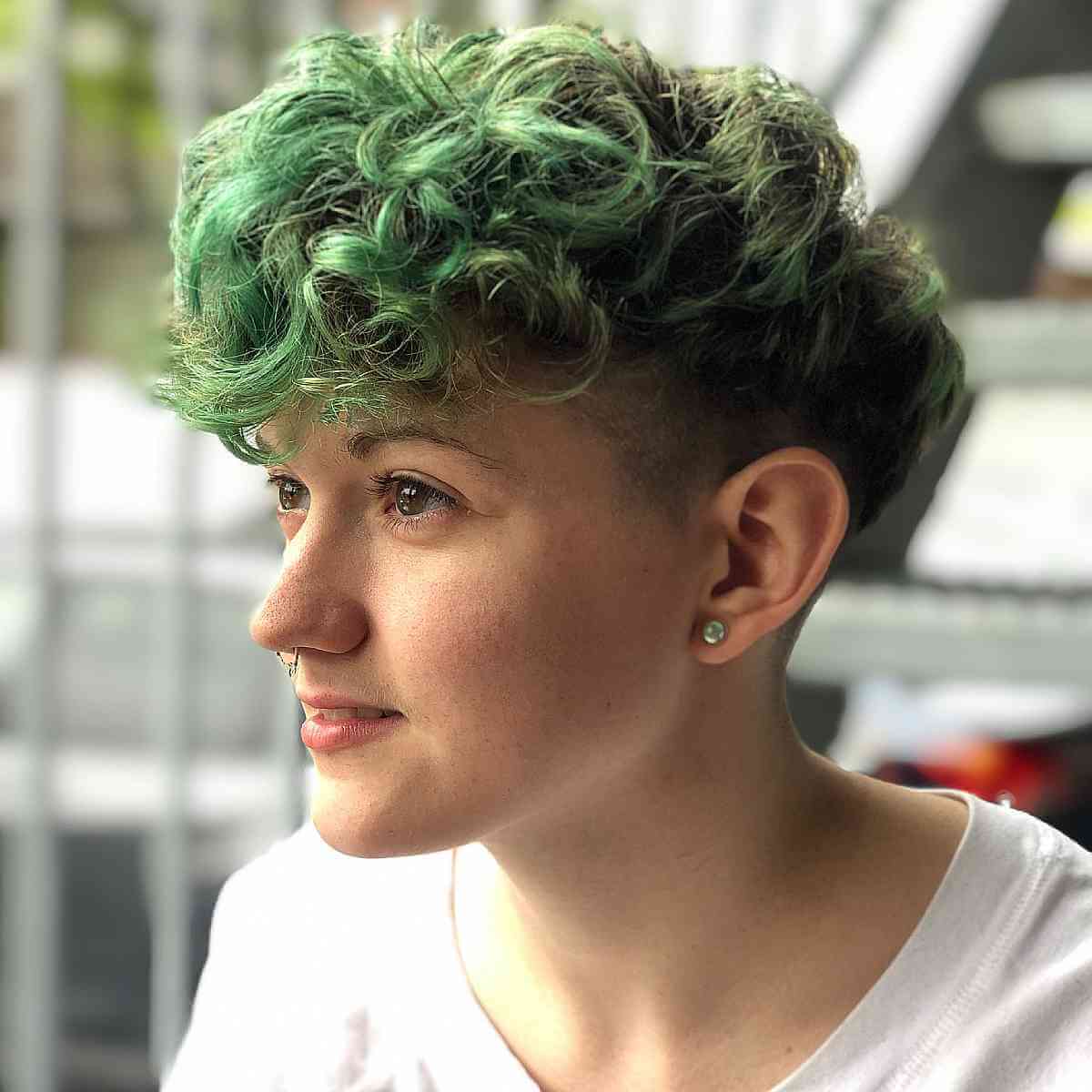
An undercut with thick, curly hair is a clever trade: you lose the side bulk but keep the top volume, and the ash green with darker roots adds depth without needing a root touch-up every three weeks. The short textured bangs break up the roundness that dense curls can create, and the side parting directs the curl pattern forward. The honest drawback is that thick curls need regular moisture, or the undercut section can look disconnected from the textured top. Ask your stylist for: ash green undercut with textured curls.
Black Bob With Neon Green Underlayer
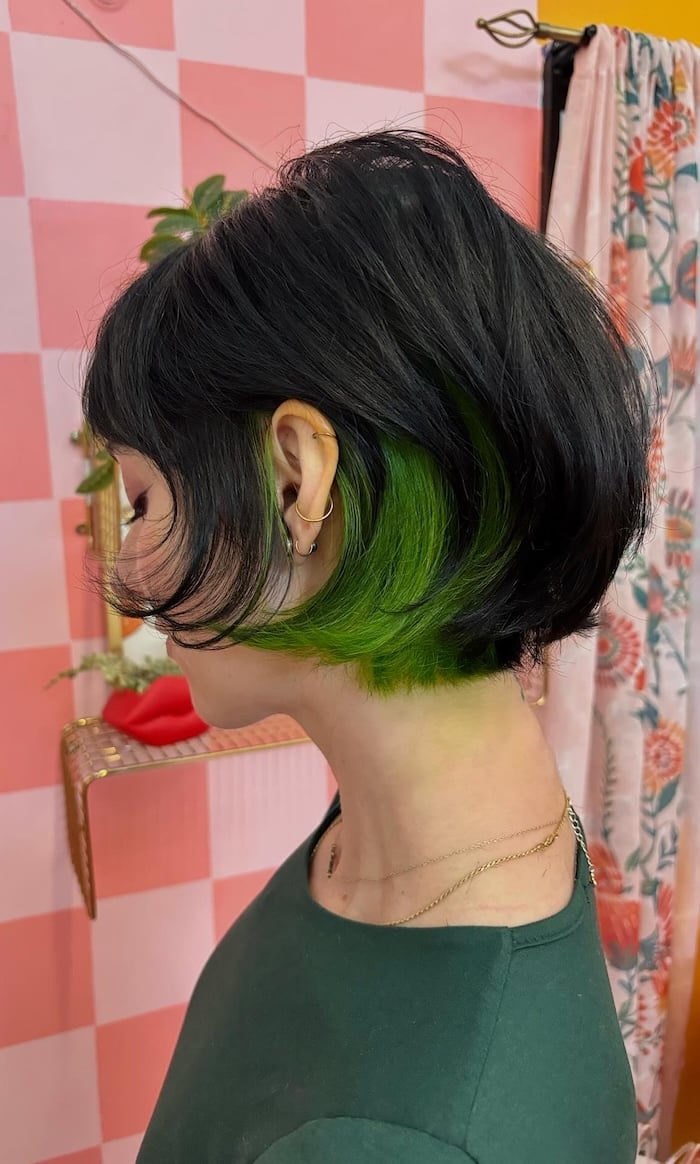
The design hinges on contrast: a short black bob with a side part and wispy bangs, where a neon green underlayer peeks out only when you move. Fine, straight hair holds this shape best, since the bob relies on a clean line and the underlayer needs a smooth canvas to contrast. Ask your stylist for: black bob with neon green underlayer and wispy bangs. This is a salon-only job, because the underlayer requires precise sectioning and a separate lightening process. The good news is a hidden color fades slower than exposed tones, so you can stretch toning to every eight weeks.
Vibrant Green Blunt Chin Bob
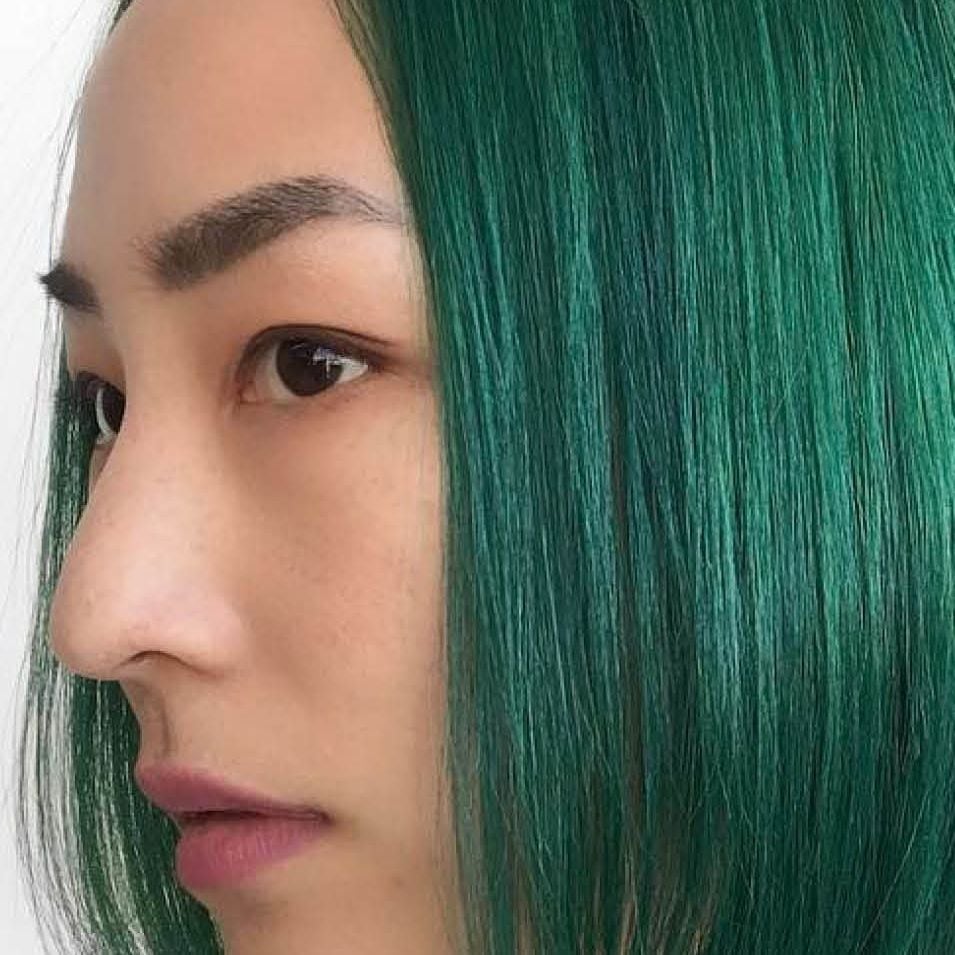
Does a blunt cut suit your face shape or just everyone on social media? A chin-length blunt bob in vibrant green works best on fine, straight hair, where the single-length line actually lands cleanly. That blunt edge visually widens a narrow jaw, so long and oval faces benefit most from the shape. Round faces should consider a longer version, since the chin-length stop can emphasize width. Ask your stylist for: chin-length blunt bob in vibrant green. The blunt cut means no layers to hide an uneven trim, so book a maintenance cut every six to eight weeks.
Dark Green Bob With Straight Fringe
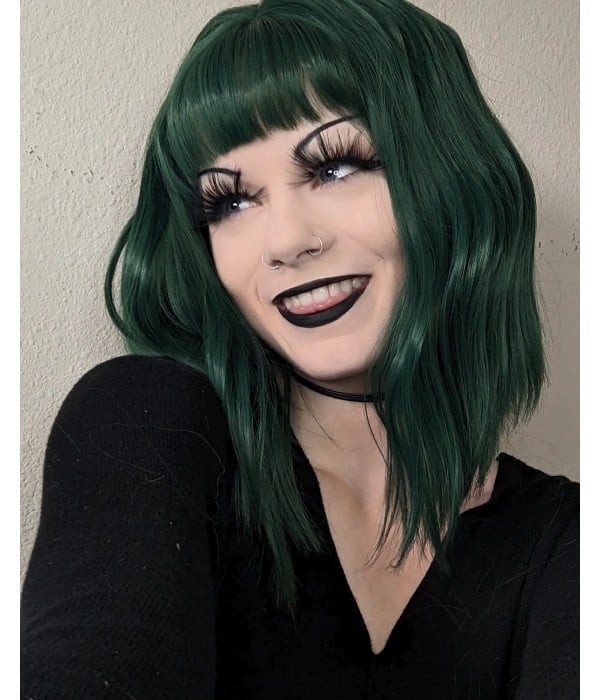
A chin-length bob in dark green gets a straightforward upgrade from a straight fringe that stops just above the brow. The thick, wavy texture here gives the soft, loose waves their body, which is exactly what a bob with a fringe needs to avoid looking flat.
Without the fringe, this is just a basic bob. With it, the eye moves from the deep green color across the bangs and down the waves. Ask your stylist for: dark green bob with straight fringe and soft waves. A fringe needs a trim every three to four weeks to stay out of your eyes, and a texturizing spray will keep those waves defined without crunch.
Deep Teal Green Sleek Bob, Chin
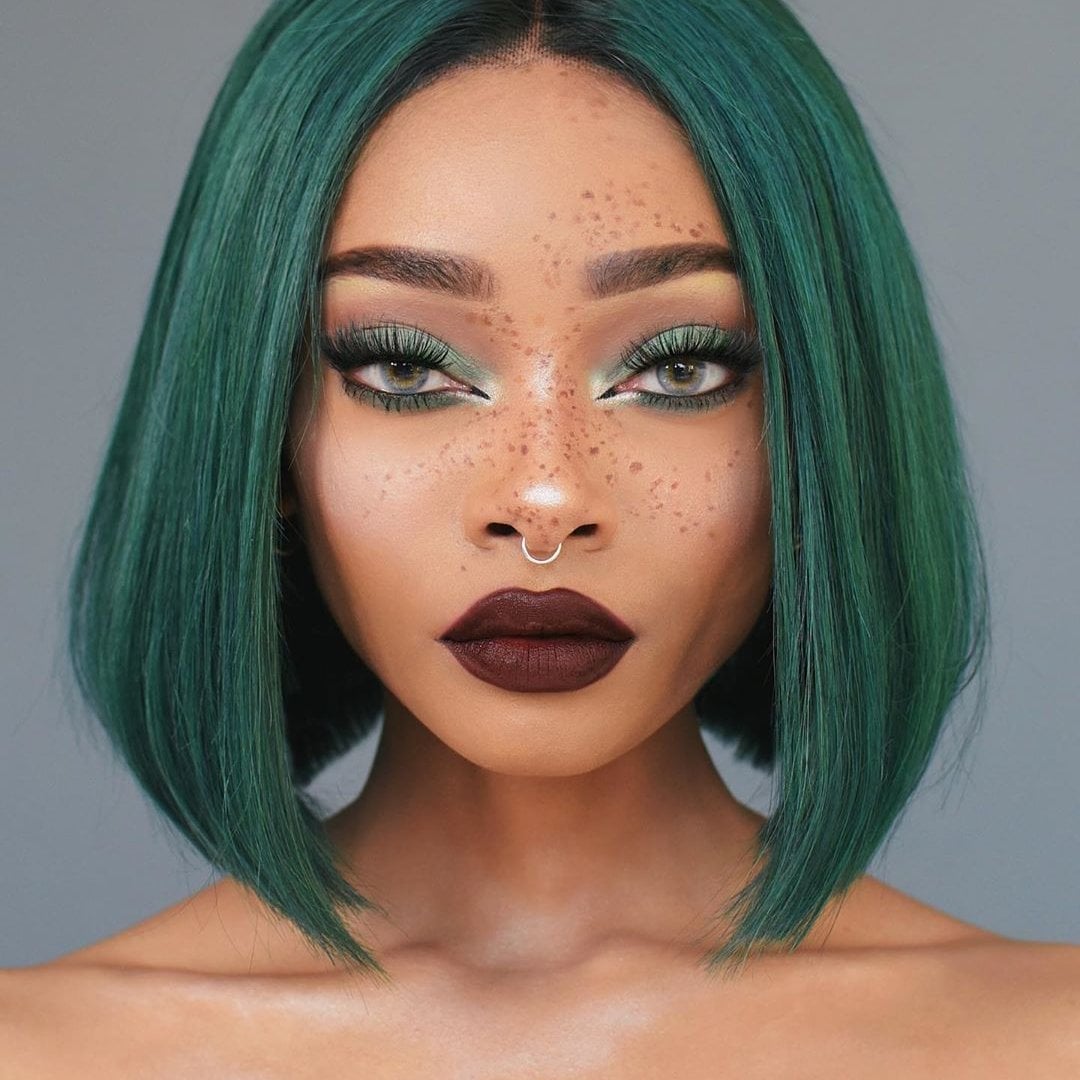
A sharp chin-length bob in deep teal green versus a textured version: the sleek middle-parted take is the one that shows every uneven line. Fine, straight hair is the only texture that delivers that mirror finish, because any wave or bend breaks the silhouette. The deep teal shade shifts between blue and green depending on the light, which is the payoff for keeping it polished. Ask your stylist for: chin-length sleek bob in deep teal green. A smoothing serum and a flat iron get you there in about ten minutes, and the single-length cut needs a trim every six weeks to keep that precise edge.
Black and Green Split Dye Bob
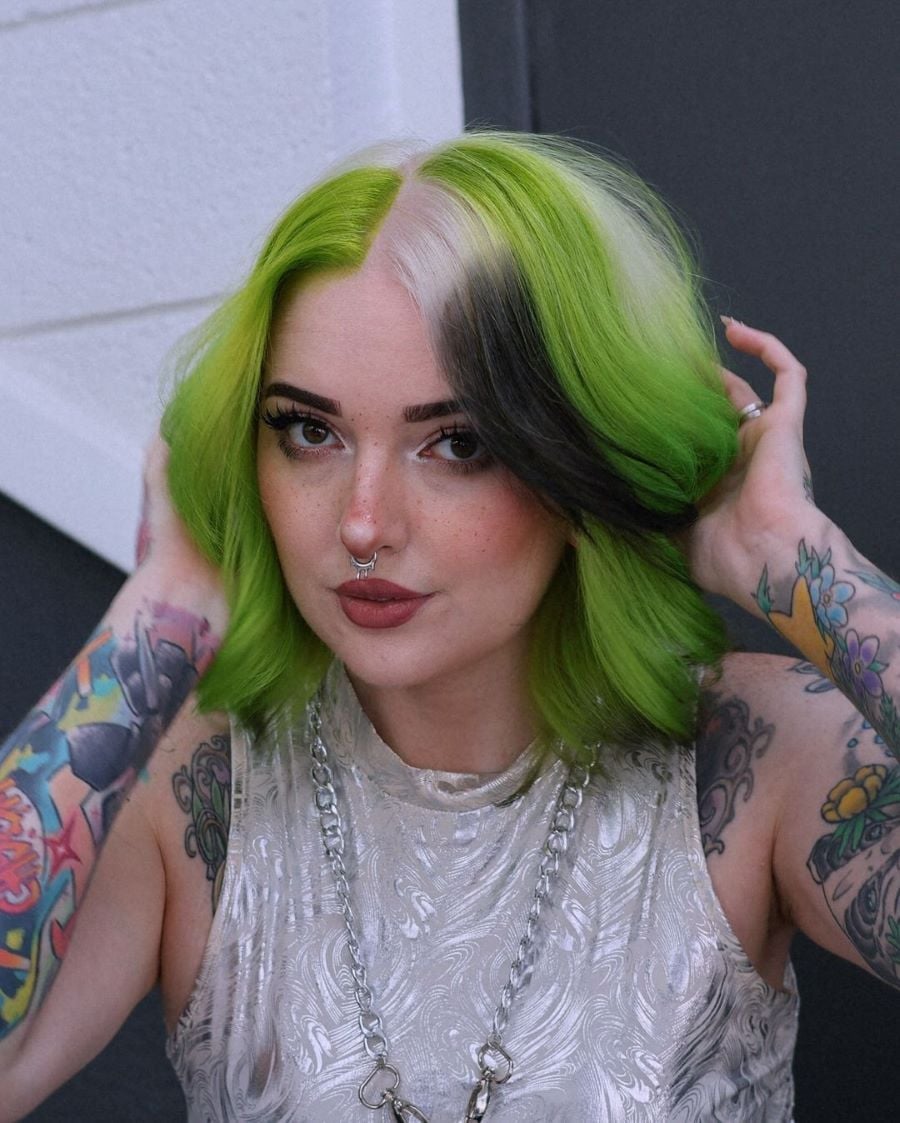
A chin-length bob split right down the middle, one side black and the other bright green, is a design that refuses to be subtle. Medium-density wavy hair gives the two-tone look the volume it needs, and the middle part keeps the contrast surgical. Ask your colorist for: chin-length bob with black and bright green split dye. This is a salon-only process, since the green side needs a full lighten-then-tone sequence while the black side stays untouched. The one real drawback: the green side will fade faster and need a refresh every four to six weeks, while the black side coasts along fine.
Black Bob With Neon Green Roots, Chin

How do you keep a black bob from blending into every other dark bob in the room? You start the color at the root, not the ends. This chin-length long bob uses subtle layers so the blunt bangs and straight, medium-density texture stay heavy rather than fussy. Ask your colorist for: black with neon green roots, blunt bangs. The payoff is a reverse ombre that gets more interesting as the green grows out, though those roots will need a refresh every three to four weeks to keep the neon intensity. A texturizing spray is all the styling this cut asks for.
Vibrant Teal Wavy Bob With Curtain Bangs
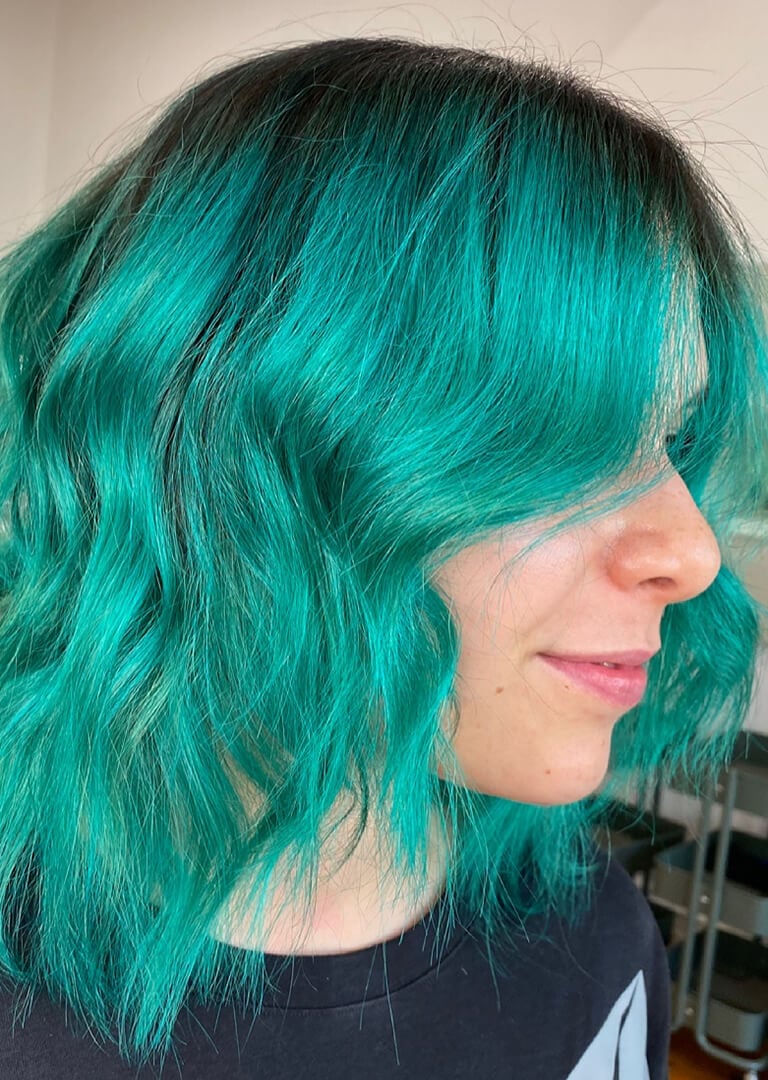
The trick to a wavy bob that does not look accidental is the blowout: the ends get a round brush while the roots stay loose. This collarbone-length cut keeps the weight at the perimeter so the curtain bangs have something to blend into. Medium-density wavy texture holds the bend best, and a side parting gives the teal with dark roots more movement. Ask your stylist for: collarbone wavy bob, curtain bangs. The darker root area softens the grow-out, so you can stretch the next color appointment to eight weeks. A sea salt spray after drying adds grip without crunch.
Blonde to Green Balayage Collarbone Lob
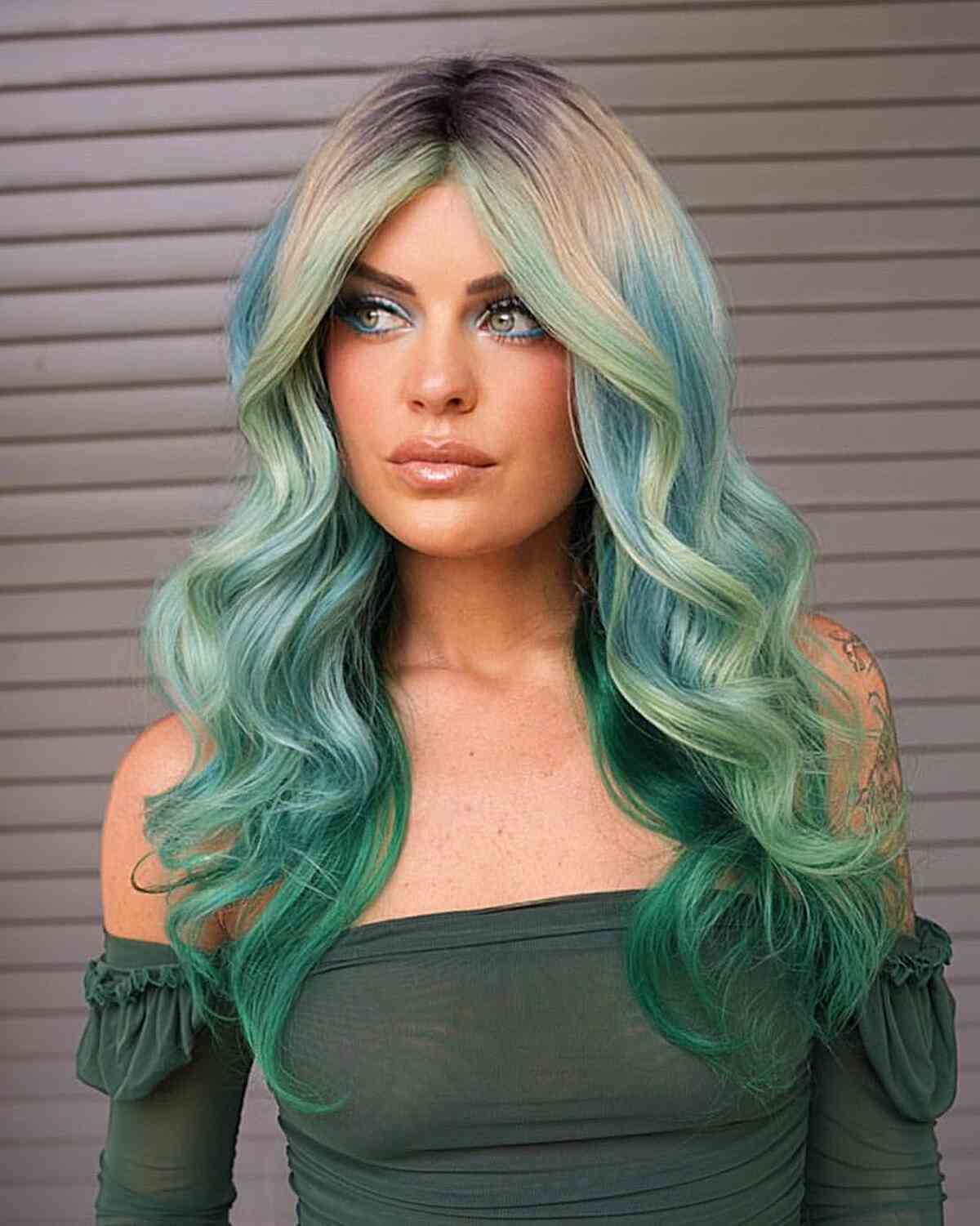
A blonde to green balayage needs thick, wavy hair to make the color transition read as deliberate. This collarbone lob keeps the layers soft so the curtain bangs sit flat against the forehead while the body of the hair holds a blowout. Ask your colorist for: blonde to green balayage, collarbone lob. The lighter starting point means the green takes evenly, but the real winner here is the grow-out: a balayage root line buys you ten weeks between touch-ups. Oval and heart-shaped faces get the most out of the side part and the length grazing the collarbone.
Dark Base With Emerald Green Highlights Lob
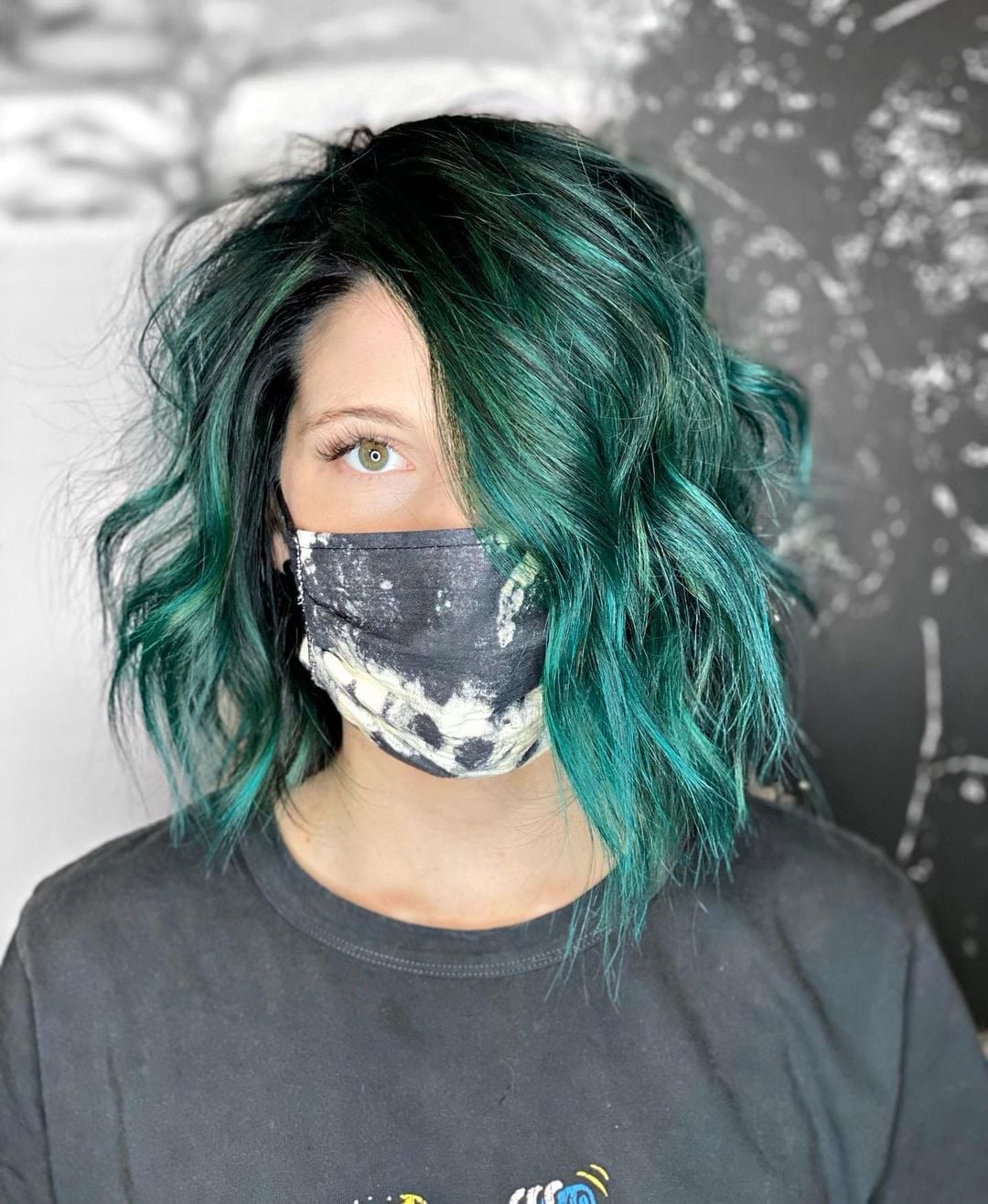
Emerald green highlights on a dark base fade slower than pastel shades, so the lob can actually look better at week four than week one. This collarbone cut uses soft layers and curtain bangs to frame the color placement without cutting into the density. Medium, wavy texture keeps the highlights visible as the hair moves. Ask your colorist for: dark base with emerald green highlights, curtain bangs. The wavy blowout masks the grow-out line for about six weeks, though the brightest pieces will need a gloss treatment around week eight. A texture spray at the roots stops the layers from falling flat.
Black Collarbone Cut With Vivid Green Streaks
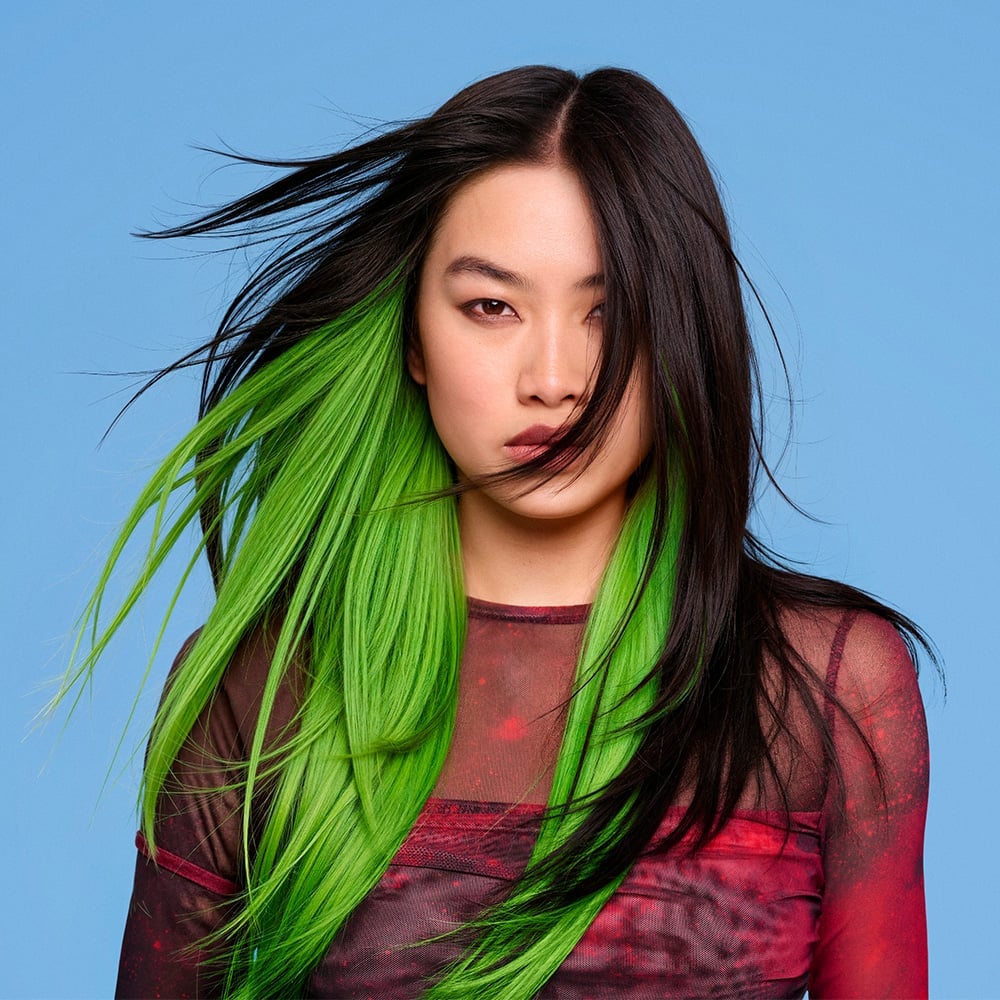
These vivid green streaks sit on the sides, so the black base stays dominant. The collarbone length works because thick, straight hair holds a blowout without needing layers to fake volume. Ask your colorist for: black base with vivid green side streaks. Compared to a full head of highlights, this placement means fewer sections to tone and a sharper contrast when the green fades. A flat iron keeps the finish glossy, and the streaks need a refresh every six to eight weeks. No bangs means the part can switch sides as the color grows out.
Black Collarbone Cut With Green Highlights
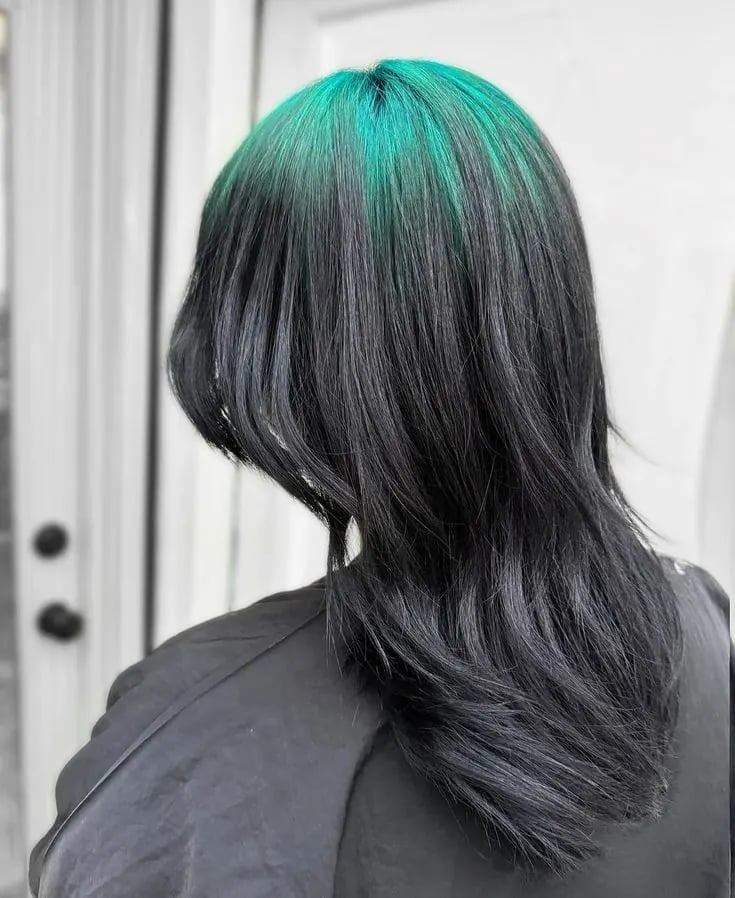
A black base with green highlights concentrated at the roots creates a color-block effect that travels down into the lengths. The collarbone cut uses subtle layers to keep the wavy, fine texture from falling flat. This is a salon-only color placement: the lightener needs to be painted precisely at the root area to avoid an all-over green result.
Ask your colorist for: black base with green root highlights. The payoff is dramatic from a back view, but there is a real trade-off for fine hair. The concentration of color at the top can visually weigh down the hair if the layers are not cut well. A trim every six to eight weeks keeps the shape light enough to carry the color. The green highlights will need a color-refreshing toner every four to six weeks to stay vibrant.
Mint Green Shag With Blonde Highlights
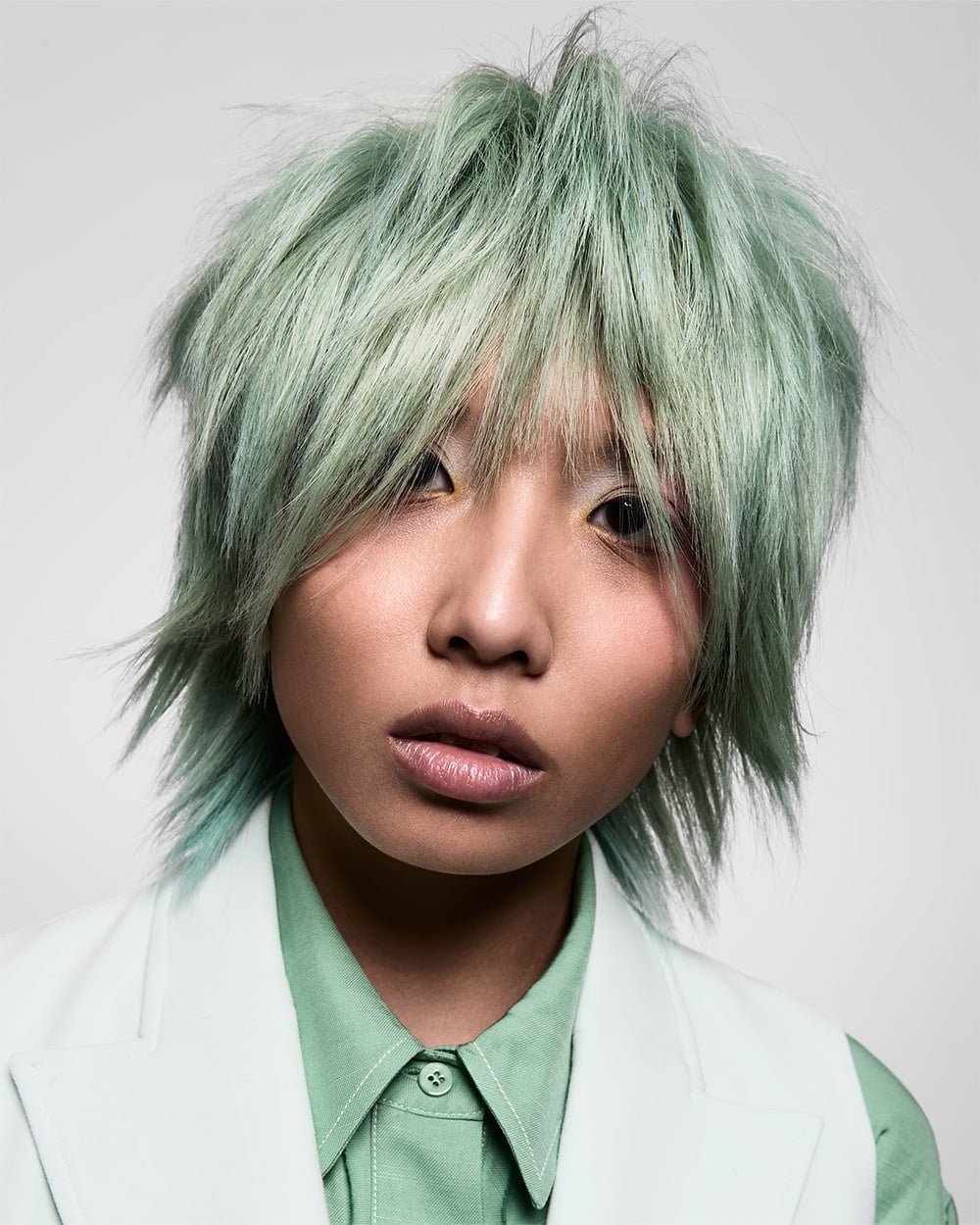
How do you describe a shade that is half mint, half blonde without getting a confused nod from your stylist? Ask for a light mint green base with subtle blonde highlights woven through the top sections and curtain bangs. The collarbone shag uses choppy layers to create the air-dried, textured finish that keeps fine, wavy hair from looking too precious.
The styling steps are short: apply a light-hold texturizing spray to damp hair, then scrunch and let it air dry. The layers and curtain bangs do the work of creating movement. The blonde highlights add dimension to the mint, preventing it from reading as a single flat pastel. A trim every six to eight weeks keeps the shag shape defined and the curtain bangs at the right length.
Green and Blue Highlights Layered Shag
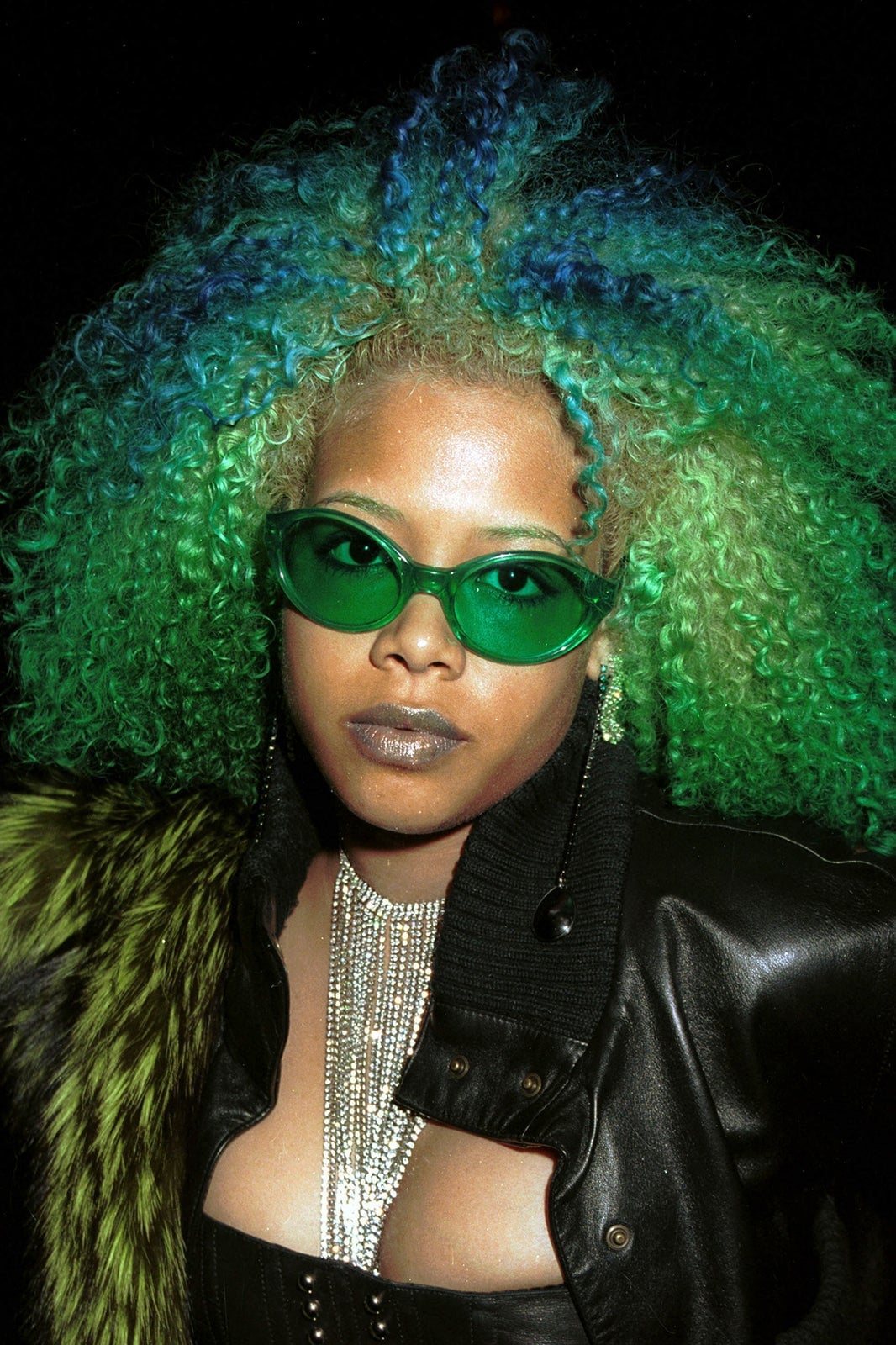
The technique here is a layered shag cut on thick, curly hair, with green and blue highlights painted onto a dark base. The curtain bangs are cut to blend into the layers, so the curls fall forward around the face. The highlights are placed on the ends to create a prismatic effect when the curls bounce.
Defined curls require a curl-defining cream applied to soaking-wet hair, then air drying. The middle parting helps the curtain bangs sit symmetrically. A trim every eight to ten weeks maintains the shag shape without losing the curl pattern. The green and blue highlights will fade at different rates, so a color-depositing conditioner in a cool tone helps keep both shades balanced.
Dark Green Curly Shoulder Length
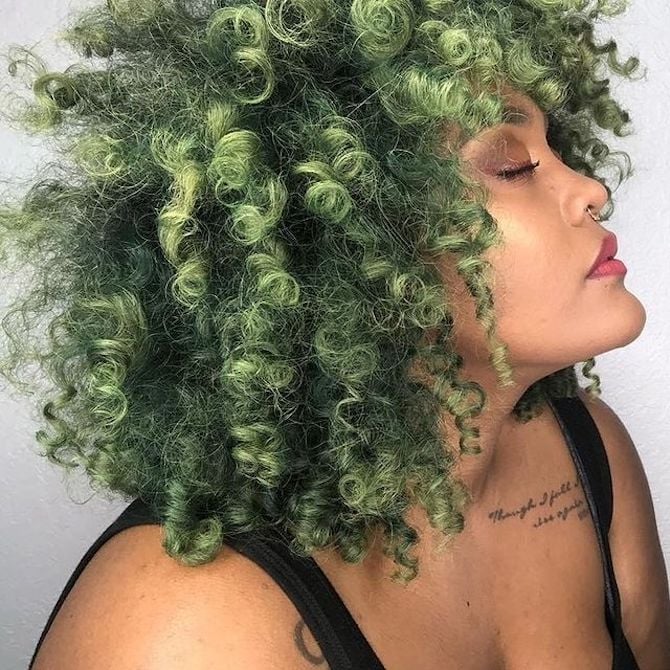
Thick, curly hair gets a rich, dimensional color with a dark green base and lighter green highlights. The shoulder-length cut uses short layers to prevent the hair from becoming too heavy, allowing the curls to spring up. This cut and color combination works well with thick, curly texture: the layers give the curls shape, and the dark green with lighter highlights adds depth without requiring heat styling. Anyone with fine or low-density curls should pass, as the short layers can make the hair look thinner. Ask your colorist for: shoulder-length dark green curly hair with lighter highlights. The side parting lets the curls frame the face naturally.
Neon Green Roots With Black Ends
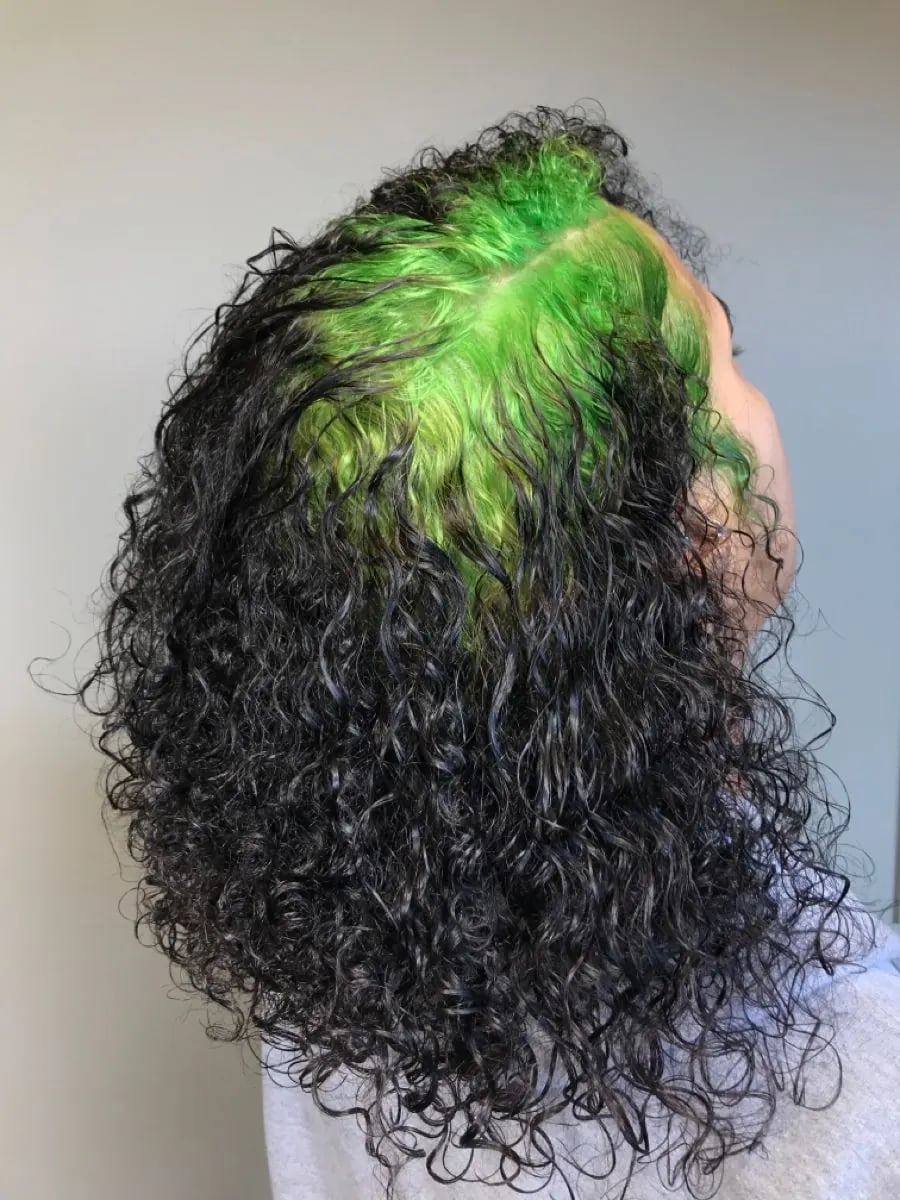
Neon green roots melting into black ends is a color placement that demands attention and a realistic outlook on upkeep. The shoulder-length cut uses layers to prevent the thick, curly texture from becoming a single heavy block of color. The middle parting and back view reveal the full contrast: the bright green at the root area against the dark lengths.
The wear reality is that neon green roots are high-maintenance. The color at the roots requires lifting to a pale blonde before the neon shade can be applied, and new growth will show as a dark line at the root in about three to four weeks. A root-touch appointment every four to six weeks is the standard rhythm to keep the contrast sharp. In between, a color-depositing conditioner in neon green helps refresh the shade. Ask your colorist for: shoulder-length curly hair, neon green roots with black ends. The air-dried styling is straightforward: a curl-defining cream, scrunch, and let it dry naturally.
Platinum Blonde With Neon Green Ends Shag
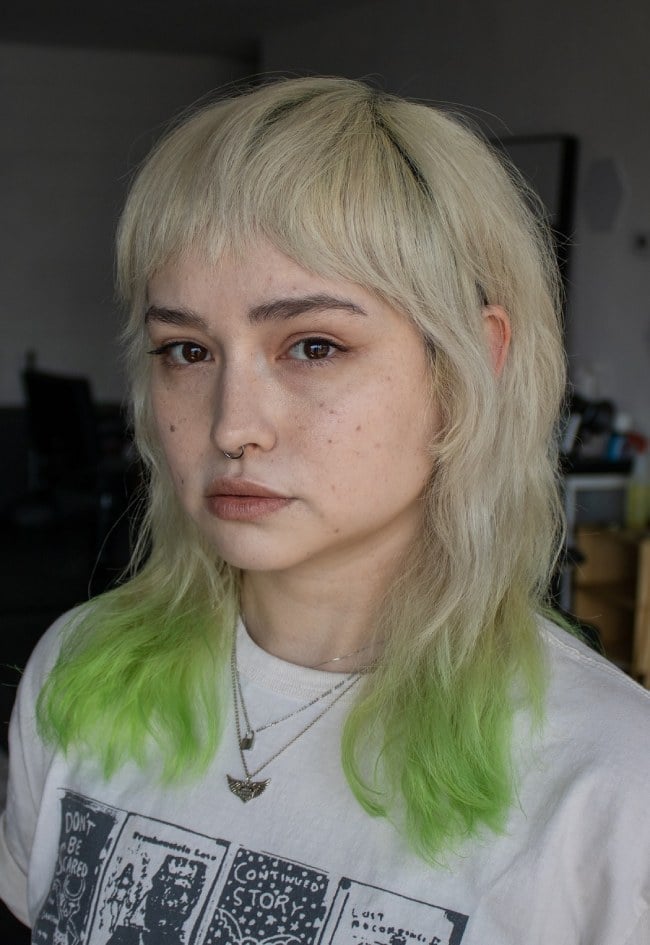
A full-bang shag with choppy layers and a side parting reads like a classic rockabilly cut until you notice the neon green tips. Where a solid green shag can feel like a single note, this version lets the platinum base do the heavy lifting and saves the color for a punchline at the ends. Ask your stylist for a medium shag with full bangs, platinum blonde base with neon green ends. A texturizing spray keeps the layers from falling flat, and the cut needs a trim every six to eight weeks to hold the shape.
Lime Green and Bright Green Highlights
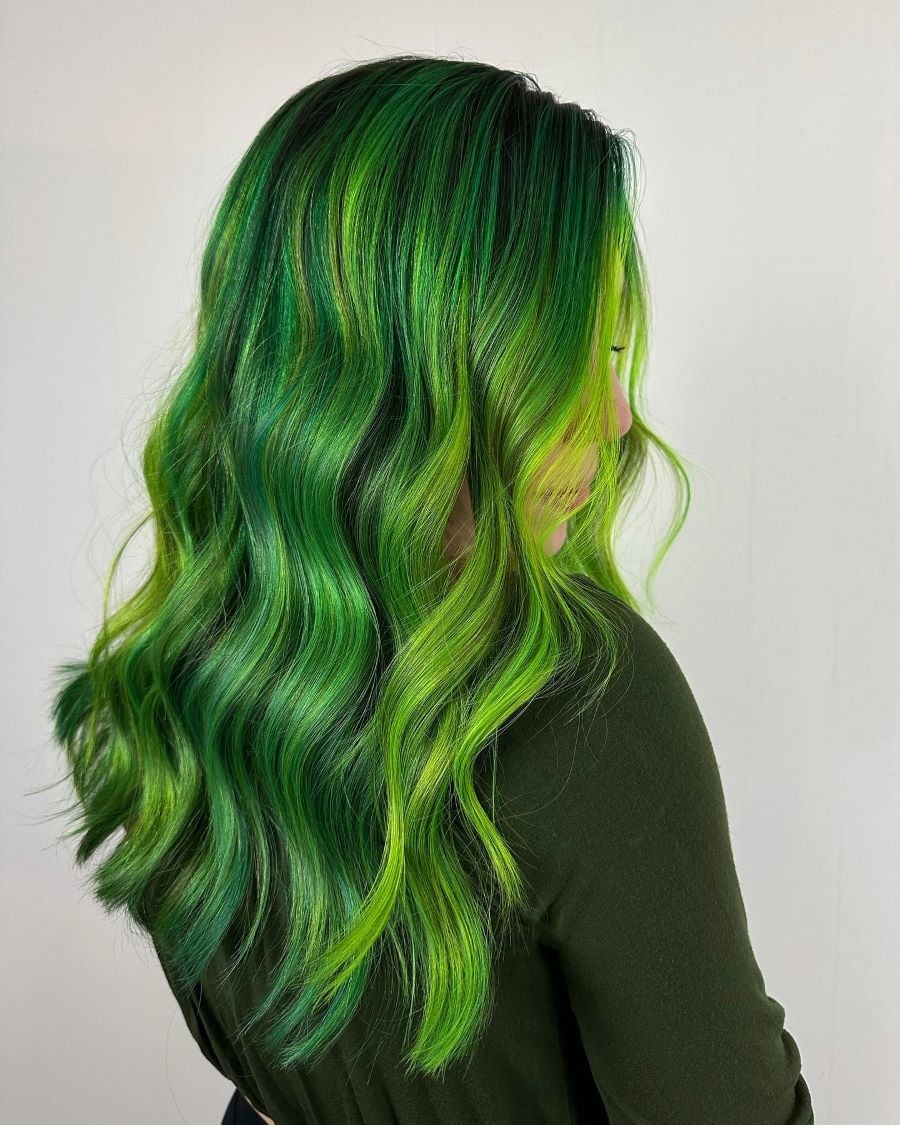
Vibrant lime and bright green highlights on a mid-back length with long layers create the kind of dimensional color that shifts from chartreuse to kelly green depending on the light. The trade-off is that vivid green fades faster than most fantasy shades, especially on a light base. A salon application is non-negotiable, because the bleach work underneath has to lift evenly for the lime to register. Ask your colorist for mid-back length hair with long layers, lime green and bright green highlights. The honest drawback is that you will be back for a gloss or a root touch-up in about six weeks if you want the intensity to stay.
Dark Green With Lighter Green Highlights
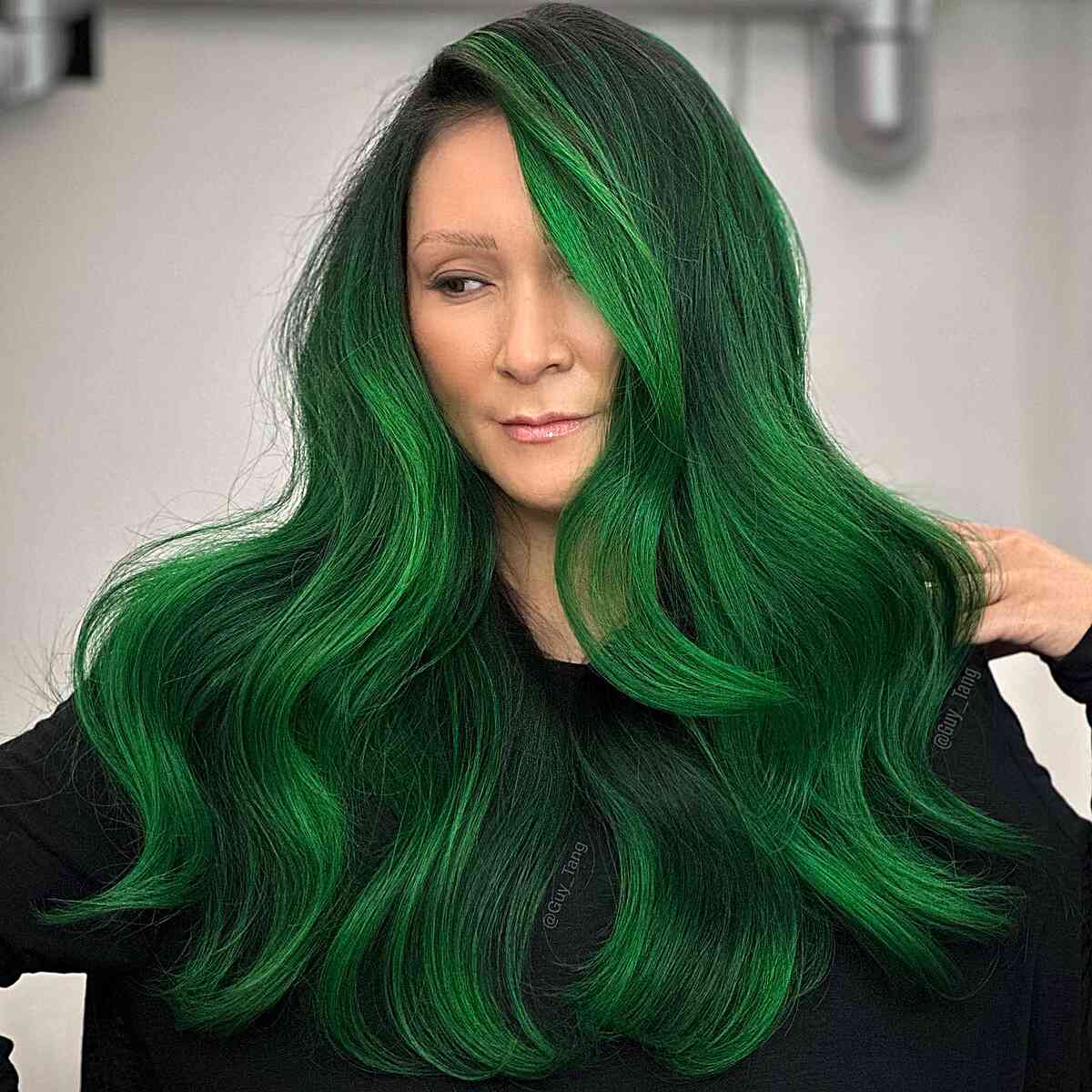
How do you get green to have visible richness? The answer is contrast. A dark green base with lighter green highlights on long layers gives the color depth without needing a full bleach. The highlights add dimension while the base stays grounded, which means the grow-out is far more forgiving than a solid neon shade. Ask your colorist for: mid-back length hair with long layers, dark green base with lighter green highlights. That is the full script. Thick wavy hair holds the layers well, but the real trick is telling the colorist to keep the highlights fine and spaced so the dark green stays dominant.
Deep Teal Green Loose Waves
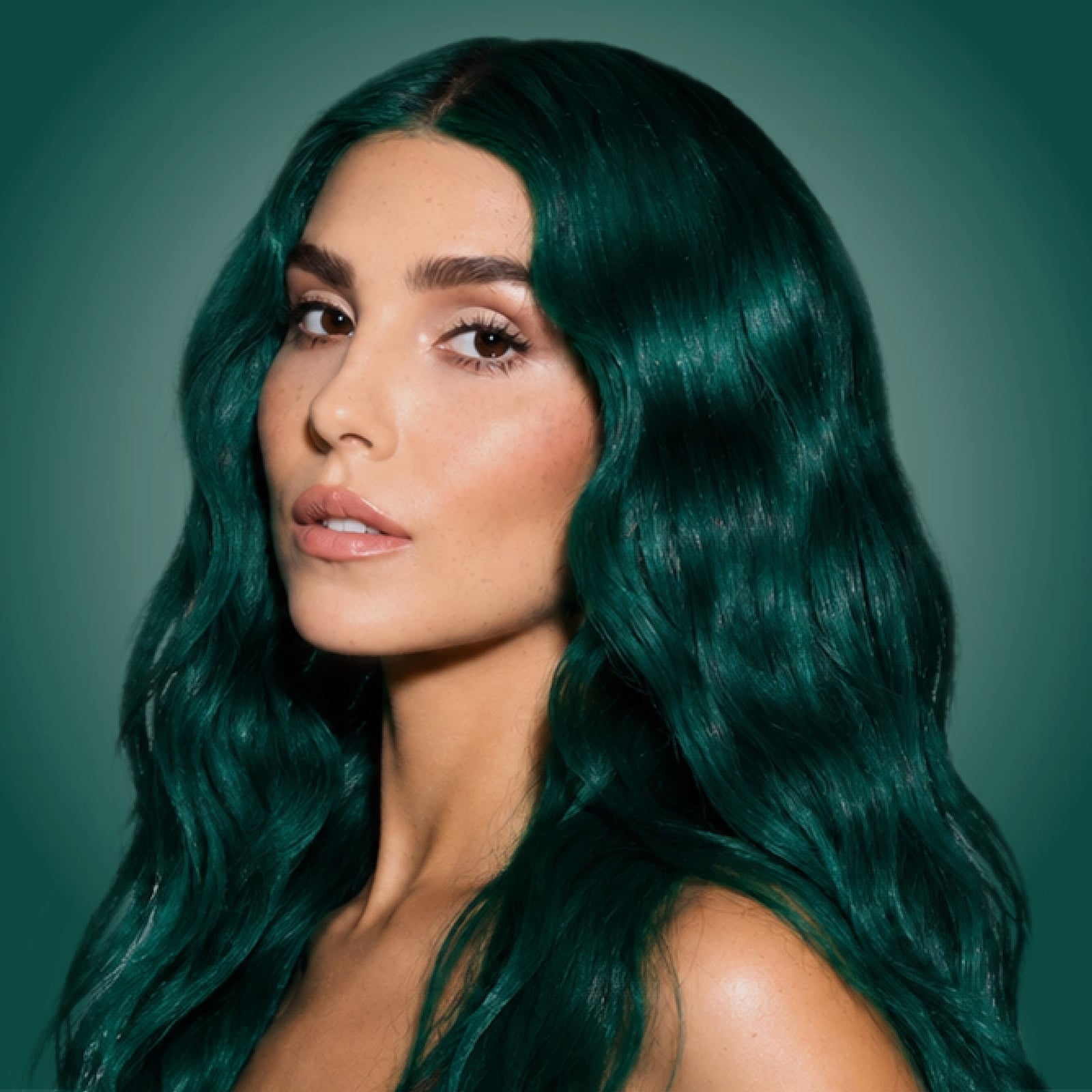
The loose waves here are the result of a specific sequence: a large-barrel curling iron, a cool-down period in the curl, and a wide-tooth comb run through once the hair is room temperature. The deep teal green color on mid-back length with long layers means the wave pattern reads clearly because there is no heavy highlight placement to muddy the silhouette. Ask your stylist for mid-back length hair with long layers in deep teal green. Even waves keep the look balanced, and medium density hair holds the bend without collapsing.
Deep Green Layered Mid-Back Hair
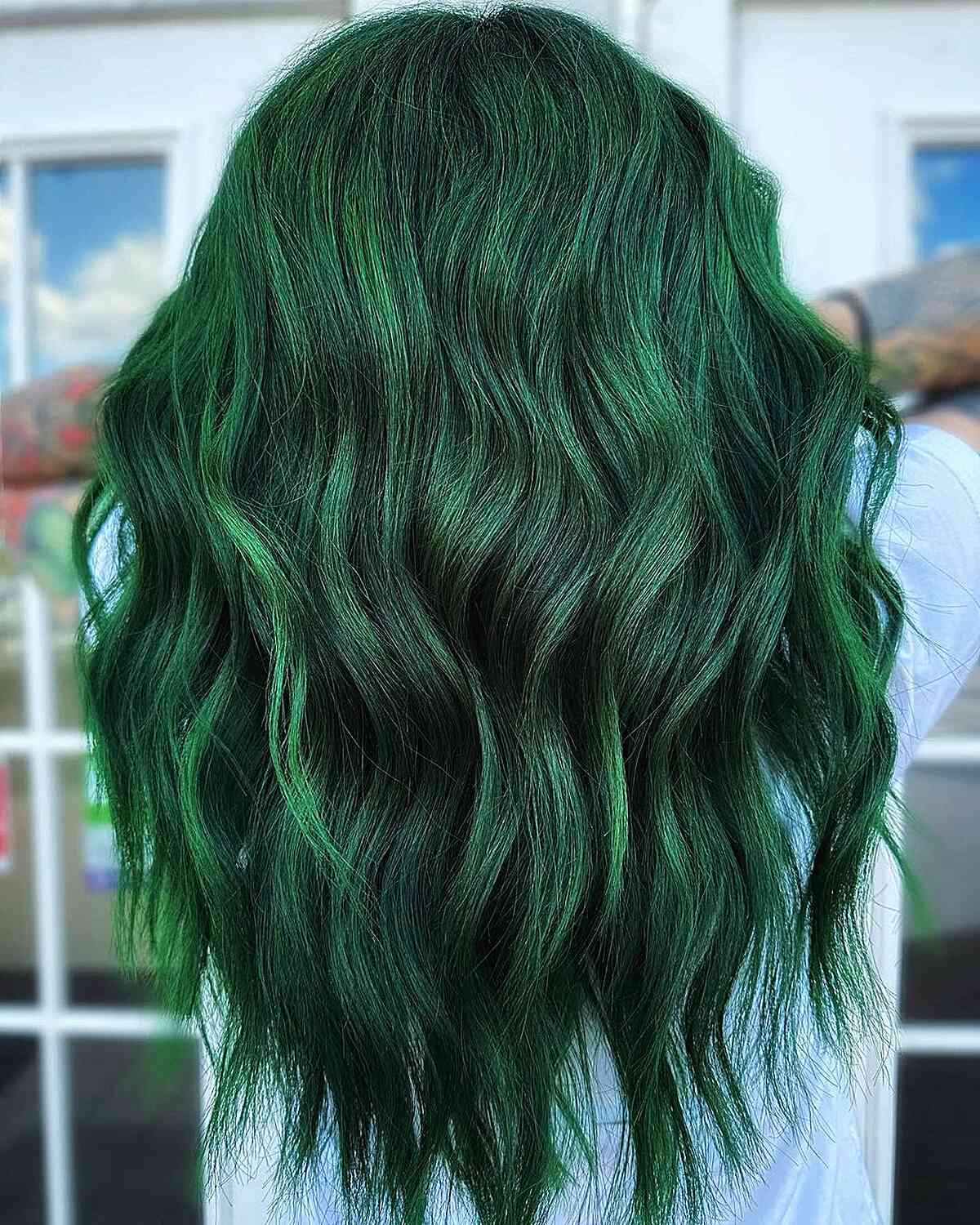
Fine hair can look defeated by too much length, but long layers on a mid-back cut give it movement without sacrificing density. The deep green color here reads almost black in shadow and only reveals its undertone in direct light, which is useful if you want a green that does not announce itself from across a parking lot. Ask your stylist for mid-back length layered hair in deep green. The back view shows the layering clearly, and a middle parting keeps the weight distributed evenly. Fine wavy hair benefits from the lift at the crown that long layers provide.
Dark Green With Lighter Highlights, Mid-Back
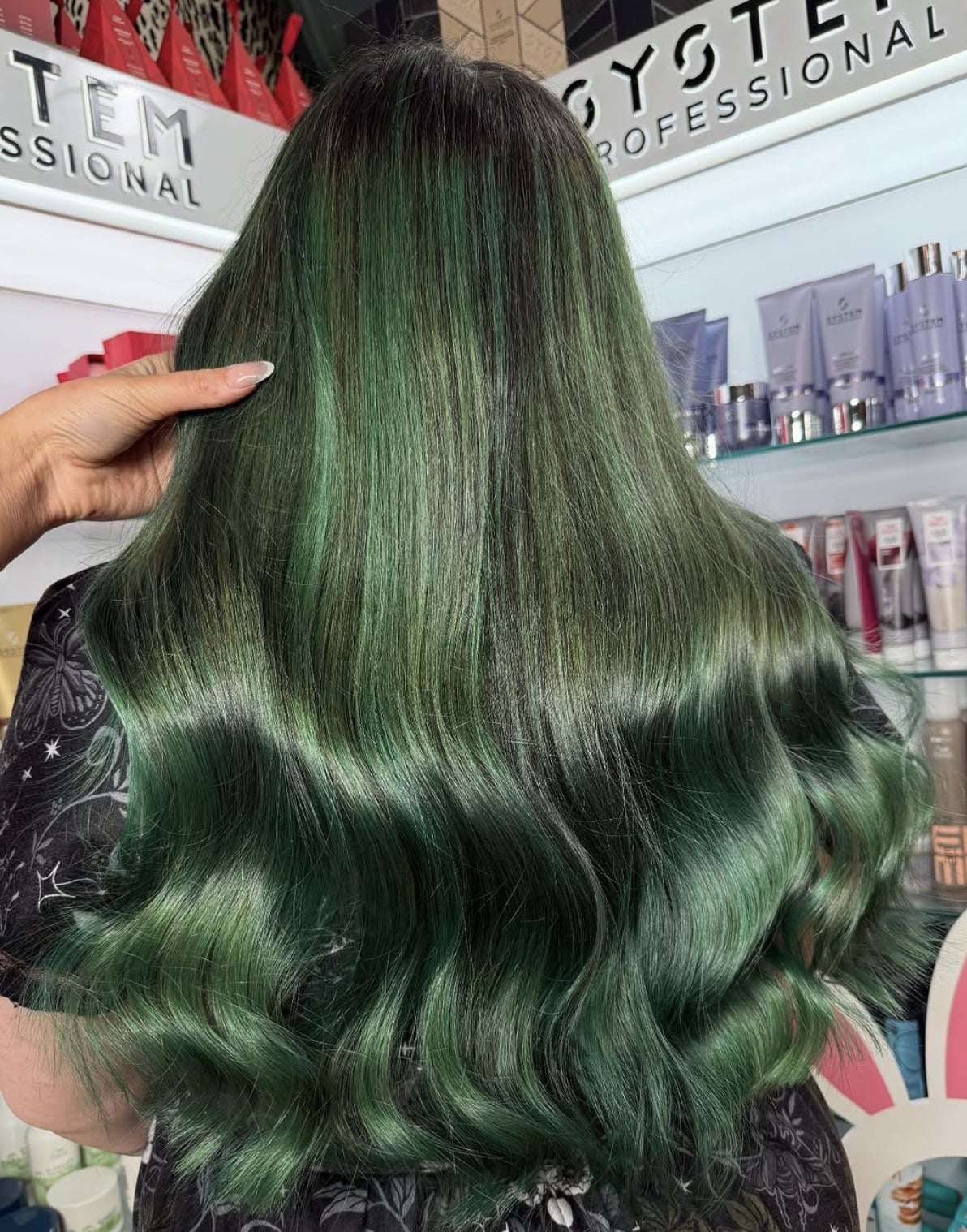
Ever wonder how to keep dark green hair from looking flat? The answer is lighter highlights woven through long layers, which add dimension. This mid-back length cut relies on a thick, wavy texture to hold the shape and keep the loose waves from collapsing. Ask your colorist for: dark green base with lighter green highlights, mid-back layers. The highlights need a toner refresh every six to eight weeks, and a wave-enhancing product on damp hair before diffusing will define the waves.
The middle parting keeps the weight evenly distributed, so the layers stack properly through the back. Thick hair that tends to widen at the bottom benefits from this approach, because the long layers remove bulk while keeping the overall density. A deep green base hides fading better than pastels, but the lighter pieces will shift toward gold over time, which is why regular toning is essential.
Brown With Subtle Green Highlights
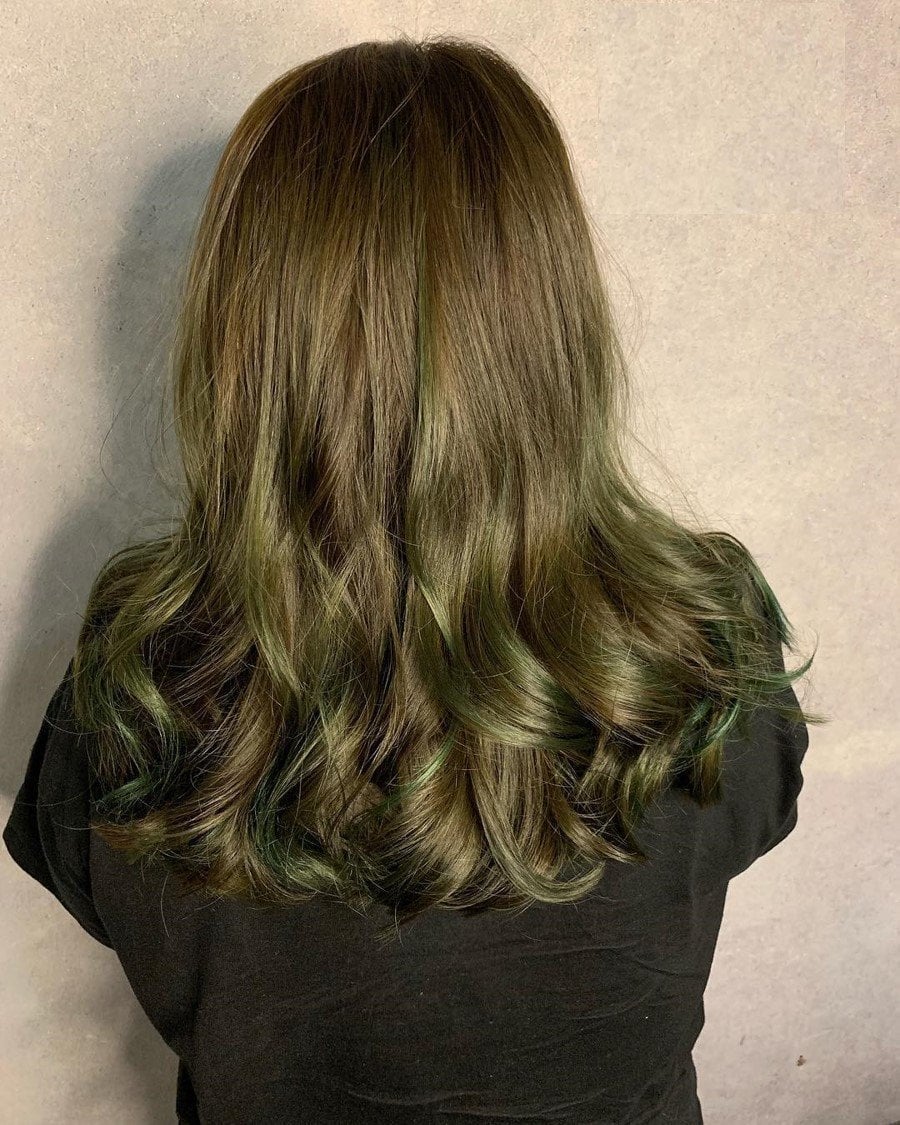
This is the difference between green hair that says something and green hair that whispers. A medium brown base with scattered green highlights keeps the overall look natural, while the subtle green is an accent for lower commitment. Long layers and loose waves with a middle parting allow the highlights to catch light at different angles. Ask your colorist for: medium brown with subtle green highlights, mid-back loose waves. If you want green without the upkeep of a vivid shade, this version works under office lighting and surprises when you turn your head.
Dark Gray to Seafoam Green Ombre
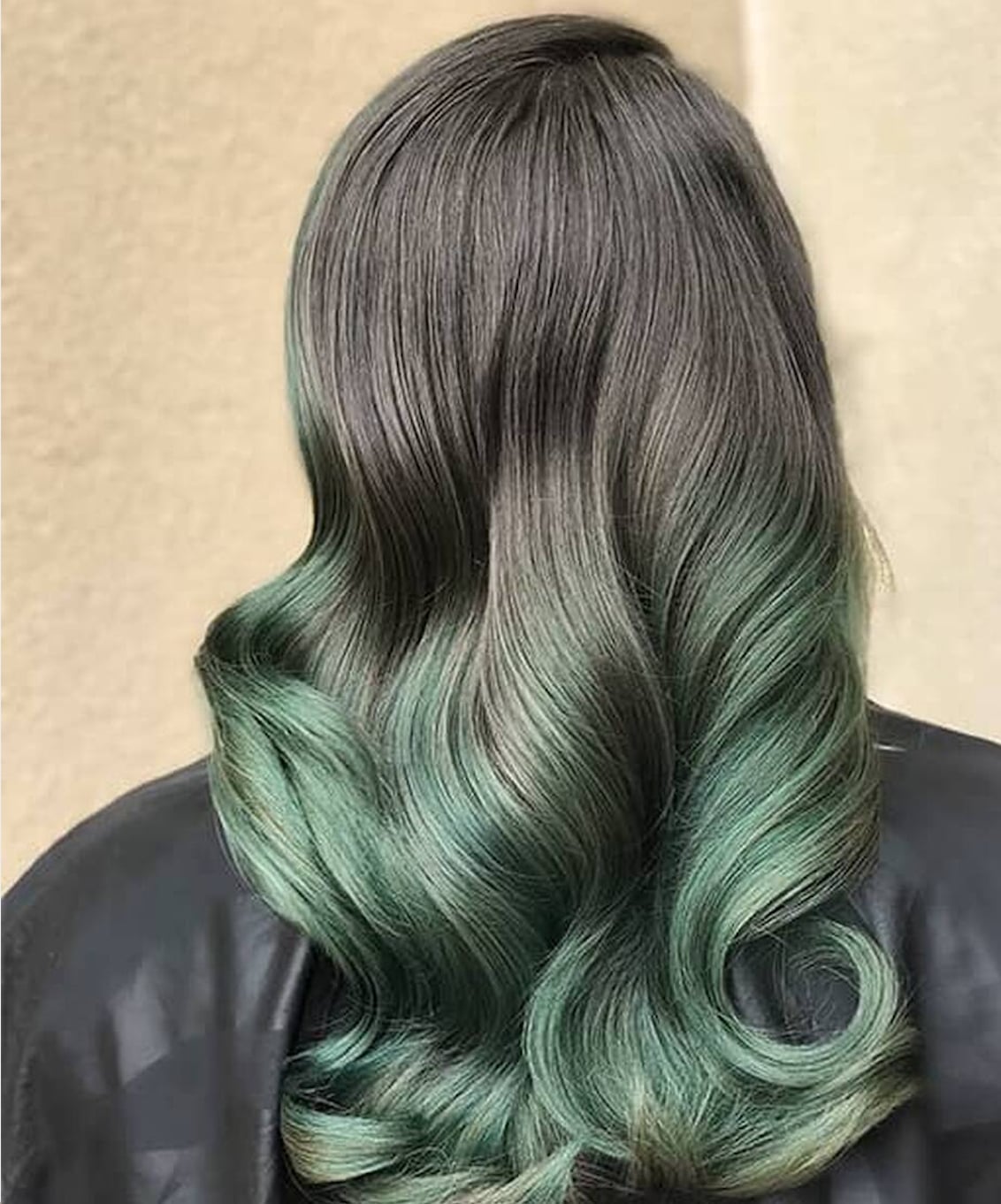
Who should skip this one? Anyone who wants a low-maintenance green or has heavily damaged ends, because the lightening required for seafoam takes a toll. The middle parting and mid-back length work best on medium-density hair that can support the weight of the layers without looking stringy. A color-safe shampoo is not optional here, it is the difference between seafoam and swamp.
Emerald Green With Darker Roots
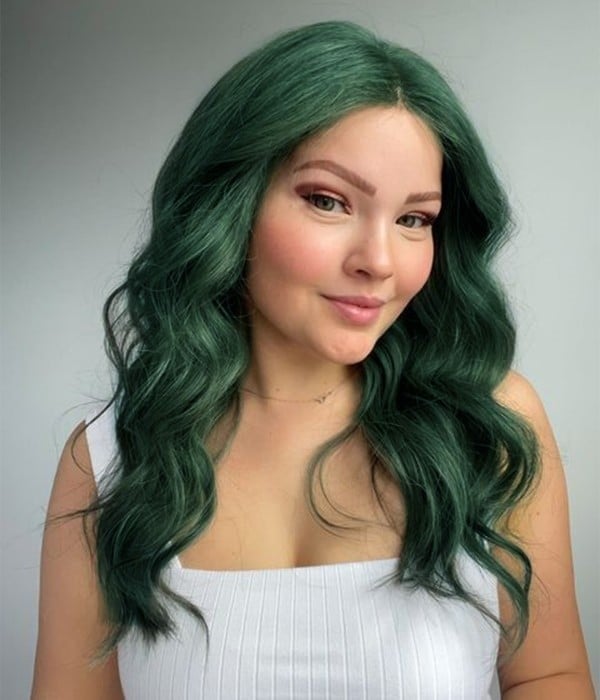
How do you get emerald green that looks expensive? The trick is a darker root shadow that grounds the color and gives it depth. This mid-back length cut uses long layers and curtain bangs, with a side parting that softens the overall shape. The emerald shade is glossy and rich, while the darker roots prevent that harsh line when growth appears. Ask your colorist for: emerald green with dark root shadow, curtain bangs, long layers. For the stylist, specify a root blend that is about an inch of depth before the green starts, and request a gloss finish on top to lock in the shine. The curtain bangs should be cut to hit the cheekbones and blend into the long layers, so they frame without overwhelming.
Dark Green to Emerald Green Ombre Lob
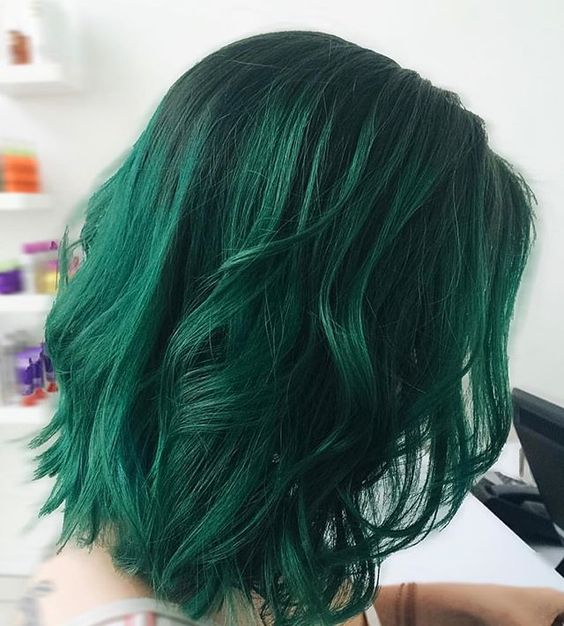
A collarbone lob with an ombre from dark green to emerald creates the illusion of volume because the lighter ends catch light while the darker root recedes. The layers are cut to stack through the back, and the side-swept styling gives movement without requiring heat styling every day. Ask your colorist for: collarbone lob with layers, dark green to emerald green ombre. The technique involves a shadow root at the crown, then a gradual lightening through the mids and ends before applying the emerald tone. This keeps the regrowth less obvious and the color from looking flat. Medium-density wavy hair is the ideal canvas, as the layers will not thin out the silhouette.
Emerald Green With Lighter Streaks

An emerald green base keeps the drama, while lighter green streaks add dimension instead of flat color. The long layers are cut to move with wavy, medium density hair, and the face-framing pieces do the real work here. They draw attention to the cheekbones and soften a square jaw, and on a round face, the length below the chin helps elongate. The middle parting keeps everything balanced, so most face shapes can wear this without a fight.
Ask your colorist for: long layers, emerald green with lighter streaks, face-framing pieces. The streaks need a gloss or toner every six to eight weeks to stay bright, because green fades faster than most people expect. At home, a round brush blow-dry will keep the waves defined without frizz. This color requires a salon visit, so budget a full day for the lightening and toning process.
Black Base With Bright Green Streaks
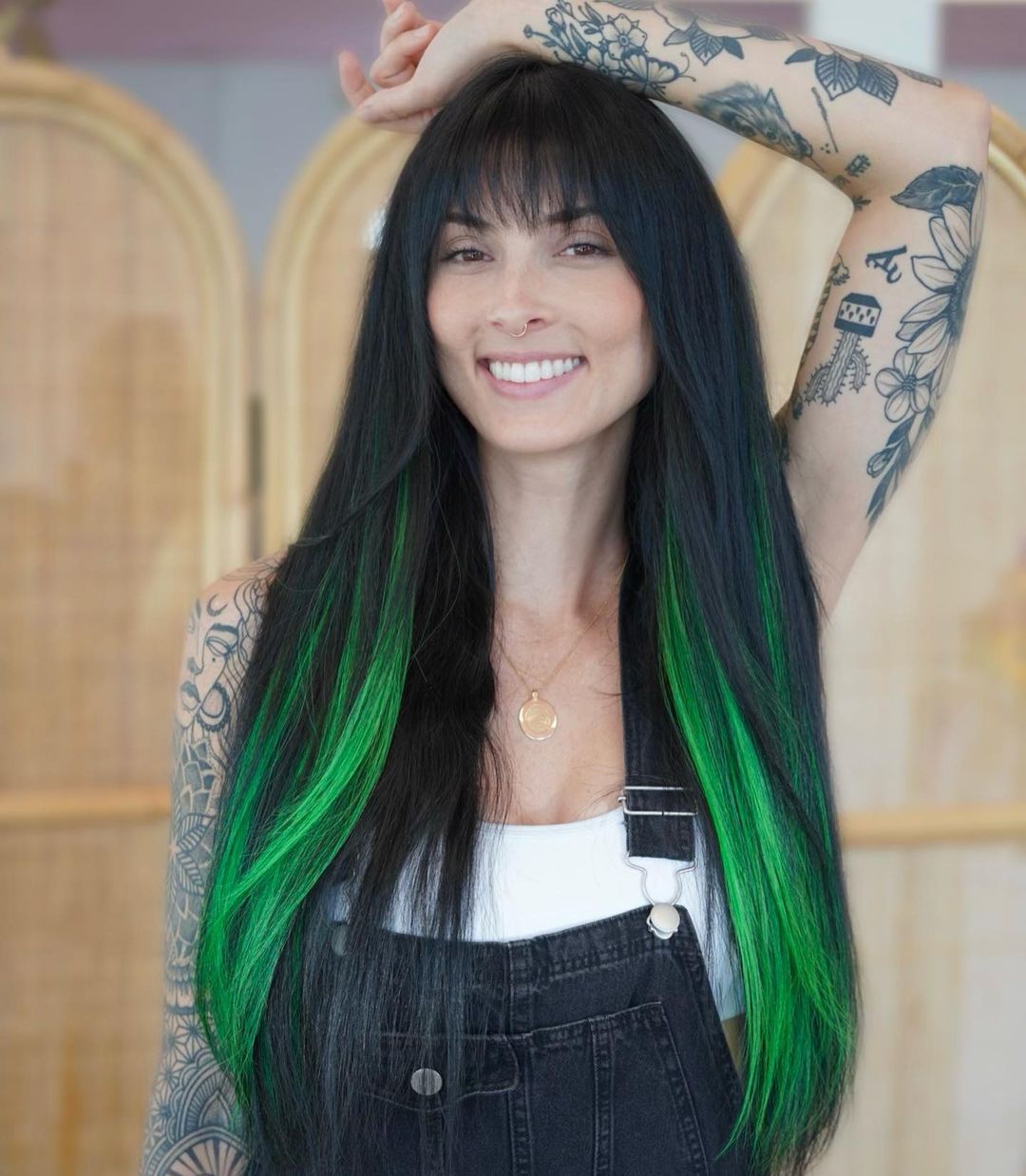
How long will those bright green streaks actually stay vivid? On a black base, the answer is about six weeks before they start shifting toward a duller teal. The streaks sit on the lower lengths of this mid-back cut, which means the regrowth is hidden up top, but the color itself needs regular toning to keep its punch. The full bangs frame the face and pull the whole look together, while the straight, thick texture holds the sleek blowout shape all day.
Ask your colorist for: mid-back length, black base with bright green streaks, full bangs. A flat iron will keep the finish glossy, and a purple shampoo once a week helps the green stay true. The long layers keep the weight moving so the length does not feel heavy. Plan for a salon touch-up every eight weeks to refresh the streaks and keep the black base deep.
Final Thoughts
The biggest decision is how much green you want. For a subtle shift, ask for green highlights or balayage on a dark base. For a statement, go all-over vibrant on a short cut or a blunt bob. Fine hair keeps its shape better with one blunt baseline; curly hair needs deeper tones to avoid looking washed out.
- Maintain vibrant green with color-depositing shampoo every other wash.
- Deep condition weekly to keep colored hair from drying out.
- Rinse with cool water to slow fading.
- Schedule root or highlight touch-ups every 4 to 6 weeks.
Embrace the green, from subtle hints to full-on emerald.