Honey blonde balayage layers warm golden and caramel tones over a darker base, so the grow-out line stays soft. The technique has shifted toward finer, face-framing pieces that work with natural texture rather than against it.
These 30 ideas cover lengths from ultra-long to collarbone and textures from stick-straight to curly. Honey blonde balayage is a strong choice for fine hair that needs dimension without weight, or for anyone who wants a low-upkeep color that does not demand a gloss every four weeks. The collection shows how the same warm tone reads differently on a dark base versus an ash base, so you can pick the contrast level that fits your starting point.
Ultra-Long Layers With Golden Honey Blonde Balayage
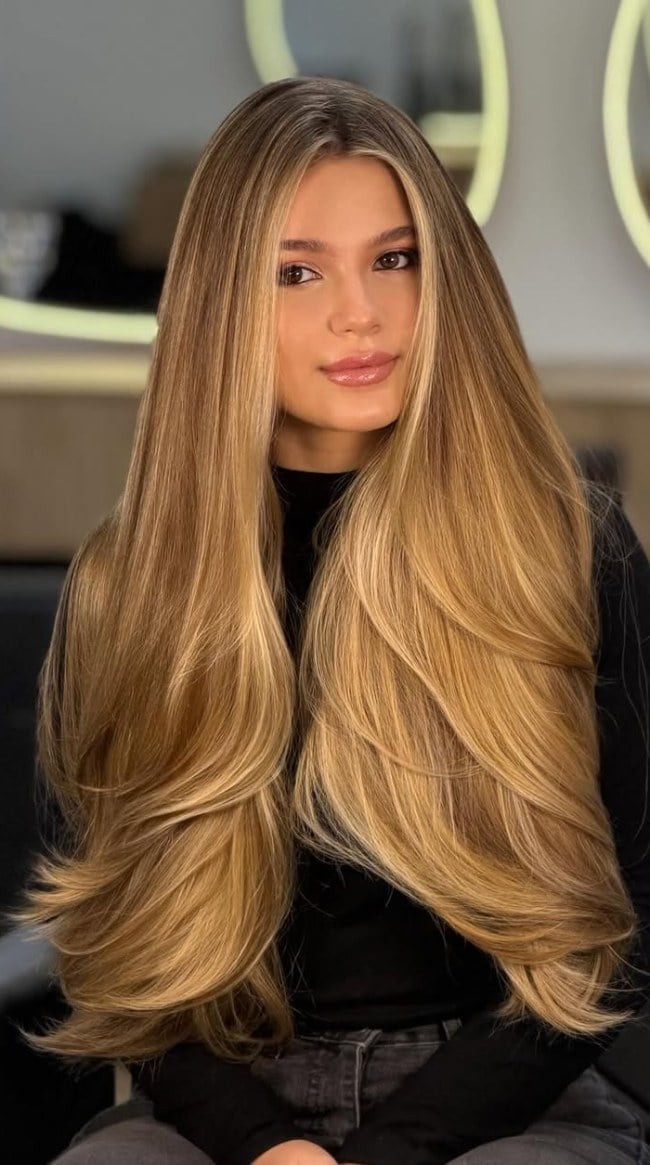
The golden honey blonde balayage here works because it lands on ultra-long cascade layers, so the color has room to build from a warmer base into lighter highlights that catch the eye. The middle parting lets those layers fall symmetrically, and the voluminous blowout with soft waves gives the whole length a sense of movement that a flat finish would kill.
This setup needs thick hair, since ultra-long layers rely on weight to keep their shape and the volume from the blowout is doing a lot of the work. It suits oval and longer faces by adding width at the sides through the waves. Ask your colorist for ultra-long hair, cascade layers, golden honey blonde balayage. Keep the ends healthy with a trim every ten to twelve weeks, and use a large round brush when you blow out to maintain that soft wave.
Mid-Back Balayage With Face-Framing Highlights
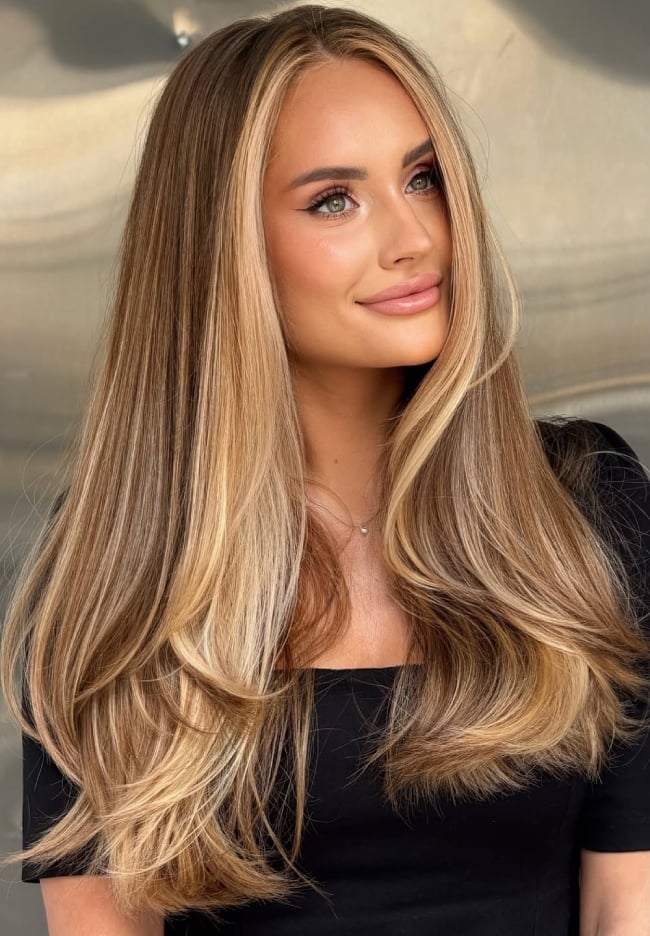
Want that bright pop around your face without going full blonde? The face-framing highlights here are the answer, lifting the honey blonde balayage where it matters most while the mid-back length keeps the rest of the color grounded in warm, blended tones.
This style suits thick, wavy hair at mid-back length, and the soft pieces around the face help round out square or angular jawlines. Ask your colorist for mid-back length, layers, honey blonde balayage with face-framing highlights. When you style, run a smoothing serum through dry hair to keep the shine, and plan to trim the layers every eight to ten weeks so those face-framing pieces stay sharp.
Layered Mid-Back With Honey Blonde Gradient
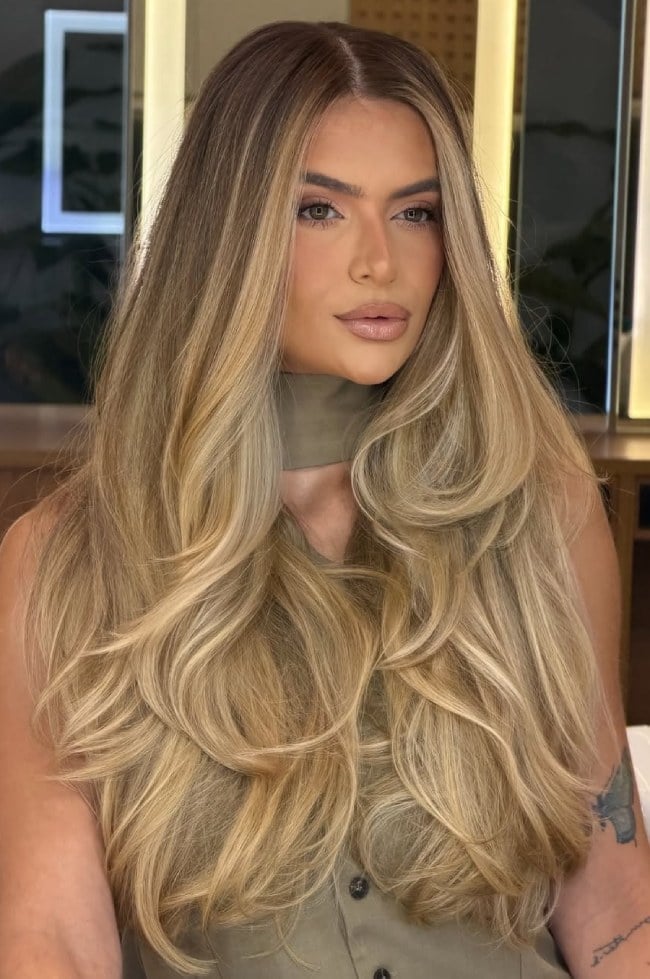
The balayage here is a textbook gradient: the colorist hand-paints warm honey and blonde tones from the mid-lengths down, leaving the base darker at the roots so the payoff concentrates toward the ends. On mid-back layers with a voluminous blowout, that soft transition reads as natural depth rather than a stripe. It suits thick, wavy hair and most face shapes, since the gradient and the middle parting balance the eye. Ask your colorist for mid-back length layers, honey blonde balayage with tonal gradient. To keep the lift visible, use a volumizing spray at the roots before drying, and trim every eight to ten weeks so the ends stay full.
Mid-Back Layers With Face-Framing Balayage, Wavy
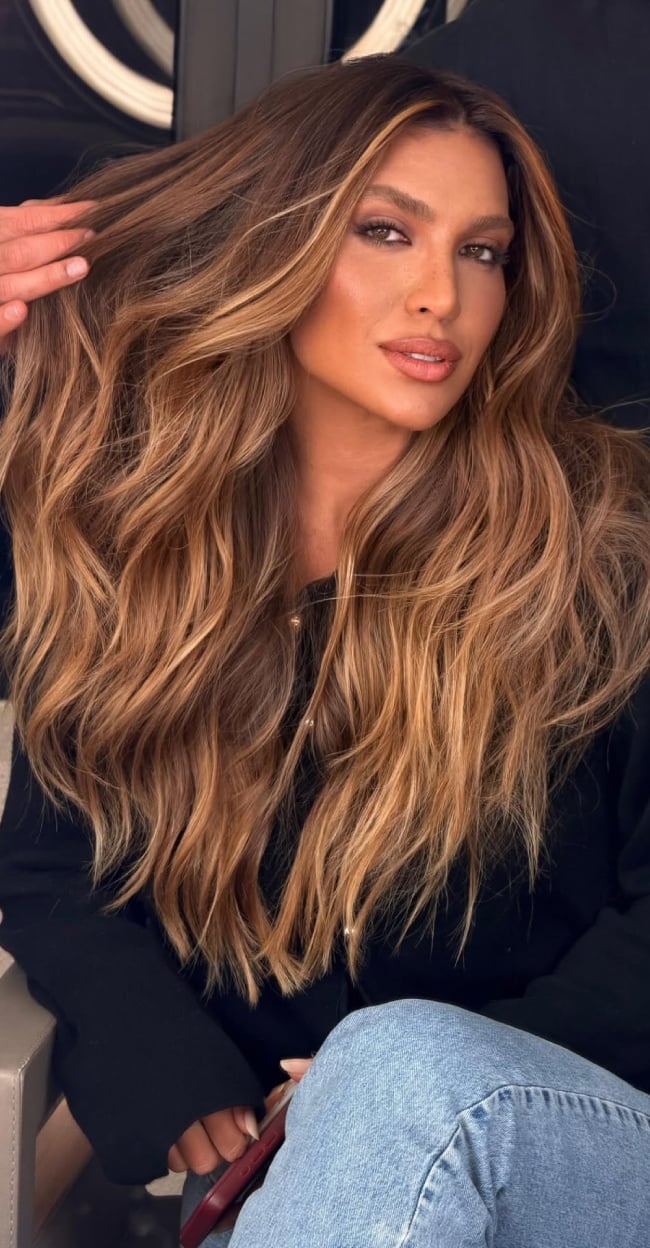
Set this against a one-length blowout and the difference is clear: the soft layers here give the honey blonde balayage room to move, while the face-framing highlights pull the light forward. The middle parting keeps it symmetrical, and the voluminous wave makes the mid-back length feel fuller than it is.
Day to day, this style holds up because the layers hide grow-out and the waves disguise a missed touch-up. It suits thick, wavy hair and brightens round or oval faces by drawing attention up. Ask your colorist for mid-back length, soft layers, honey blonde balayage with face-framing. Always use a heat protectant before you blow out, and book a trim every eight to ten weeks to keep the shape from turning into a triangle.
Mid-Back Wavy Hair Air-Dried Balayage
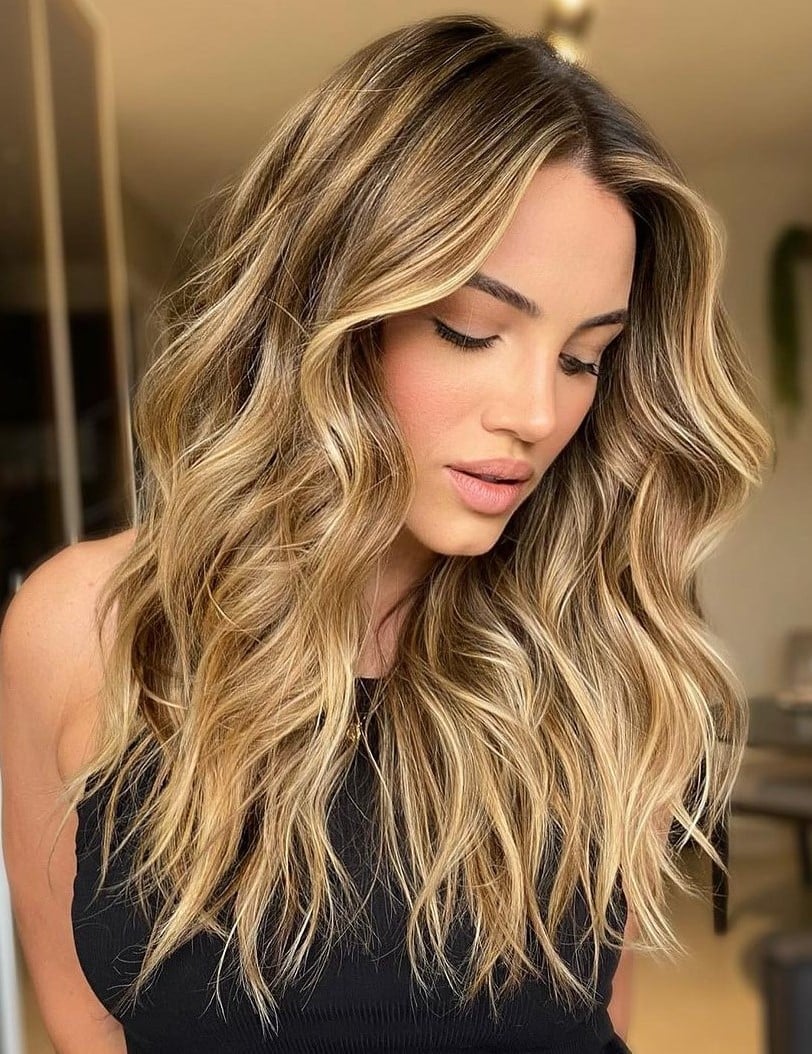
What makes this work is what it skips: no heat styling, no perfect wave, just the natural texture doing its thing. The honey blonde balayage blends warm blonde and darker tones through the mid-back length, and the air-dried finish lets those two shades sit visibly next to each other, which is where the depth comes from.
The visible layers add movement, so the style lands somewhere between polished and lived-in. It suits thick, wavy hair and anyone who wants a low-effort routine. Ask your colorist for mid-back length, layers, air-dried honey blonde balayage. A conditioner on damp hair keeps the wave defined as it dries, and a trim every ten to twelve weeks keeps the ends from splitting. This is the color you pick when you would rather sleep in than pick up a round brush.
Mid-Back Ash Blonde With Honey Highlights
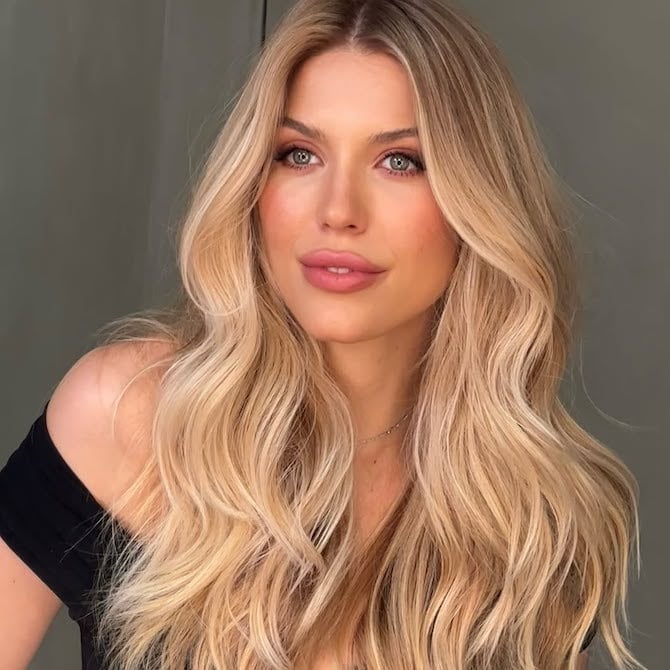
If the choice is between a flat, all-over ash and a warm honey blonde, this mid-back wavy blowout splits the difference. The ash blonde base keeps the roots cool and modern, while honey highlights woven through the thick, wavy layers bring the warmth that an ash-only tone lacks. A middle parting lets each side mirror the other, and the voluminous blowout shows off the contrast with every movement. Ask your colorist for: mid-back length, ash blonde base with honey blonde highlights. This works best on thick, wavy hair that can carry the dimension without looking busy. A purple shampoo once a week keeps the ash from going brassy, and a trim every eight to ten weeks preserves the shape.
Mid-Back Ash Base With Honey Balayage, Wavy
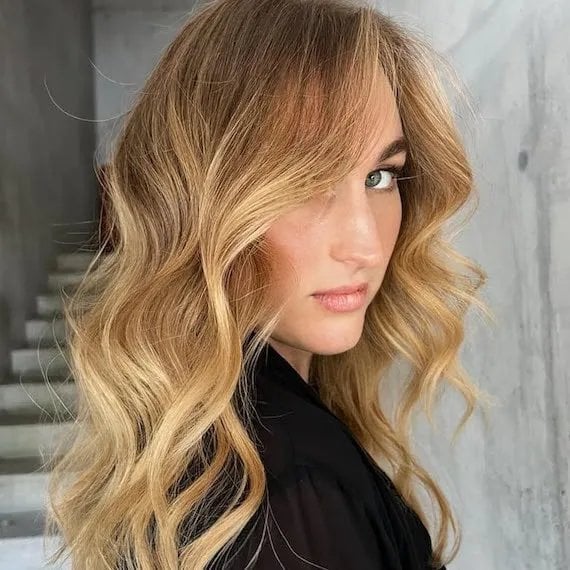
The trick to this cool ash honey blonde balayage is that the honey is painted on by hand, not foiled. Your colorist starts with a cool ash blonde base at the roots, then sweeps the honey blonde color down to the ends, leaving the top a shade darker. The hand-painted placement means the transition is soft, not striped, and the thick, wavy texture catches the lighter pieces at different angles. A voluminous blowout shows the gradient in full. Ask your colorist for: mid-back length, cool ash blonde base, soft honey blonde balayage. The ash base tones down the honey so it reads as natural, not brassy, which is why this works for a modern, cool-toned approach. Keep the ends hydrated with a conditioner, and trim every eight to ten weeks to keep the layers moving.
Mid-Back Honey Balayage With Darker Roots
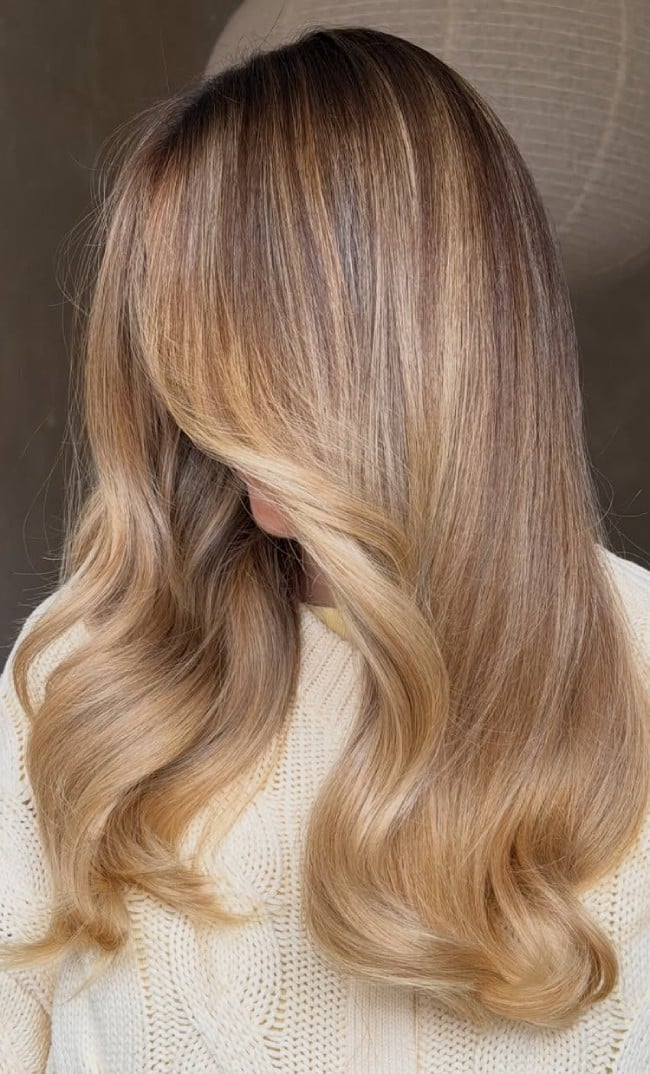
What makes this look so wearable is the seamless transition from darker roots to lighter ends. The honey blonde balayage starts a few inches past the root, so the grow-out is gradual, not a hard line. Back view, the loose waves show how the color deepens at the top and brightens toward the mid-back ends. A middle parting keeps the weight evenly distributed, and the thick, wavy texture gives the blend plenty of surface to reflect light. Ask your colorist for: mid-back length, honey blonde balayage with natural dark roots. Because the roots stay dark, you can stretch the time between color appointments. A gloss treatment every six to eight weeks keeps the honey from dulling, and a trim every ten to twelve weeks keeps the ends clean without sacrificing the lived-in feel.
Mid-Back Layers With Honey Blonde Transition
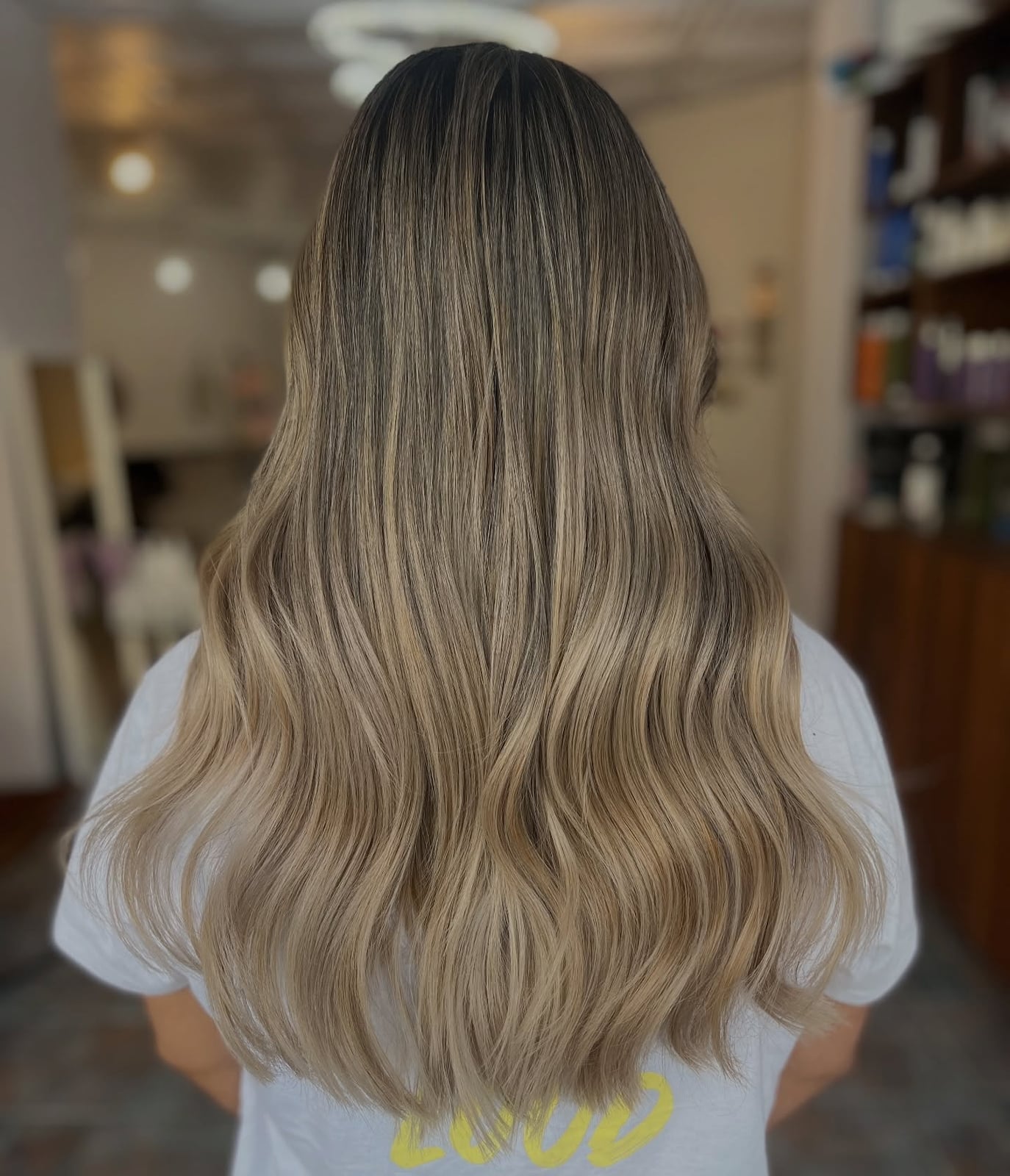
From the back, the transition is the point: a dark root that softens into honey blonde balayage by the time it reaches the mid-back ends. The soft layers are cut to carry that gradient, so the lighter color lands on the lower sections and the darker base stays up top. A middle parting frames the face, and the loose waves give the color movement, letting the honey shift with each bend. This is a lived-in color, built for someone who wants dimension without a harsh grow-out line. Ask your colorist for: mid-back length, soft layers, honey blonde balayage with root transition. The back view is where the blend does its job, so a texturizing spray on the waves helps the color look deliberate. Trim every ten to twelve weeks.
Mid-Back Waves With Dimensional Highlights
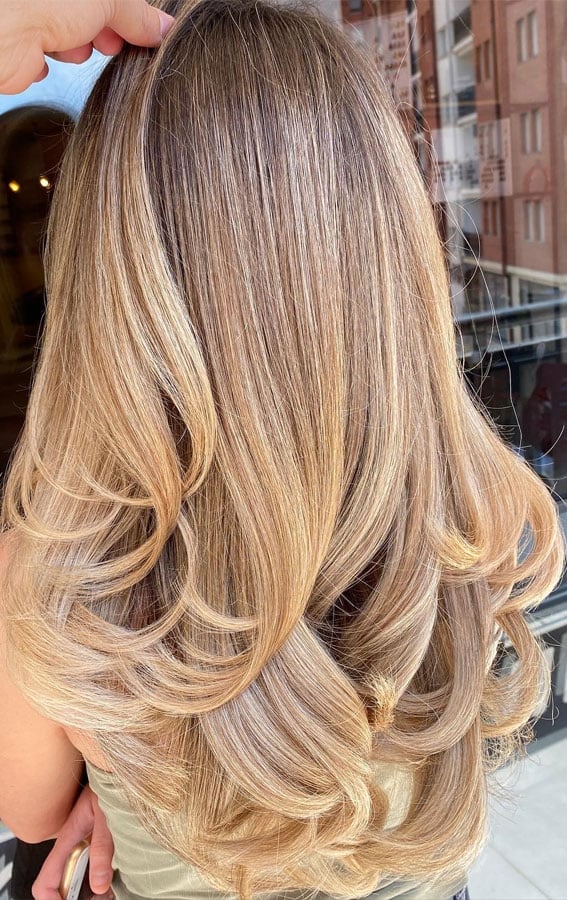
Wondering if a honey blonde balayage can work on your thick hair? This one says yes. The mid-back length carries loose waves, and the honey blonde balayage weaves lighter blonde strands through the thick texture, so the color doesn’t sit flat. Each wave catches the light differently, giving the hair a glossy, dimensional finish that a single-tone blonde can’t match. The back view shows how the layers move, and the dimensional highlights keep the color from looking like one solid block. Ask your colorist for: mid-back length, loose waves, honey blonde balayage with dimensional highlights. This suits thick, wavy hair best, since the texture gives the highlights room to read. A shine serum on the ends boosts the gloss, and a trim every eight to ten weeks keeps the shape from growing out.
Mid-Back Dark Base With Honey Balayage
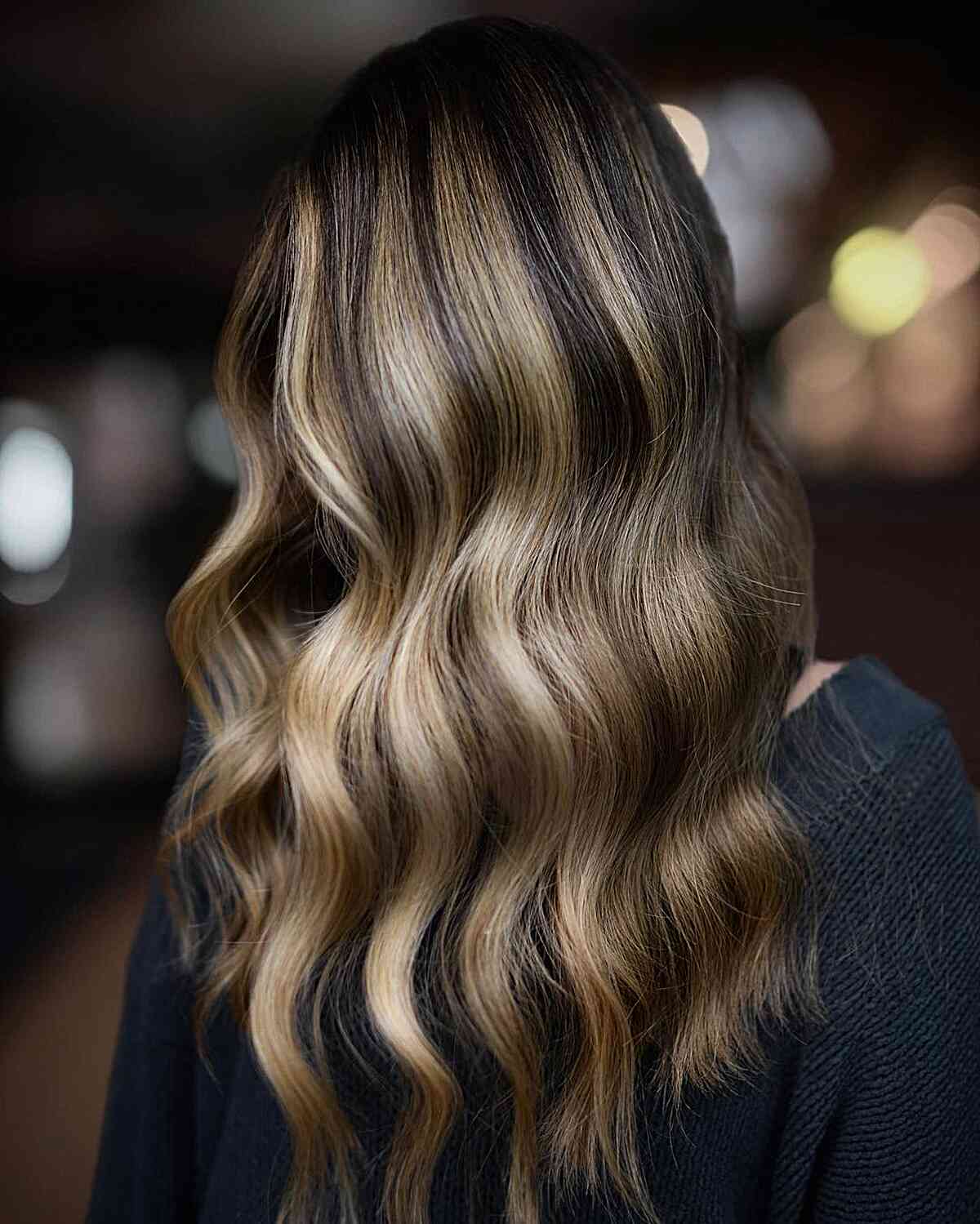
Going from a dark brown base to honey blonde takes more than one session, and that is the honest math of this balayage. The colorist paints the lighter pieces so they melt into the darker roots, which means you leave with dimension instead of a stripe, but you also leave with a commitment.
Thick, wavy hair at mid-back length carries the blend well, because the waves break up any hard lines. Ask your colorist for: mid-back length, dark brown base with honey blonde balayage. This is a salon-only job; the transition needs a skilled hand to avoid patchiness. The one drawback is the grow-out: it looks intentional for a while, then the contrast softens and you will want a toning appointment around the ten-week mark.
Mid-Back Dark To Honey Blonde Balayage, Wavy Blowout
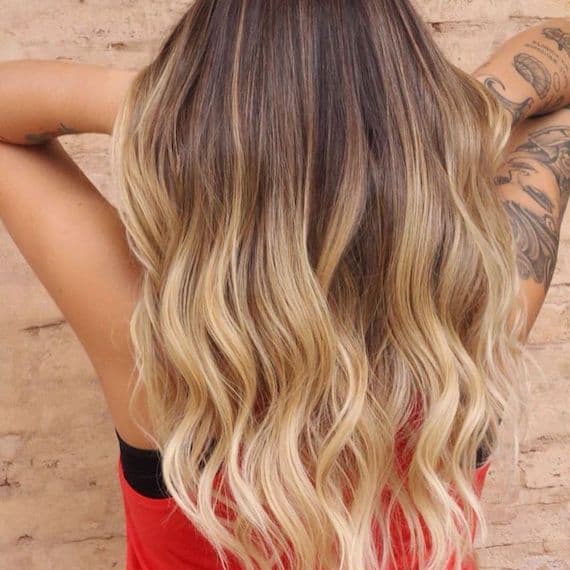
The design works because the colorist leaves the root area dark and concentrates the honey blonde from the mid-lengths down, so the wavy blowout shows off the gradient with every bend. Thick hair at mid-back length holds the shape and lets the transition read clearly. Ask your colorist for: mid-back length, dark brown to honey blonde balayage. The application takes a few hours, but the result is a lived-in color that grows out without a harsh line.
Mid-Back Dark Base With Honey Balayage, Long Layers
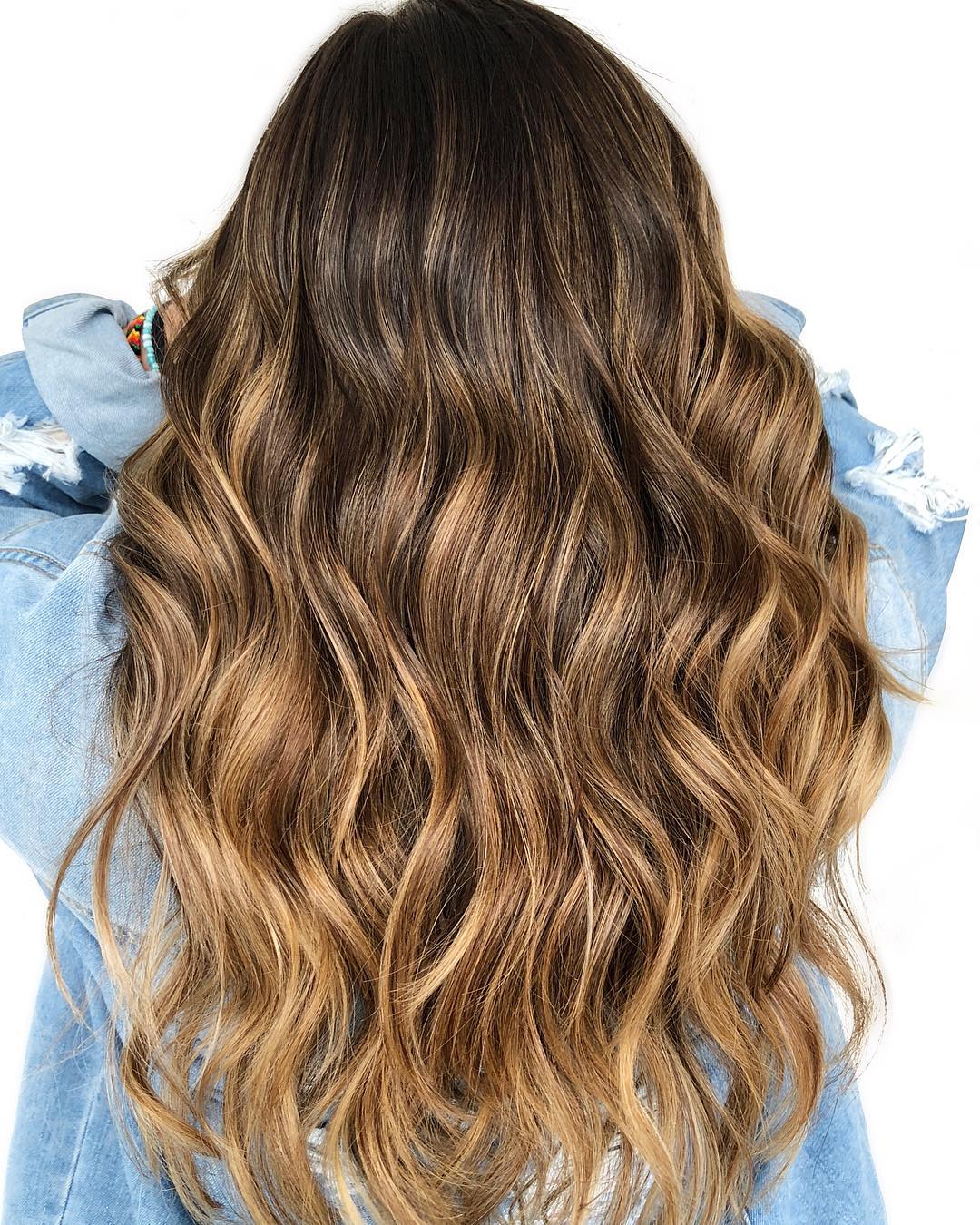
Long layers do more than add movement to thick, wavy hair: they give the honey blonde balayage somewhere to land. The lighter pieces catch the wave peaks, while the dark brown base stays at the roots, so the color reads as depth rather than a flat wash.
This finish wears well because the balayage technique means the roots stay natural as they grow, which stretches the time between salon visits. Ask your colorist for: mid-back length, dark brown base with honey blonde balayage. A leave-in treatment keeps the waves smooth, and a trim every ten to twelve weeks keeps the layers from getting straggly.
Mid-Back Dark To Honey Wave Transition
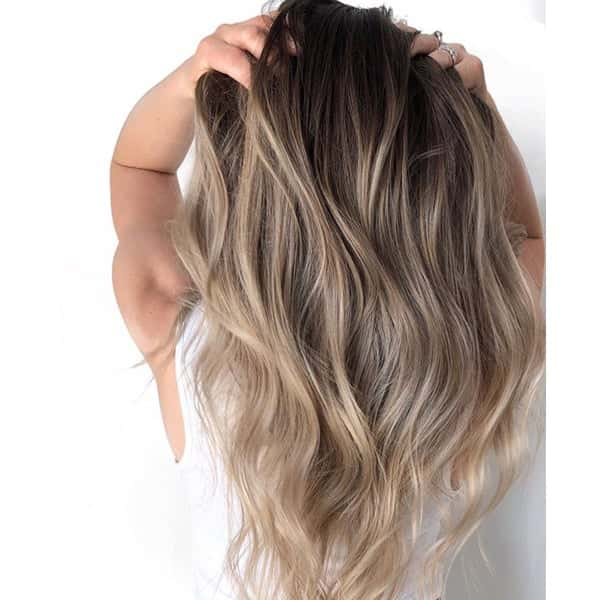
What keeps this from looking like a failed dye job? The transition happens gradually, from a dark brown root to a honey blonde at the ends, and the loose waves make the blend look natural. Medium-density wavy hair at mid-back length is the right canvas, because it lets the color show without overwhelming it.
Ask your colorist for: mid-back length, dark brown to honey blonde balayage, loose waves. The middle parting helps the face-framing pieces fall forward, which softens the overall effect. This is a low-maintenance color, but the ends will need a gloss treatment every few months to keep the honey tone from turning brassy.
Mid-Back Layers With Honey Bronde Balayage, Wavy
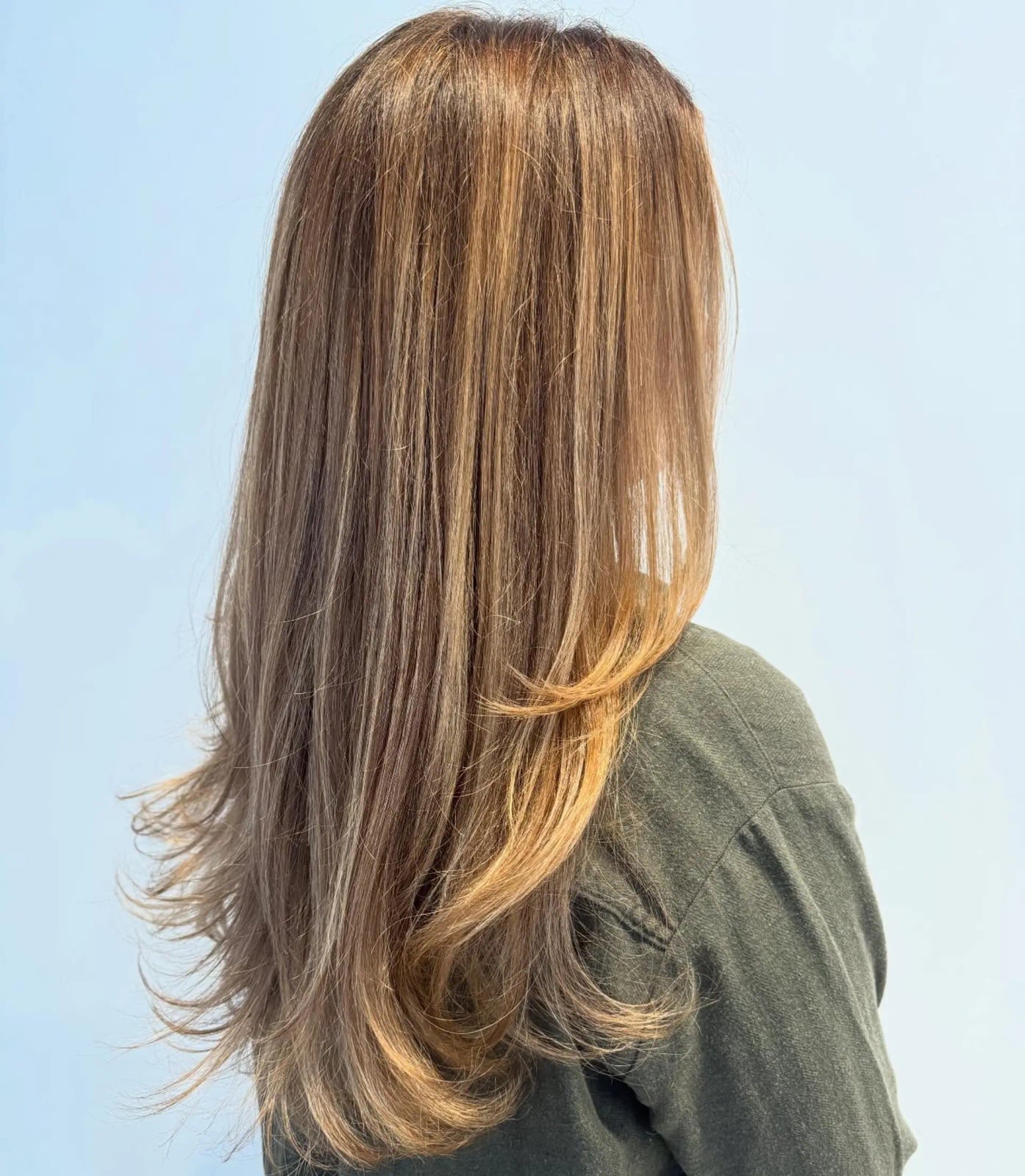
Honey bronde sits between brown and blonde, and on wavy, medium-textured hair it brings warmth without going full golden. Soft layers let the color move, so the balayage blends from richer tones at the roots to lighter ones at the ends.
Ask your colorist for: mid-back length, layers, honey bronde balayage. This shade suits anyone who finds ash tones too cool, since it brings warmth without red. A nourishing oil keeps the waves shiny, and a trim every eight to ten weeks keeps the layers from looking heavy.
Mid-Back Caramel Beige With Honey Highlights
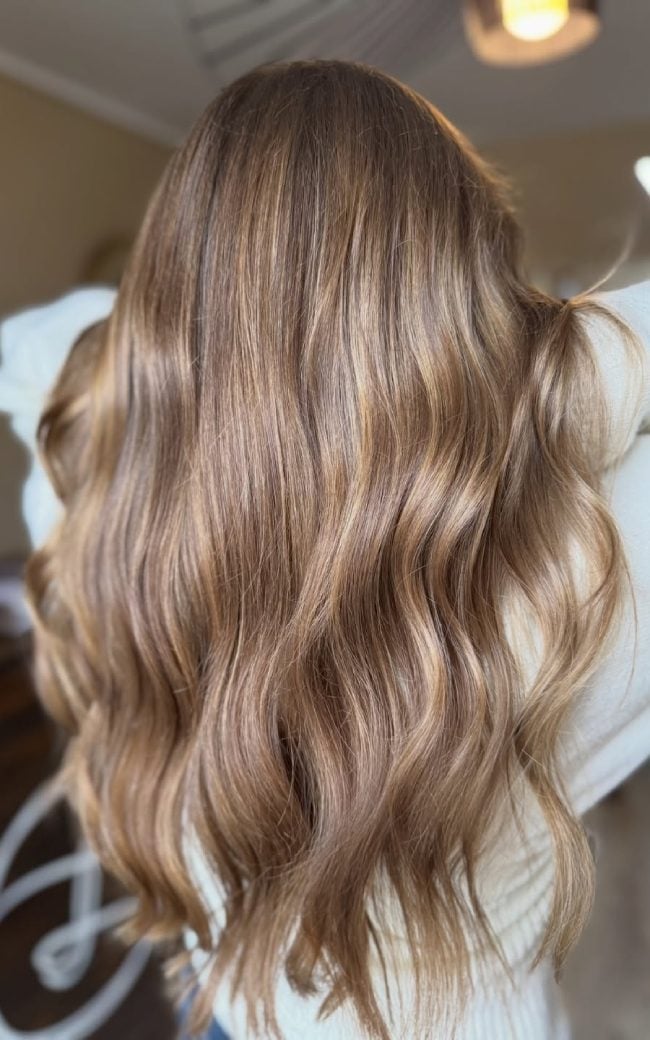
A caramel beige base keeps the honey highlights from tipping into brass, so the blend stays soft and warm. The balayage is painted in soft, sweeping strokes through the mid-back length, with the honey tones concentrated around the ends and a few face-framing pieces. Loose waves help the color look dimensional, which is why this technique suits thick, wavy hair that can hold the bend without flattening.
Ask your colorist for: mid-back length, caramel beige blonde balayage with honey highlights. The neutral caramel beige tone mutes the warmth, making it a softer alternative to a full golden blonde. Use a color-safe shampoo to keep the subtle tones from shifting, and plan a trim every 8 to 10 weeks to keep the ends clean.
Collarbone Lob With Honey Balayage
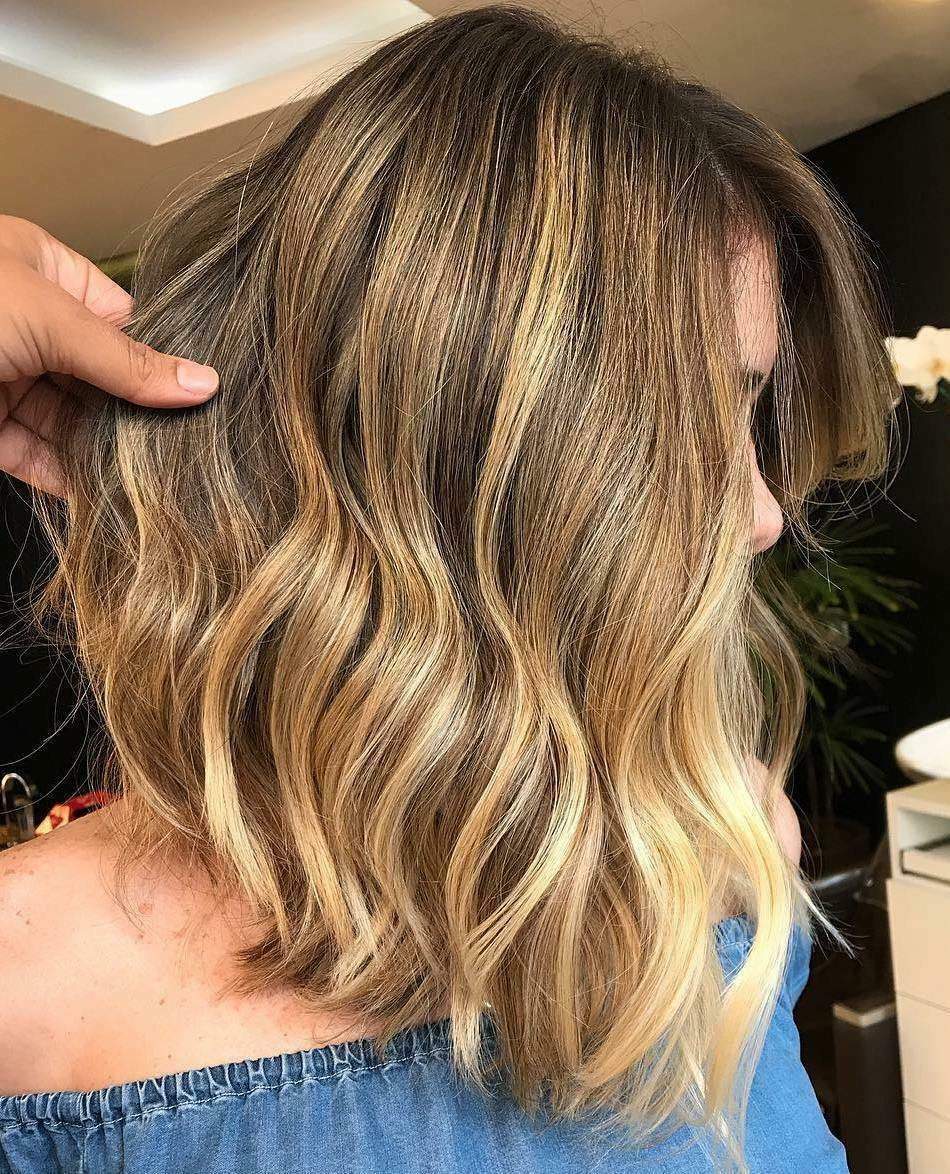
The lob ends right at the collarbone, where the honey blonde balayage gets its most noticeable lift. Lighter blonde tones melt into a warmer base. The middle parting lets the color fall symmetrically on both sides. Loose waves give the lob movement, so the balayage has a dimensional look. This length suits most face shapes, and the wavy texture keeps the lob from feeling too heavy. Ask your colorist for: collarbone length lob, honey blonde balayage. A texturizing spray adds wave definition without weighing the hair down, and a trim every 6 to 8 weeks keeps the lob line crisp.
Collarbone Layers With Honey Balayage
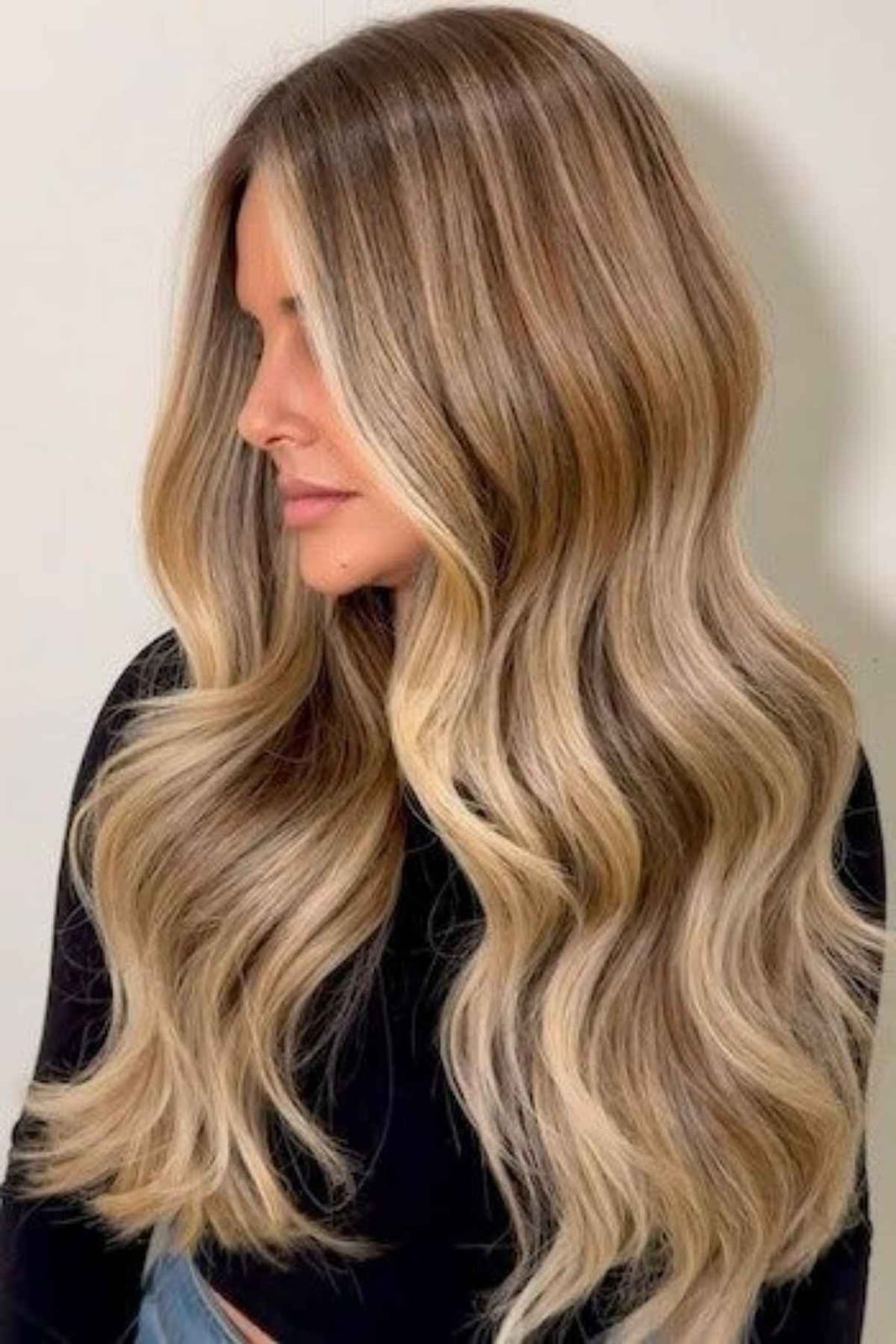
Wondering how to get that honey blonde tone without it looking stripey? Ask for soft layers at collarbone length, then have the balayage painted on with a lighter hand at the roots. The side parting adds a natural asymmetry, and the wavy blowout shows how the lighter tones catch the light at the ends. This placement softens square and angular faces, and the honey blonde tone stays warm without going brassy. Ask your colorist for: collarbone length layers, honey blonde balayage. Blow-dry with a round brush for soft waves, and schedule a trim every 6 to 8 weeks.
Collarbone Long Bob With Warm Honey Tones
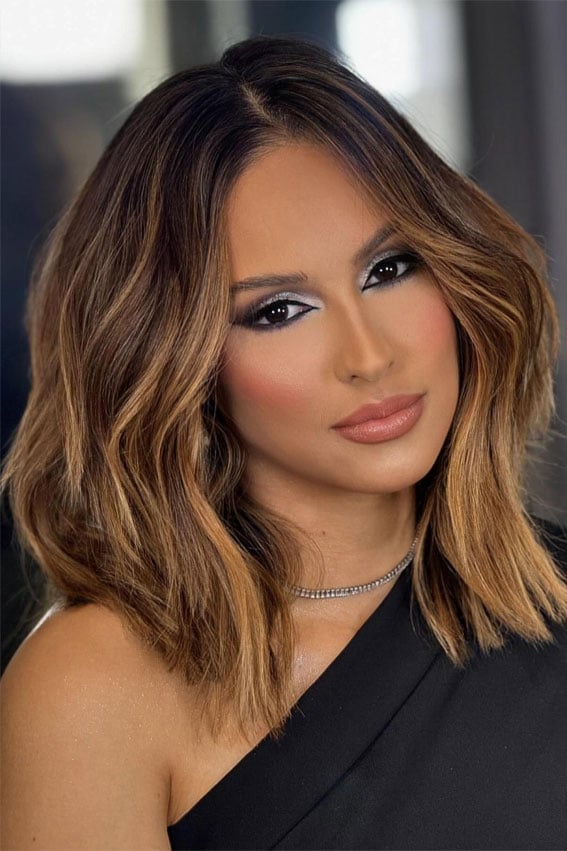
A long bob often looks sleek, but this one leans into its wavy texture for a lived-in feel. The honey blonde balayage runs warm and golden through the collarbone length, with a middle parting that shows the color distribution evenly. Warm honey tones need a bit of maintenance: a gloss treatment every 4 to 6 weeks keeps the golden hue from dulling, and a trim every 6 to 8 weeks preserves the bob’s shape. Ask your colorist for: collarbone length long bob, warm honey blonde balayage. A texturizing spray on the mid-lengths gives the waves a relaxed finish.
Collarbone Layers With Curtain Bangs Balayage
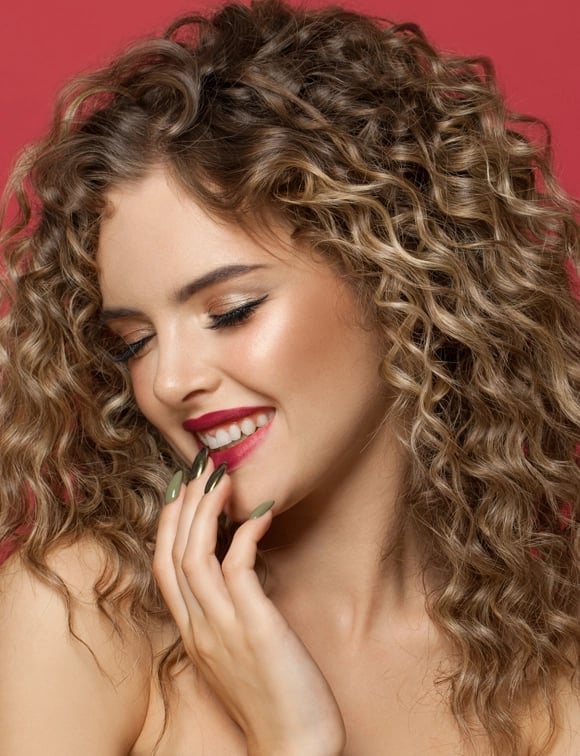
Curtain bangs are having a moment, and this collarbone cut proves why they pair so well with balayage. The honey blonde tone frames the face through the bangs and the layers, creating a sun-kissed effect that works for work or casual outings. Thick, wavy hair holds the curtain bangs’ shape without constant fussing. Ask your colorist for: collarbone length layers, curtain bangs, honey blonde balayage. Blow-dry the fringe forward with a round brush to set the curve, and plan a trim every 6 to 8 weeks to keep the bangs from covering the eyes.
Collarbone Balayage With Face-Framing Layers
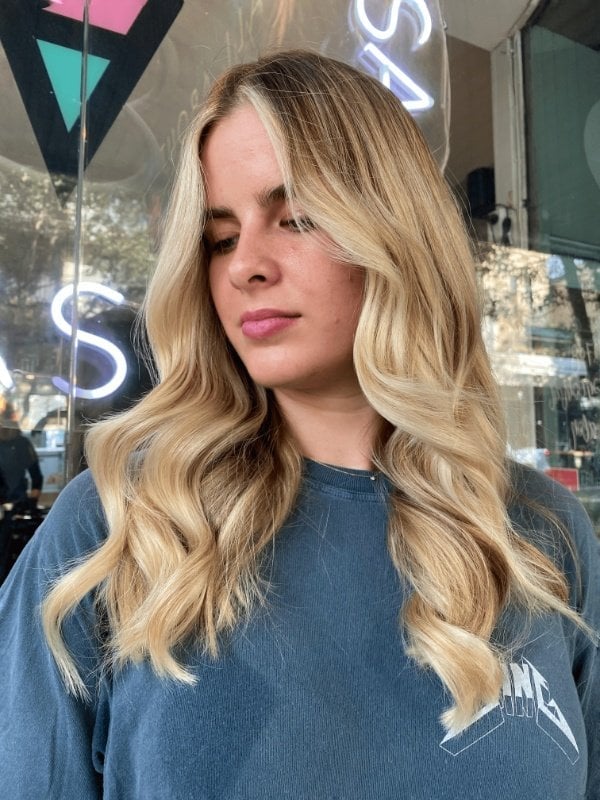
The face-framing layers here are where the balayage earns its keep, pulling the lightest honey tones up around the cheekbones while the darker base stays put at the back. That contrast gives the collarbone length a soft, rounded shape that suits round and oval faces, especially when the hair is thick and wavy. Ask your colorist for: collarbone length, face-framing layers, honey blonde balayage. A smoothing cream on the ends keeps the waves glossy, and a trim every six to eight weeks stops the layers from turning into one blunt blob.
Collarbone Dark Brown With Honey Balayage
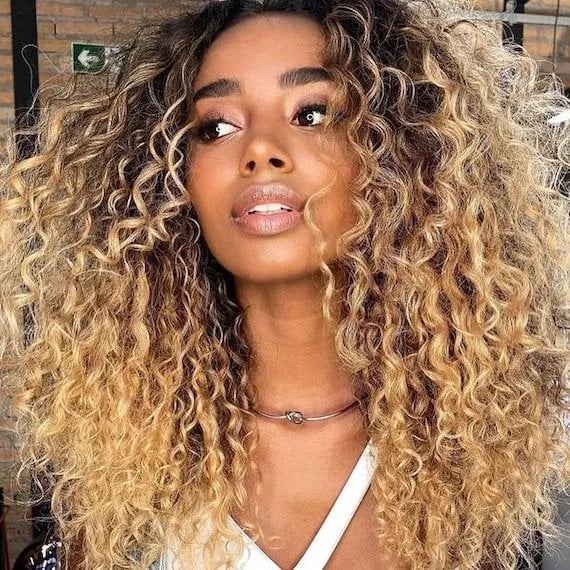
Against a lighter base, honey blonde balayage reads as bright and airy, but on a rich dark brown base it turns into something warmer and more grounded, a bit like caramel that stayed in the pan a moment longer. That depth suits thick, wavy hair and softens a square jaw, making it a solid pick for workdays and evening events alike. Ask your colorist for: dark brown base with honey blonde balayage, curtain bangs. This is a salon-only project, so budget for several hours in the chair. A color-depositing mask every few washes keeps the honey tones from drifting brassy, and a trim every six to eight weeks holds the collarbone line.
Collarbone Balayage With Soft Waves
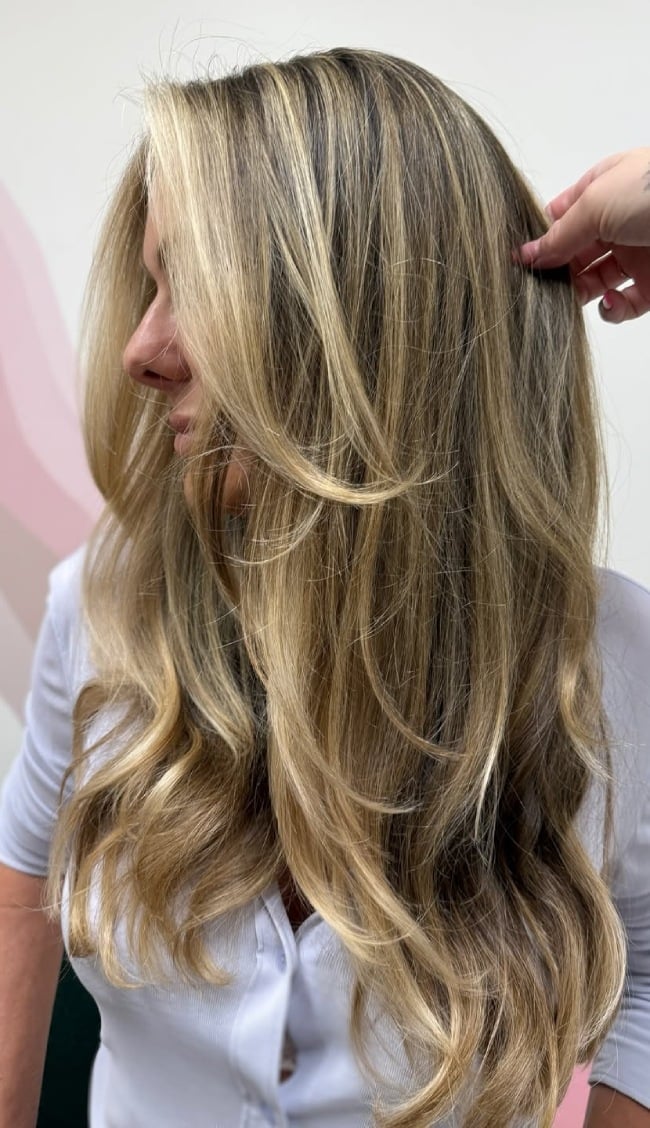
The blowout with soft waves is the part that keeps this look honest, because the balayage shows its dimension best when the hair moves, not when it hangs flat. Thick, wavy hair at collarbone length carries the wave pattern well, and the curtain bangs soften round and heart faces without demanding constant styling. Ask your colorist for: collarbone length, curtain bangs, honey blonde balayage with soft waves. A volumizing mousse before blow-drying gives the roots a lift that lasts the day, and a trim every six to eight weeks keeps the ends from splitting.
Collarbone Lob With Curtain Bangs, Wavy
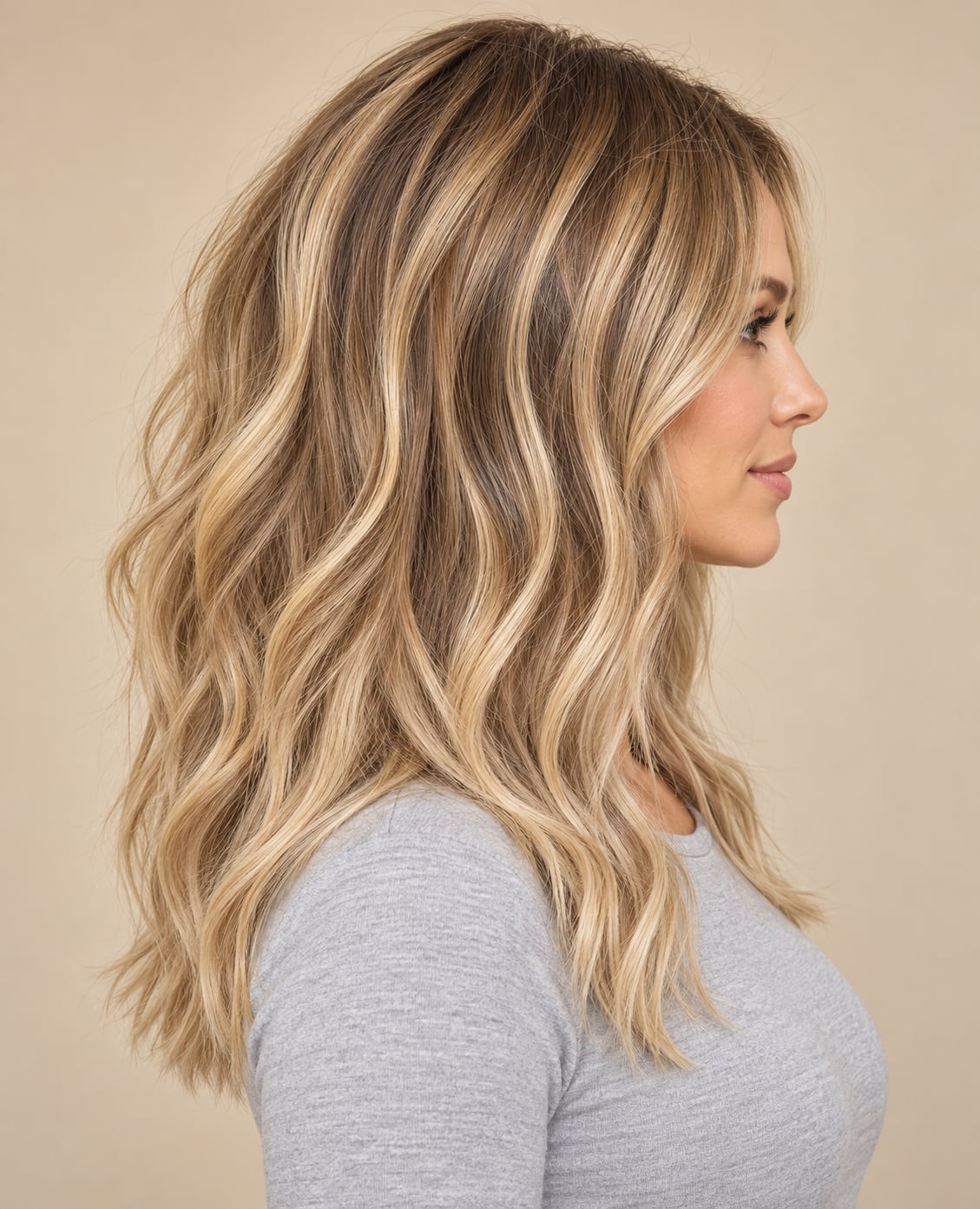
A collarbone lob with curtain bangs walks a narrow line between polished and messy, and the mistake most people make is letting the fringe grow past the cheekbones until it falls flat over the eyes. The honey blonde balayage here keeps the sun-kissed highlights close to the face, so the curtain bangs stay soft and separate instead of clumping. Thick, wavy hair at collarbone length takes the wave pattern easily, and the middle parting opens up the face for round and oval shapes. Ask your colorist for: collarbone length lob, curtain bangs, honey blonde balayage. Blow-dry the fringe with a round brush for a gentle curve, and book a trim every six to eight weeks to keep the shape honest.
Collarbone Curly Hair With Honey Highlights
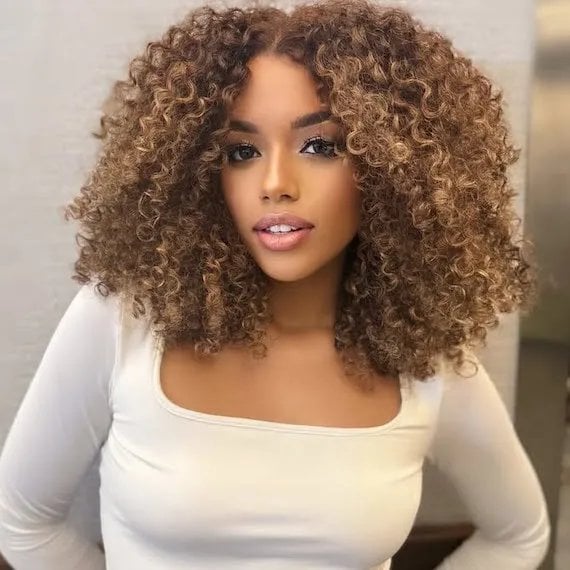
Is honey blonde balayage a smart bet for curly hair, or a fast track to brassy orange? On thick, collarbone-length curls with a medium brown base, the payoff is real: the honey blonde highlights land on the curve of each coil, so the sun-kissed effect moves with the hair rather than sitting in flat streaks. The air-dried texture and curtain bangs give the shape a lived-in feel, and the contrast between base and highlight adds definition without turning the curls into a striped mess. The drawback is upkeep, since curly hair grabs pigment unevenly and the honey tones fade faster at the ends. Ask your colorist for: medium brown with honey blonde highlights, curtain bangs. A curl-defining cream keeps the pattern sharp, and a trim every eight to ten weeks stops the ends from getting stringy.
Mid-Back Layers With Balayage Highlights, Curtain Bangs
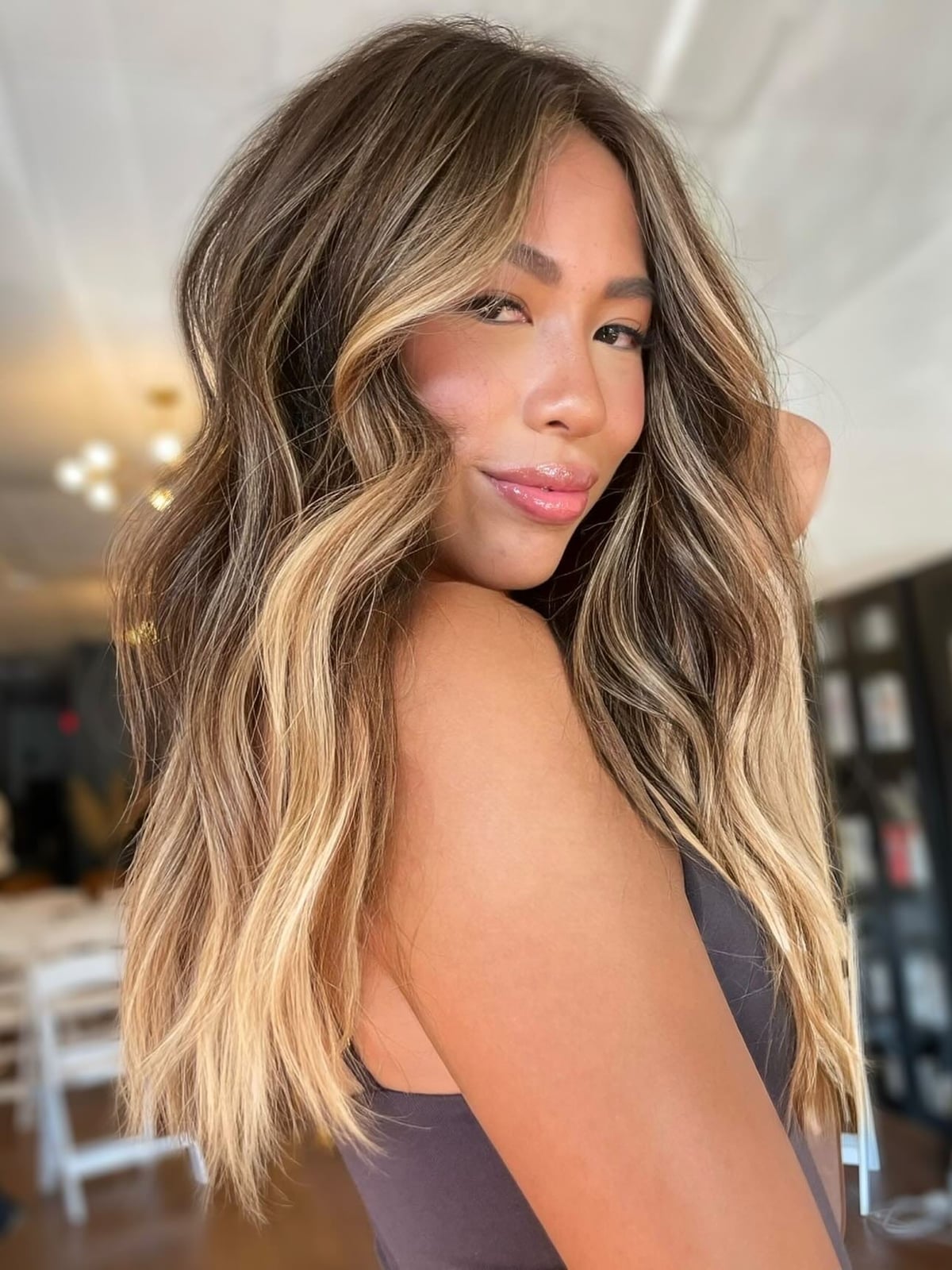
Want the honey blonde balayage highlights to actually show up when your hair is down? That is a matter of placement, not just color. This mid-back length cut with visible layers and curtain bangs shows how the lightest pieces land along the face and through the top layers, so the dimension reads even without a blowout. Thick, wavy hair holds these sections open, which helps the mid-back balayage highlights catch the room light instead of hiding flat against the back. Soften a round or oval face by asking for the curtain bangs to start below the cheekbone, then blend the honey tone into the mid-lengths.
Ask your colorist for: mid-back honey blonde balayage highlights. The middle parting keeps the pattern symmetrical, which makes the grow-out less obvious. For definition between washes, a texturizing spray on the lengths and a trim every 8 to 10 weeks will keep the layers and the color line sharp.
Shoulder Length Fine Hair Balayage
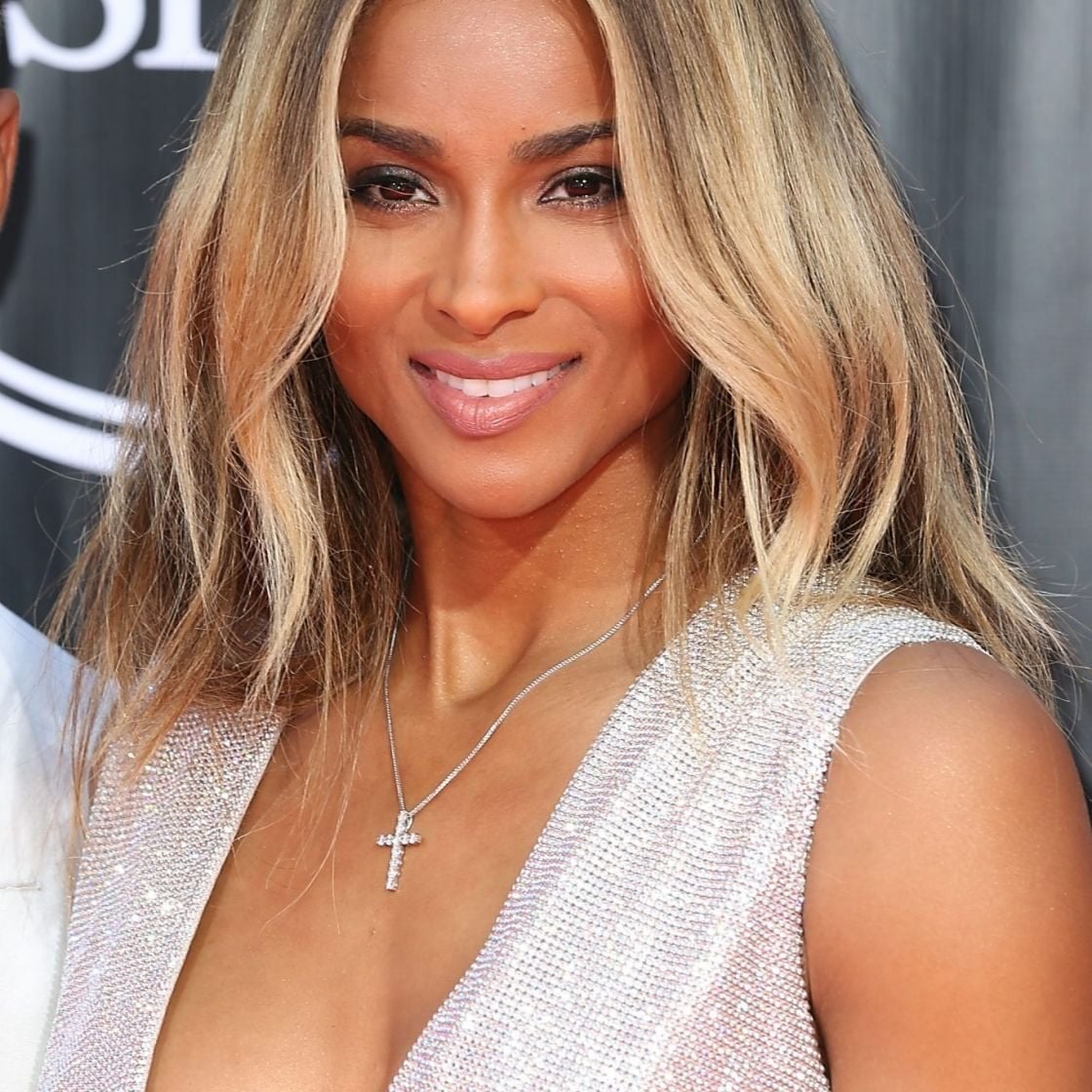
Fine hair takes color faster, so a honey blonde balayage here goes lighter and glossier than on thicker strands. That works in your favor for dimension, but it also means the contrast from root to tip can pull brassy faster. This shoulder length cut with no bangs keeps the wavy texture loose and low-maintenance. Skip it if you want a dramatic shift from dark to golden honey in one sitting; fine hair needs a gentler lift to avoid damage, so plan two appointments. A salon job is the right call, since precise placement prevents the color from pooling at the ends. The grow-out is soft and does not need a root touch-up every month.
Mid-Back Layers With Dimensional Color
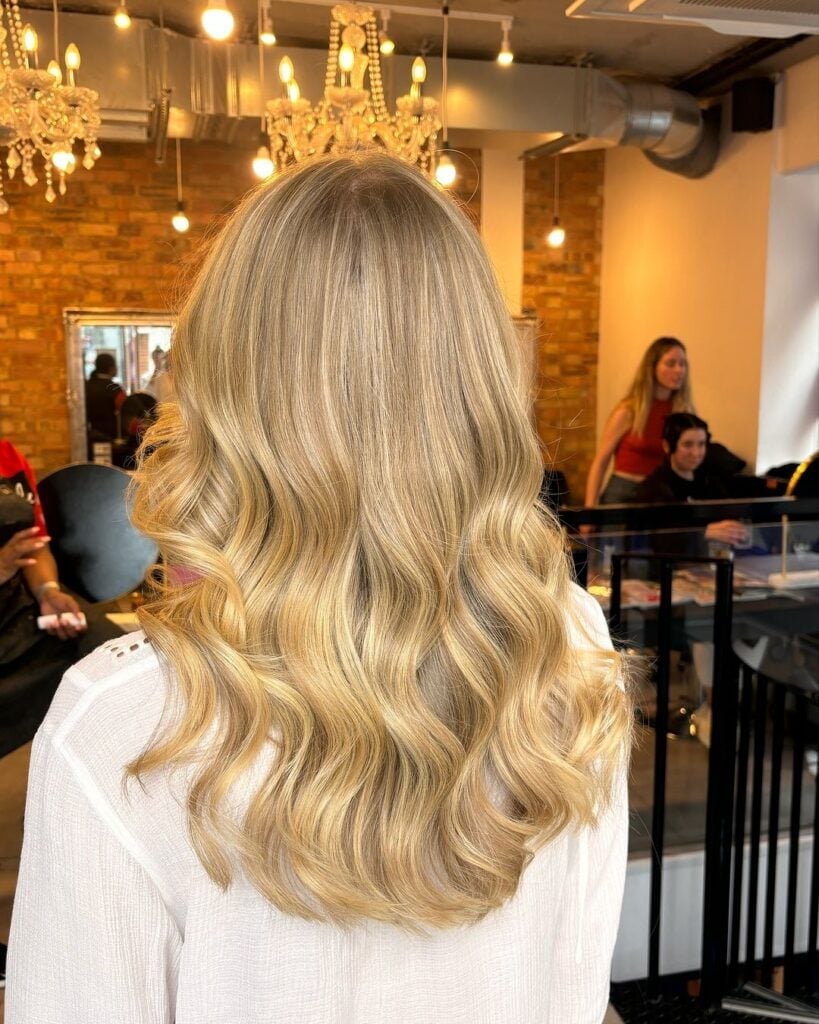
What makes this honey blonde balayage look expensive is not the warmth, it is the way the warm blonde tones are stacked through the mid-back layers. The color is painted in sections, so the light pieces sit between darker ones, giving the hair depth that a single all-over shade cannot match. Thick, wavy hair at mid-back length shows off that dimensional color because the waves catch each tone separately. A middle parting keeps the pattern even, and a blowout with a round brush will make the dimension look deliberate, not accidental.
Ask your colorist for: honey blonde balayage with dimensional color. The technique takes about three hours in the chair, since each section is foiled and painted individually. To keep the glossy finish, a toning appointment every 6 to 8 weeks will hold the honey tone from drifting brassy. Trims every 10 weeks keep the layers moving without sacrificing length.
Ultra-Long Hair With Golden Honey Balayage, Close-Up Take
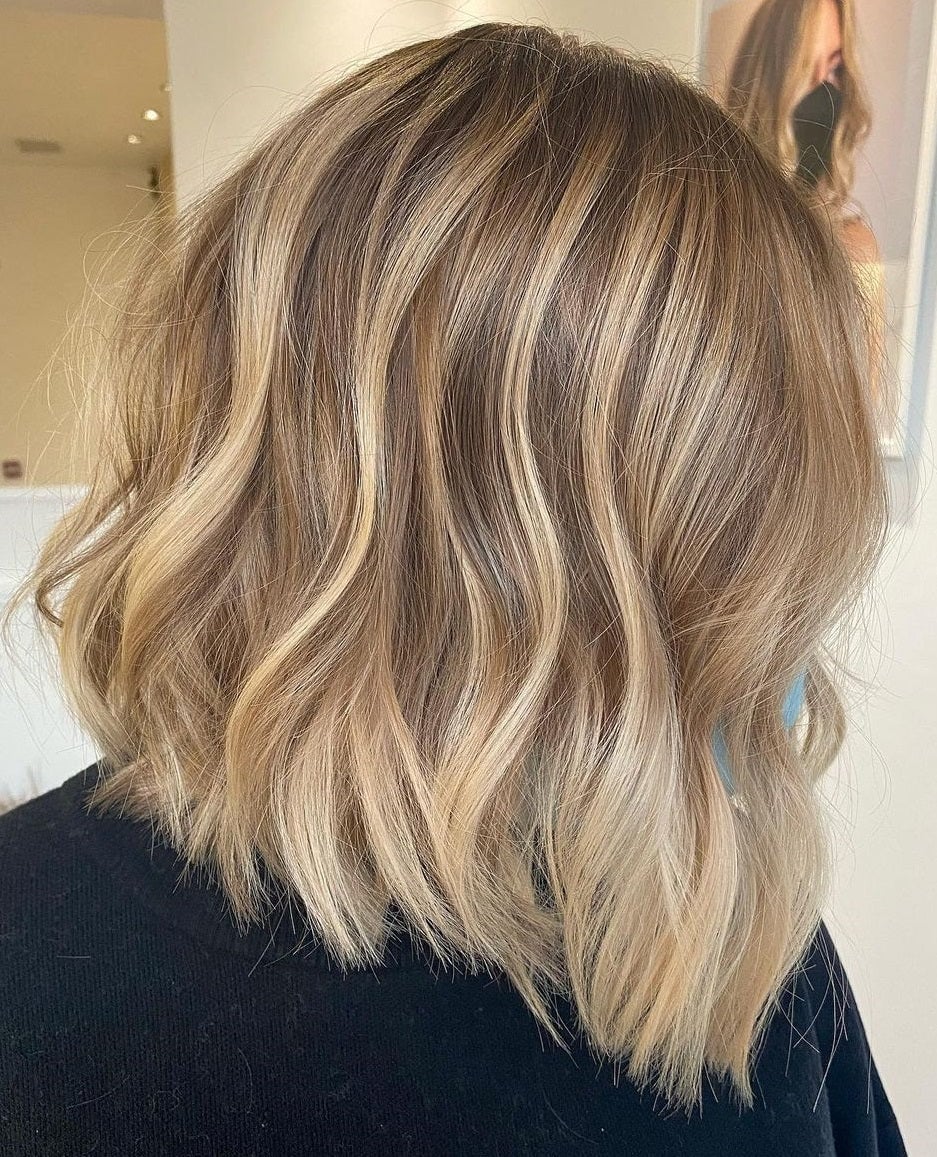
Golden honey balayage on ultra-long hair works by keeping the root darker and the ends lighter, which this blowout with soft waves makes obvious. The color is painted from the mid-lengths down, leaving the top darker to create a gradient that does not wash out the length. Thick, wavy hair carries the weight of this technique, since the lighter ends need enough density to hold the color. The soft waves are the point: they show how the golden tone moves through each section without looking striped.
Ask your colorist for: golden honey blonde balayage on ultra-long hair. The precision is in the placement, not the brand of dye, so a salon-leaning job is worth the time. To keep the wave pattern, a large barrel round brush on damp hair, then a blast of cool air to set it. Trims every 10 to 12 weeks keep the ends healthy without losing the length that makes this style work.
Mid-Back Dark Base With Honey Balayage, Close-Up Take
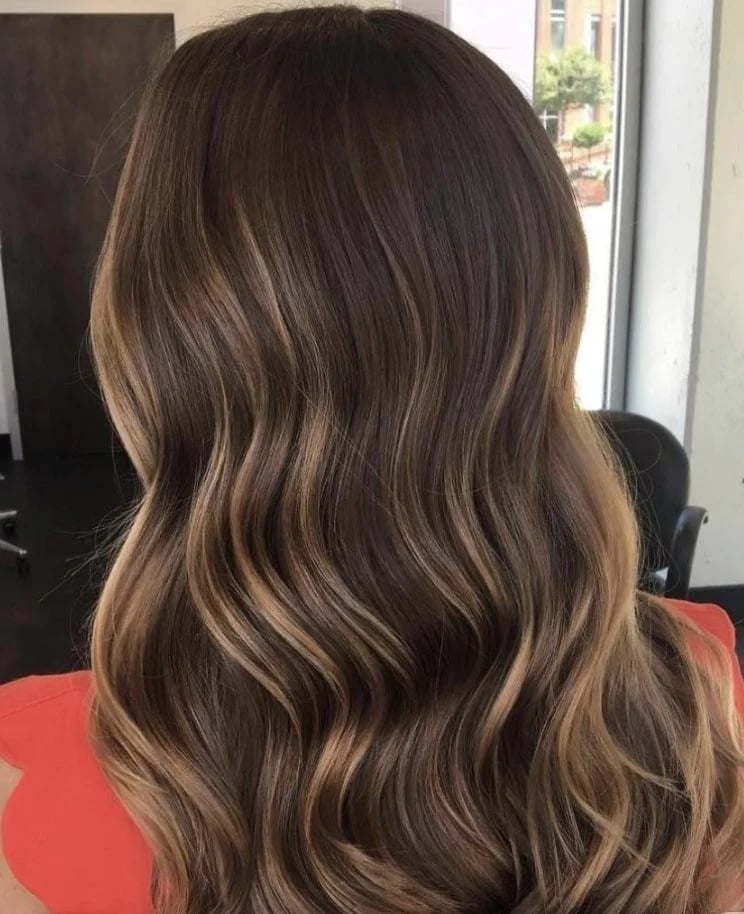
This long layered cut pairs a dark brown base with honey blonde balayage, and the contrast does the work. The dark root stays close to the scalp, then the honey tone takes over through the mid-lengths and ends, so the grow-out line is soft and forgiving. Thick, wavy hair at mid-back length shows the transition clearly: the dark base grounds the style, the honey adds warmth, and the waves break up any harsh line. A blowout with a round brush will make the transition look smoother than a flat-iron finish, which can read as stripes.
Ask your colorist for: dark brown base with honey blonde balayage. The upkeep is about two visits a year for the color, since the root shadow hides the grow-out for about six weeks. To keep the honey tones from turning brassy, a color-depositing conditioner once a week, and trims every 10 to 12 weeks to keep the long layers from splitting.
Final Thoughts
For a subtle, low-maintenance blend, ask for fewer, finer highlights, especially if you have fine hair or a shorter length. For more impact and contrast, request bolder, more frequent pieces around the face.
- Maintain toning glosses every 6-8 weeks to keep honey tones bright.
- Use a color-safe shampoo and conditioner to preserve the balayage.
- Limit heat styling to prevent color fade and texture damage.
- Schedule salon touch-ups for the balayage blend every 10-12 weeks.
Honey blonde balayage offers a warm, dimensional glow for many.