The wolf cut, a hybrid of shag and mullet, is defined by its choppy layers and face-framing fringe. What started as a short, punk silhouette has softened into a versatile shape that works from ear-length to mid-back, with lived-in color and glossy natural texture leading the way.
These 27 wolf cut ideas span short crops, collarbone lengths, and longer shags, with options for fine hair that needs volume and thick hair that needs weight removed. Whether you want wispy bangs, curtain bangs, or a full fringe, there is a version here that does not require a weekly trim to stay fresh.
Vibrant Copper Short Wolf Cut Crop

The design logic is simple: keep the length short enough that the weight never wins, then let the wispy bangs and choppy textured layers do the work. Fine, wavy hair starting at ear length finally has a cut that adds density where it matters and removes it where it doesn’t. A side parting and a texturizing paste give an airy, piecey finish that softens round and oval faces. Ask your stylist for: a short wolf cut crop with wispy bangs and choppy texture in a vibrant copper color.
Dark Brown Ear Length Wolf Cut
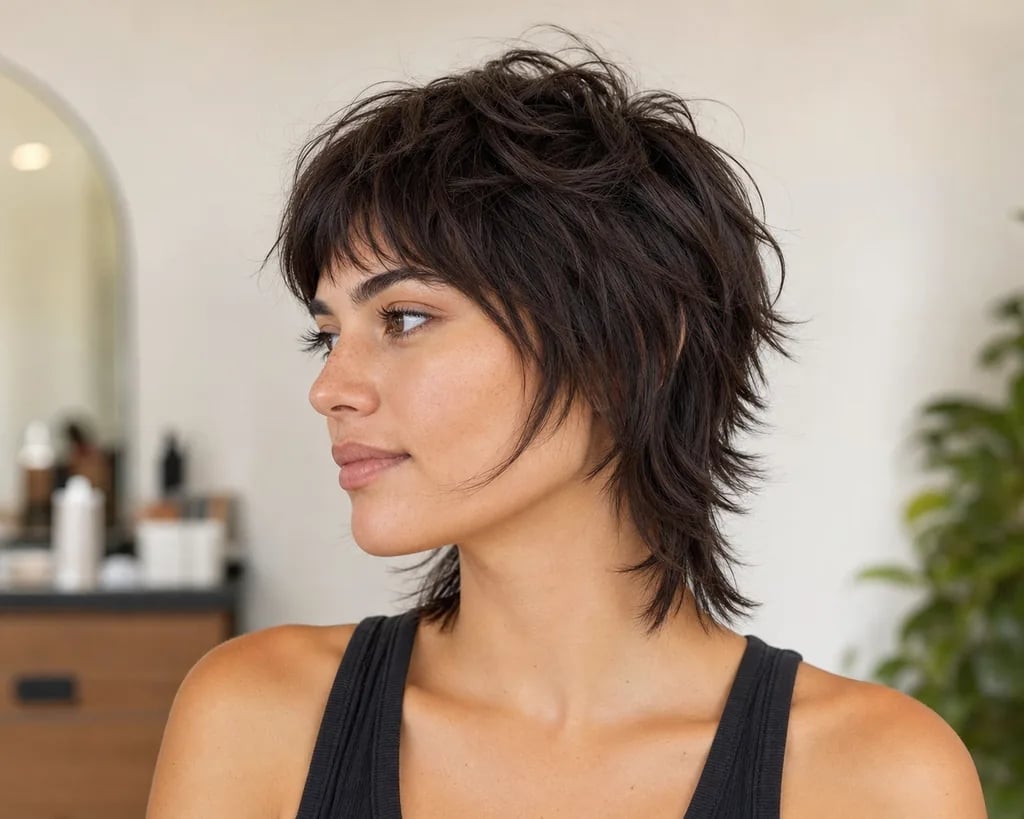
Where the copper crop above is soft and wispy, this one is sharp and deliberate. Fine, straight hair benefits from the heavily layered, choppy construction that stops the cut from falling flat. The short, sharp bangs hit the forehead, and the ear-length finish avoids any triangle shape at the jaw. Square faces gain a angular, modern edge. Ask your stylist for: an ear length choppy wolf cut with short, sharp bangs in dark brown.
Black Curly Shoulder Length Wolf Cut
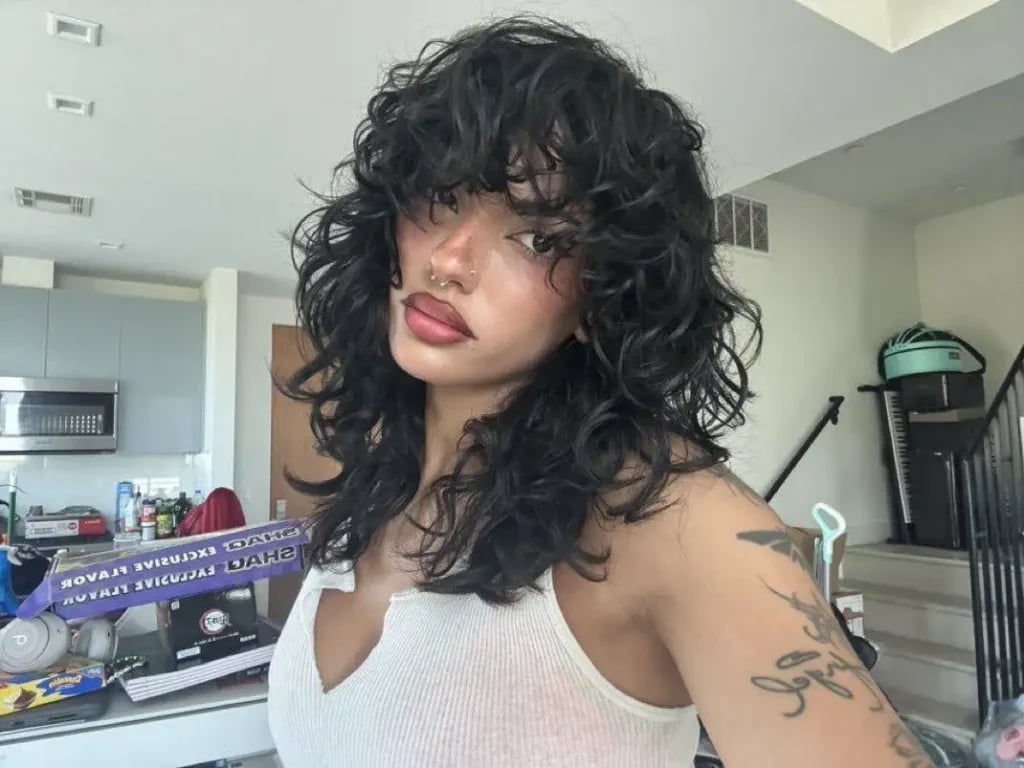
The wolf cut works with curl, not against it. Thick, curly hair starting at shoulder length gets the full fringe and choppy layers that remove bulk without losing shape. The middle part and air-dried finish let the natural texture define the silhouette. A curl cream applied to damp hair encourages definition, and a diffuser speeds the process. The technique: scrunch upward, then leave the rest alone.
- Apply leave-in cream on soaking wet hair
- Diffuse on low heat until 80 percent dry
- Let the final 20 percent air dry for a soft hold
Shoulder Length Copper Red Wolf Cut Shag

Does vibrant copper red fade faster than brown? Yes, and that is the trade-off. Wavy, medium density hair at shoulder length carries the choppy bangs and shag layers well, and the lighter auburn tones add depth that softens a square jaw. The lived-in, messy finish means the grow-out is less obvious than a precise bob. A texturizing spray refreshes the shape between washes. Ask your stylist for: a shoulder length wolf cut shag with choppy bangs in copper red with auburn tones. A trim every six to eight weeks keeps the layers from losing their shape. A toning gloss every four to six weeks helps the copper red stay vibrant.
Ash Blonde Shoulder Length Wolf Cut

Ash blonde needs a cut that gives it movement, or it reads as flat. The choppy layers and choppy bangs in this shoulder-length wolf cut create the shaggy texture that lifts the color. Wavy hair starting at shoulder length benefits from the middle part and air-dried finish, which let the highlights show without heat styling. Round faces gain length and a vertical line. Ask your stylist for: a shoulder length wolf cut with choppy bangs and choppy layers in ash blonde. The cut does the work, not the blow-dryer.
A purple shampoo used once a week keeps the ash tone from warming up. The choppy layers mean the sun-lightened ends blend naturally, so the grow-out phase is less high-maintenance than a blunt ash blonde bob. Square faces get the same softening effect from the shaggy texture, while oval faces get the volume at the sides they need.
Black Wavy Shoulder Length Shag Wolf Cut

A shoulder-length shag wolf cut with choppy bangs and a thick, wavy texture is a lot of design at once. The choppy layers add volume, but on thick, wavy hair without a bit of styling, they can read more messy than intentional. A texturizing spray helps define the tousled finish without turning it into a triangle. Ask your stylist for: shoulder length shag wolf cut, choppy bangs. The subtle dark blue undertones in the black base add depth that the layers catch. It softens long faces but demands a regular trim every six to eight weeks to keep the shape readable.
DIY Medium Brown Shoulder Length Wolf Cut
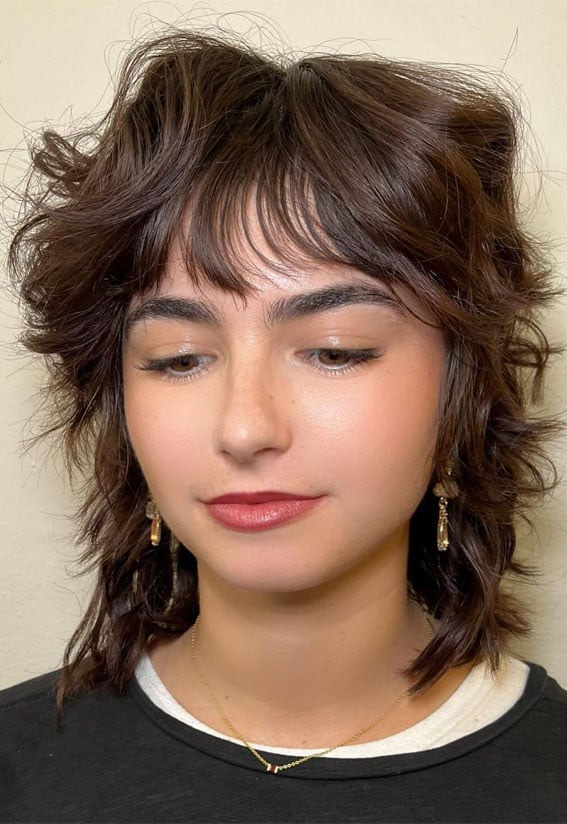
A medium brown shoulder-length wolf cut with a soft fringe is one of the few layered styles that actually works as a DIY. The prominent face-framing layers and middle parting create structure without requiring salon precision. You can trim the fringe and front sections yourself, air dry the medium density wavy texture and get a passable result. Ask your stylist for: shoulder length wolf cut, soft fringe. This approach softens round faces and takes about twenty minutes from shower to finish. The trade-off is that the back layers may lack the same definition; a friend with scissors helps.
Dark Brown Shoulder Length Wolf Cut, Wispy Bangs

How do you describe wispy bangs to a stylist without getting a blunt fringe or a curtain that never leaves your forehead? The key is in the texture and the connection to the layers. You want the bangs to feel like an extension of the choppy layers, not a separate piece. Ask your stylist for: shoulder length wolf cut, wispy bangs, choppy layers. The dark brown base with subtle highlights keeps the cut from looking flat, and the middle parting lets the wispy ends fan out naturally. This version suits wavy, medium density hair beginning at shoulder length and softens round faces. Avoid asking for “feathery”, that often ends up too thin.
Ash Blonde Collarbone Wolf Cut

A collarbone-length wolf cut with curtain bangs relies on the way the layers feather around the jawline. On fine, wavy hair, the choppy layers create the illusion of density without weighing the ends down. The ash blonde base with lighter highlights keeps the tone cool and modern. Ask your stylist for: collarbone length wolf cut, curtain bangs, ash blonde color. The curtain bangs blend into the face-framing layers, so they grow out naturally rather than abruptly. This cut softens square faces and works best with an air-dried texture. The honest detail: fine hair needs a lightweight mousse at the roots to keep the volume from falling flat by midday.
Creamy Blonde Collarbone Wolf Cut

This creamy blonde collarbone wolf cut requires medium density wavy texture to hold its shape without a full styling routine. The creamy blonde shade adds warmth without washing out the cut’s structure. Ask your stylist for: collarbone length wolf cut, soft curtain bangs, creamy blonde color. It suits round faces by elongating through the middle part and the length just below the collarbone. The tousled waves are best achieved with a curling wand and a cool shot of air to set the bends. A trim every six to eight weeks keeps the curtain bangs from becoming a generic grown-out fringe.
Dark Brown Collarbone Wolf Cut
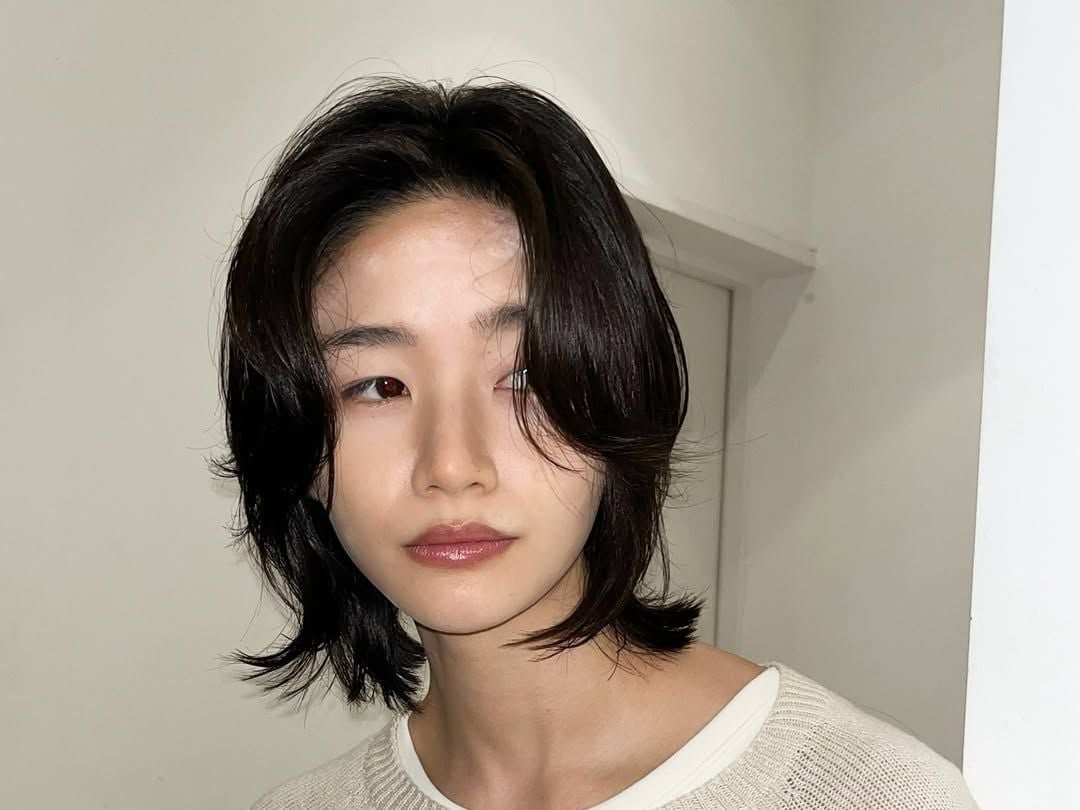
Does a collarbone wolf cut actually hold a blowout, or does it collapse into a sad, flat triangle? With fine, wavy hair and a side part, the answer depends on technique. This version uses curtain bangs and face-framing layers that catch the round brush, so the volume stays at the roots instead of migrating to the ends. Ask your stylist for: collarbone length wolf cut, curtain bangs, face-framing layers. The payoff is soft waves that move rather than sit stiff, but the commitment is real: a blowout with a round brush takes about 20 minutes, and the shape needs a trim every six to eight weeks to keep the layers from blending into one shapeless wedge.
Black Collarbone Wolf Cut With Wispy Bangs

The design trick of this cut is the wet look. It extends the shine of black hair into a deliberate, glossy finish that reads as styled, not air-dried. Wispy bangs and choppy layers prevent the texture from becoming a heavy sheet, but the wet look is not a set-it-and-forget-it situation: gel or pomade needs reapplication through the day to avoid flaking, and a middle part demands both sides behave equally. Ask your stylist for: collarbone length wolf cut, wispy bangs, choppy layers, wet look. Skip this one if your office has strict rules about reflective finishes.
Dark Brown Collarbone Wolf Cut With Wispy Bangs
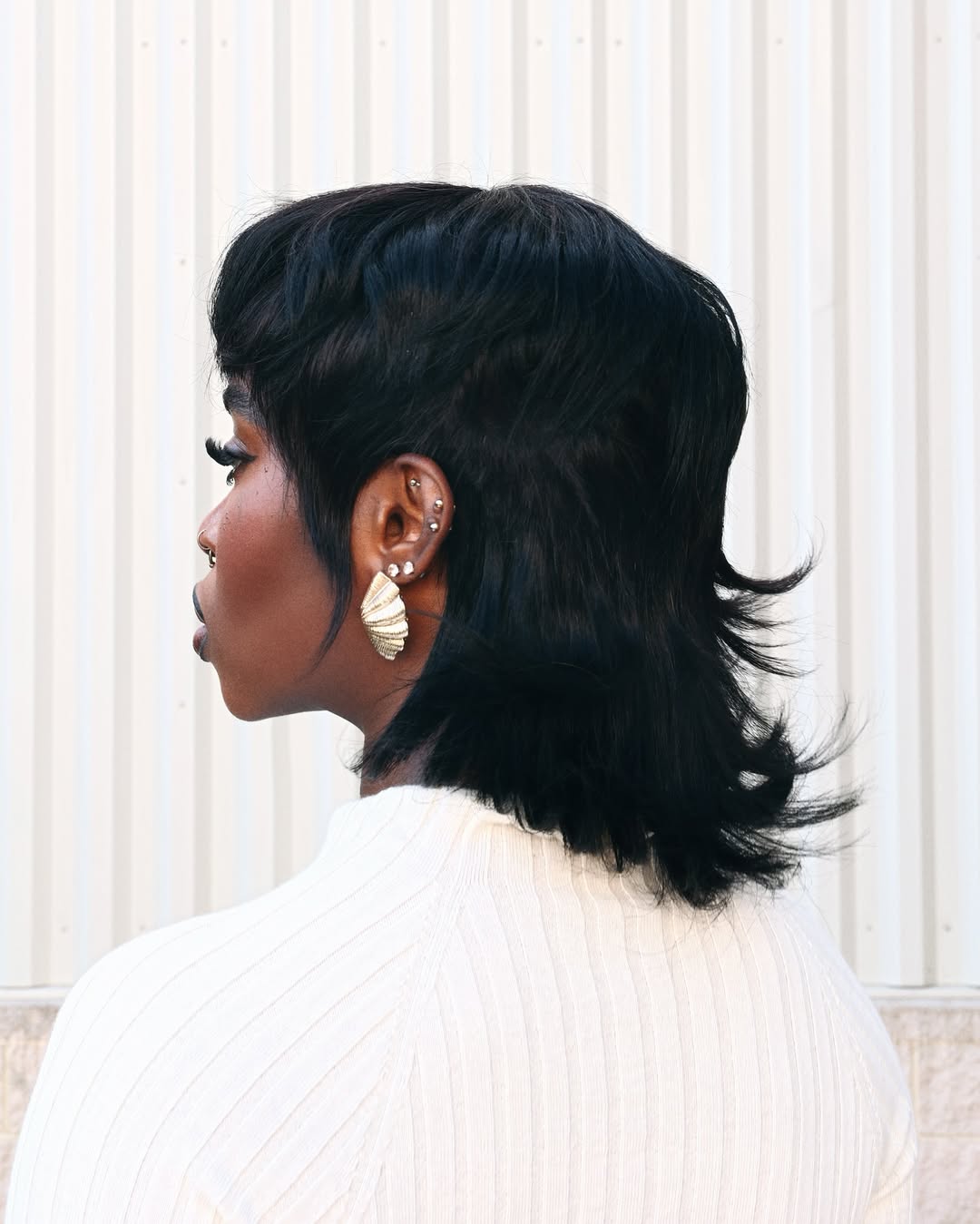
Fine, straight hair can look stringy in a wolf cut if the bangs hit at the wrong weight. The fix is asking for wispy bangs that stay light at the tips instead of landing as a blunt block. With a collarbone length as the base and a middle part, the wispy edge keeps the fringe from competing with the layers below. Ask your stylist for: collarbone length wolf cut, wispy bangs, dark brown color. The blowout adds volume: a round brush at the roots keeps the top from falling flat, and a trim every six to eight weeks stops the bangs from drifting into curtain territory.
Dark Brown Collarbone Wolf Cut With Full Bangs, Wavy

Full bangs change the personality of a wolf cut. Instead of the usual peek-a-boo layers around the face, you get a solid fringe that anchors the choppy shape below. For wavy hair, this works best when the bangs are cut dry, so the natural wave pattern determines the length. The collarbone length keeps the cut from feeling top-heavy, and the middle part lets the full bangs sit centered. Ask your stylist for: collarbone length wolf cut, full bangs, choppy layers.
Who should try this? Long faces benefit from the horizontal line a full fringe creates, and wavy texture adds the volume that straight hair can miss. Skip it if your hair is very fine, because the weight of full bangs can pull the wave out and leave a limp curtain instead. The air-dried finish here requires no blowout, just a texture spray scrunched through damp hair for definition.
Dark Brown Collarbone Wolf Cut With Highlights, Curtain Bangs

Subtle blonde highlights versus chunky babylights: which one belongs with a wolf cut? The answer depends on whether the layers should look like separate pieces or one blended shape. Here, fine blonde highlights on a dark brown base keep the curtain bangs and choppy layers distinct without the stripe effect of thicker color. The wavy, medium density texture holds the highlights visible through the movement, and the side part lets the lighter pieces fall forward. Ask your stylist for: collarbone length wolf cut, curtain bangs, choppy layers, dark brown with blonde highlights. A trim every six to eight weeks maintains the shape, and a gloss treatment every four weeks keeps the brown from fading warm.
Warm Brown Collarbone Wolf Cut

The warm brown base keeps it grounded while the lighter strands catch the eye along the curtain bangs and face-framing sections. Ask your stylist for: collarbone length wolf cut, curtain bangs, choppy layers; then ask your colorist for: warm brown with honey highlights. Wavy, medium density hair starting at the collarbone softens round faces without losing the cut’s edge. A texturizing wave spray gives the lived-in effect, and a trim every six to eight weeks keeps the layers from looking overgrown.
Medium Brown Collarbone Wolf Cut With Balayage

Does a wolf cut still work when you want low-maintenance color? This one does. The medium brown base with balayage highlights means the grow-out is gradual, not stark, so you can stretch salon visits to twelve or sixteen weeks without a harsh line. The choppy layers and curtain bangs add movement, and the wavy texture air-dries into a shape that keeps its body all day. Ask your stylist for: collarbone length wolf cut, curtain bangs, choppy layers; ask your colorist for: medium brown with balayage. Wavy hair starting at the collarbone softens square faces well. The trade-off is that balayage on a cut this layered takes about two and a half hours in the chair the first time.
Softer Blonde Collarbone Wolf Cut
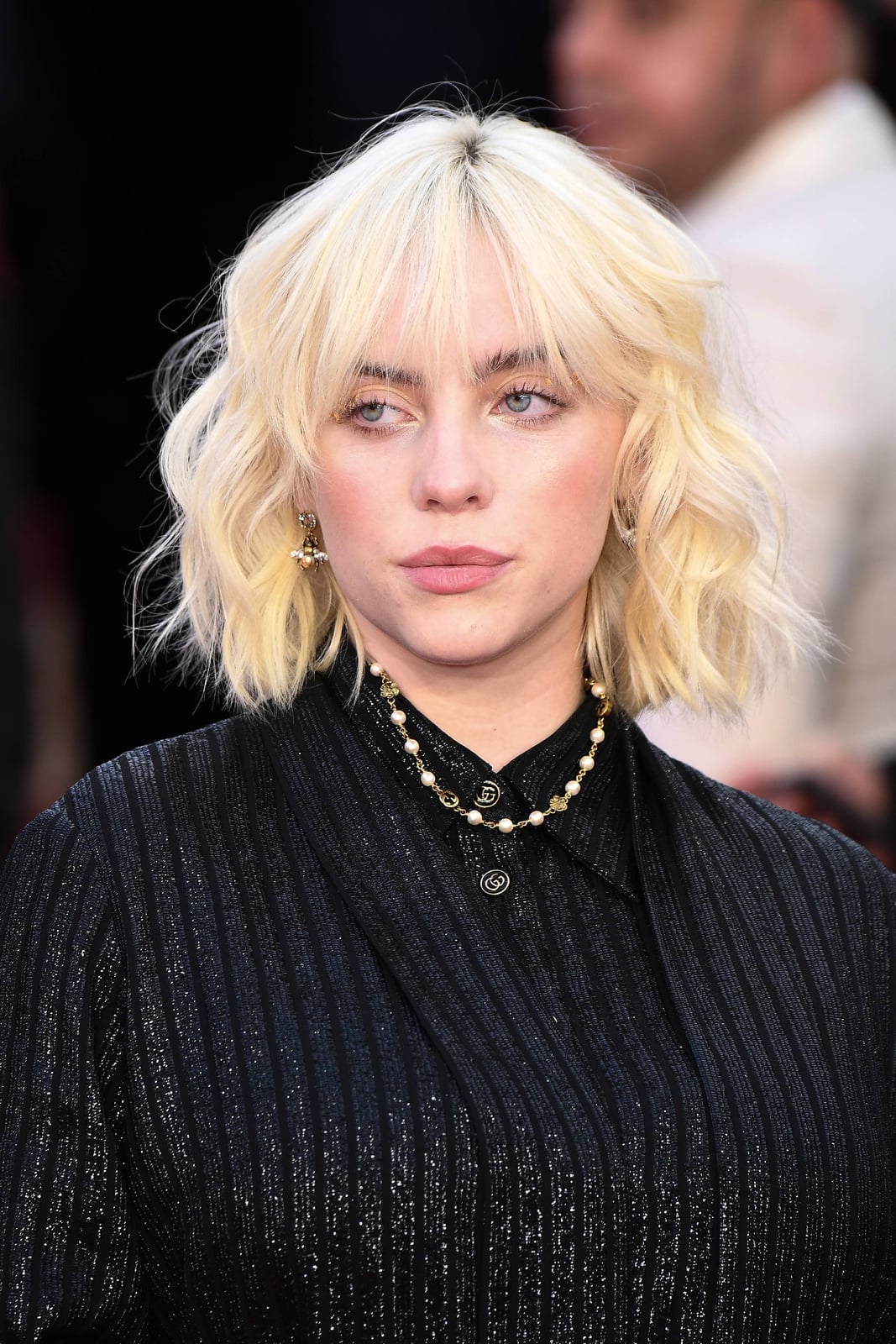
This is the wolf cut for anyone who thought the style required thick hair. Fine, wavy texture actually benefits from the face-framing layers and curtain bangs, because the shorter pieces create volume where longer sections would fall flat. The blonde color keeps it looking softer than a darker version would, and the collarbone length preserves enough weight to avoid the top-heavy silhouette that fine hair can get with shorter cuts. Ask your stylist for: collarbone length wolf cut, curtain bangs, face-framing layers. A round brush blowout gives the wavy texture lift, and a trim every six to eight weeks stops the layers from closing in. Round faces get a nice elongation from the middle part and the length below the chin.
Medium Brown Collarbone Wolf Cut With Balayage, Curtain Bangs
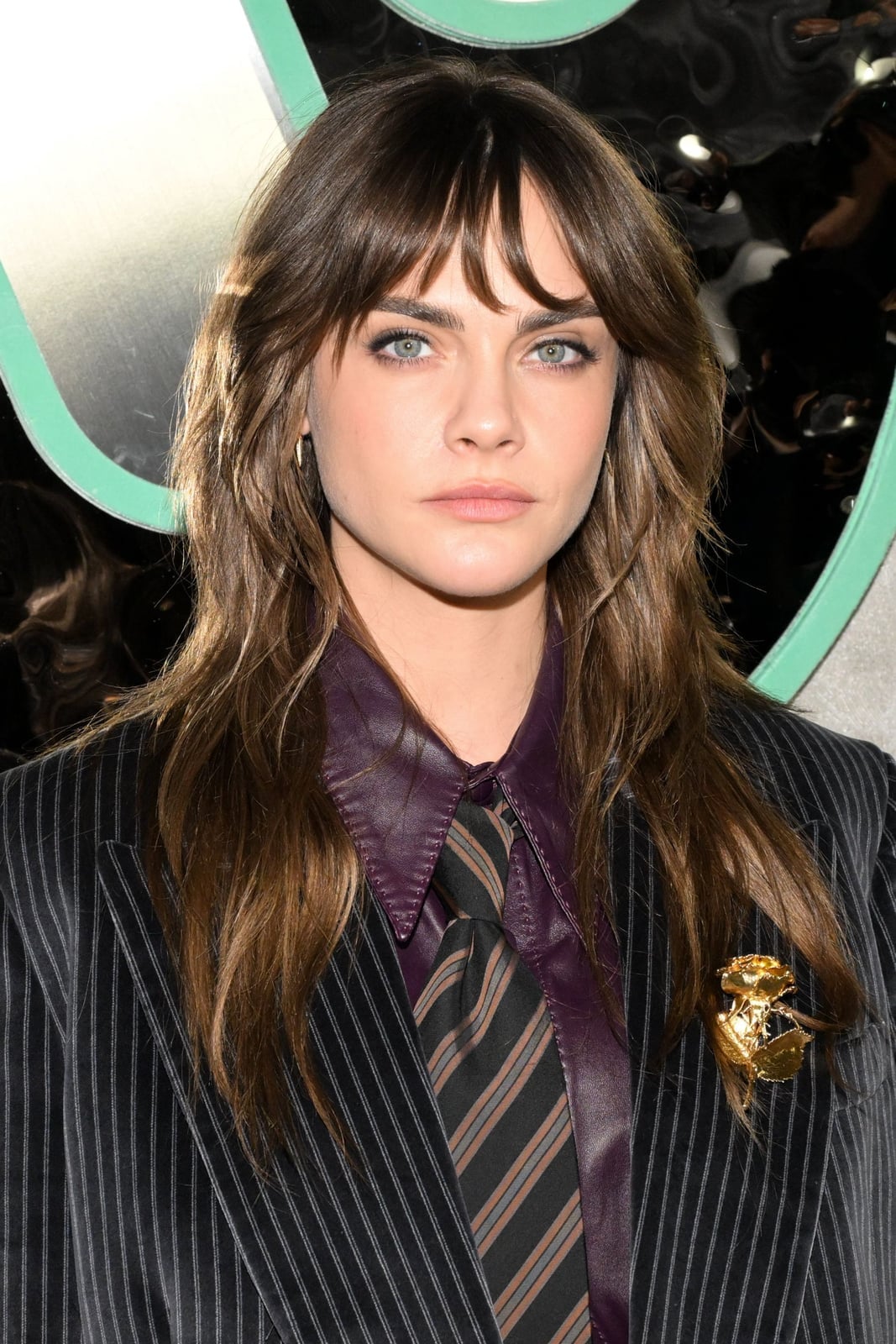
The medium brown base with blonde balayage adds dimension that helps the layers read separately, and loose waves give the texture some grip. Ask your stylist for: collarbone length wolf cut, curtain bangs, layers; ask your colorist for: medium brown with blonde balayage. Square faces soften noticeably with the length grazing the collarbone and the layers breaking up the jawline. The honest drawback is that fine, wavy hair needs a texturizing spray to keep the curtain bangs from going flat by midday, so skip this if you want a set-it-and-forget-it cut.
Ash Blonde Shoulder Length Wolf Cut, Shaggy Bangs
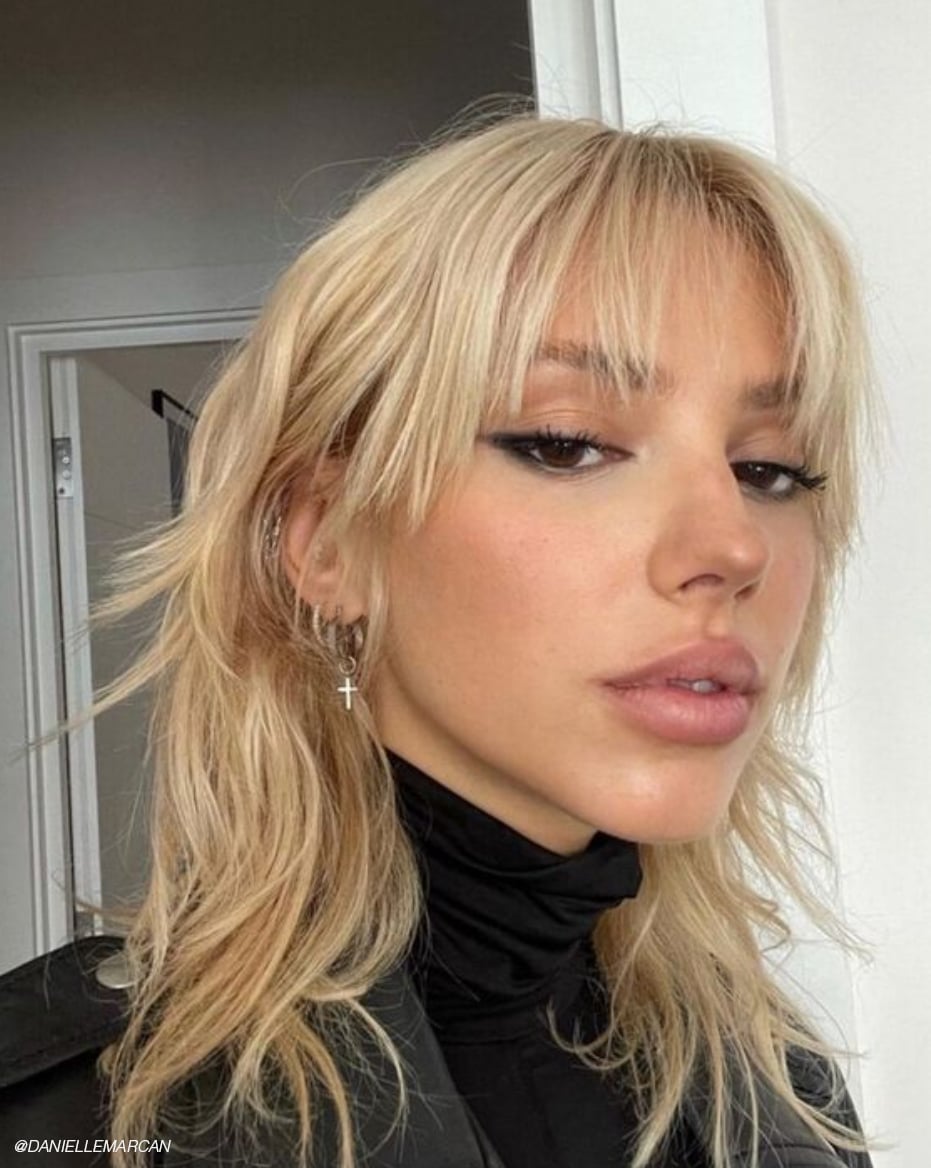
The shaggy bangs here do not sit as a separate curtain. They blend into the choppy layers, which is the whole point of asking for them as shaggy. The ash blonde color with darker roots gives depth so the cut looks textured, and the shoulder length keeps enough weight to stop fine hair from looking stringy. Ask your stylist for: shoulder length wolf cut, shaggy bangs, choppy layers. The side part adds volume on the heavier side, which is useful for fine, wavy texture that tends to fall flat on the crown. A textured blowout with a round brush gives the shape hold, and the lived-in look means you get a few days between washes without it turning into a helmet.
Dark Brown Collarbone Wolf Cut Shag, Wavy
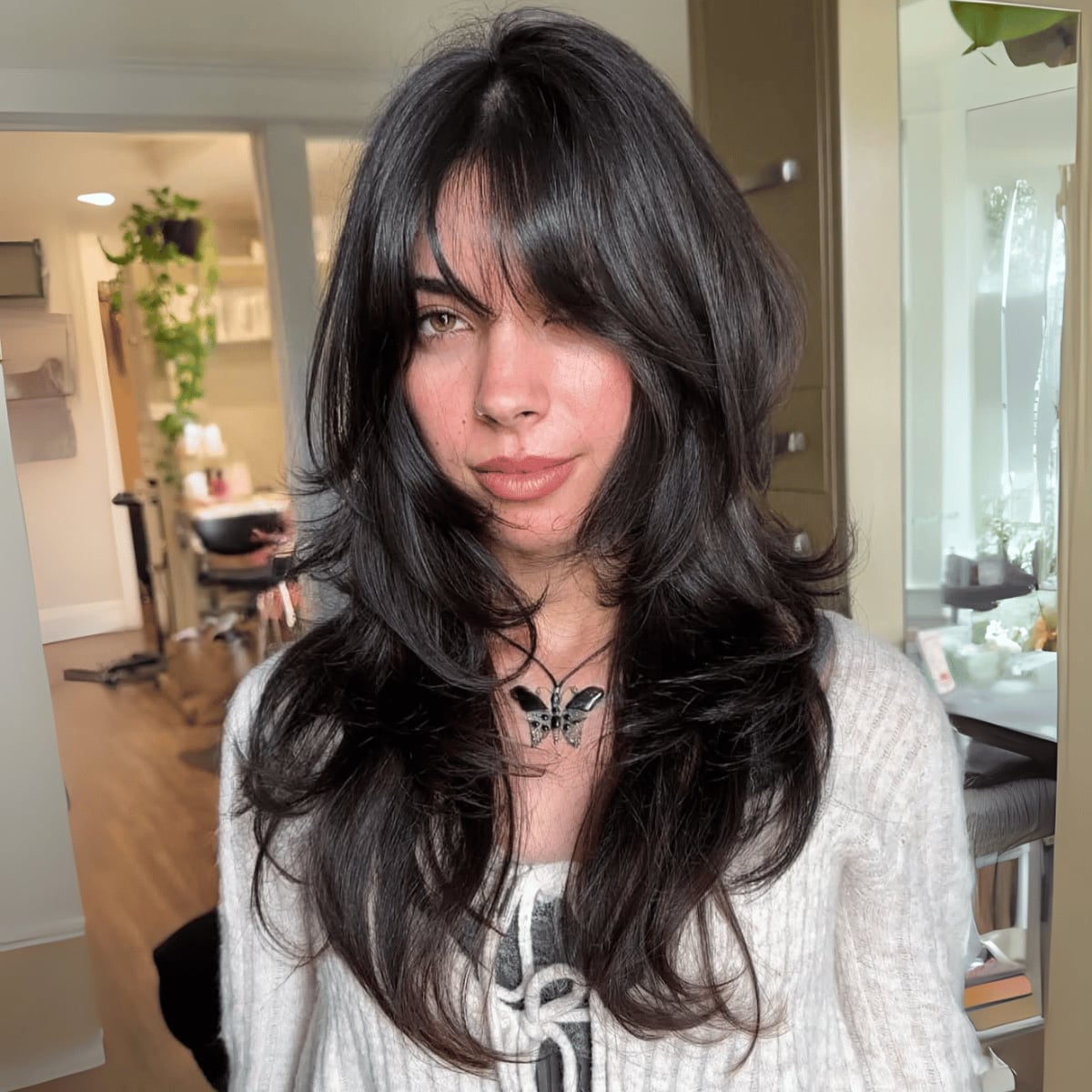
This is not the wolf cut you can approximate with a pair of kitchen scissors and a prayer. The collarbone-length shag version relies on short, choppy layers that start at the crown and graduate toward the ends, with curtain bangs that blend into the rest of the cut. Ask your stylist for: collarbone length shag wolf cut, curtain bangs, choppy layers. The subtle lighter brown highlights add dimension, but the real work is in the layering itself. A salon professional carves those sections so the volume lands exactly at the cheekbones and the nape stays dense enough to avoid looking stringy. Soft waves from a blowout finish the shape, and a trim every six to eight weeks keeps the shag from turning into an accidental mullet.
Dark Brown Collarbone Curly Wolf Cut, Soft Bangs

The wolf cut works harder for curly hair than it does for straight, because the layers have somewhere to land. This collarbone-length version uses soft bangs and a side part to let the curls stack upward rather than flattening against the head. The rich dark brown color keeps the shape grounded, and the defined, voluminous curls create that retro volume without any teasing. Ask your stylist for: collarbone length curly wolf cut, soft bangs. Thick, curly textures benefit most from this cut; the layers prevent the triangle shape that happens when curly hair is cut too uniformly. If your curls are fine or sparse, the volume here will look hollow rather than full, so this one is best left to those with density to spare.
Long Copper Red Wolf Cut Shag

The long shag is a different animal from its shorter cousin. Where a cropped wolf cut relies on abrupt contrast between crown and nape, this mid-back version uses heavy, face-framing layers that start high on the head and graduate slowly into the longer lengths. The curtain bangs sweep to either side, blending into the layers without stopping abruptly. Ask your stylist for: long wolf cut shag, curtain bangs, face-framing layers. The copper red base with subtle lighter highlights adds depth, and the middle parting keeps the weight distributed evenly.
The technique here is about connection: each layer must flow into the next so the shag moves as one piece. This is a fall-through-winter cut, especially when styled with a voluminous blowout and soft waves. The texture holds well for events that call for polished waves with a bit of playfulness.
Mid-Back Brown Wolf Cut With Balayage
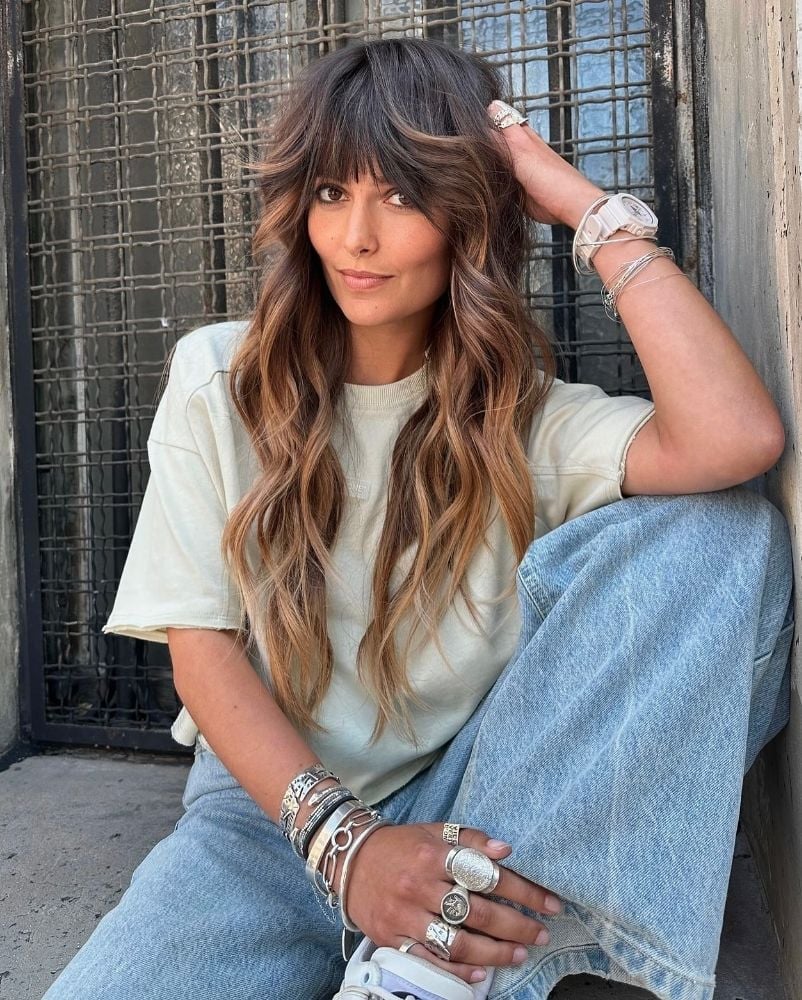
How does a wolf cut behave when the color is doing half the work? The balayage handles the grow-out, but the cut still needs attention. This mid-back version uses prominent face-framing layers and curtain bangs that sweep across the forehead, with a warm brown base lifted by lighter balayage highlights that hit around the cheekbones and shoulders. Ask your stylist for: mid-back wolf cut, curtain bangs, face-framing layers, brown with balayage.
The balayage means you can push the toning appointment to every twelve to sixteen weeks rather than the usual eight, because the hand-painted highlights grow out softly instead of showing a hard root line. The loose waves from a blowout give the layers movement, but the cut itself is what prevents the length from dragging the shape down. A trim every eight weeks keeps the face-framing pieces from falling past their intended point. Medium-density wavy hair holds the volume best here; overly fine hair may struggle to support the layers this far down the back.
Ash Blonde Mid-Back Wolf Cut
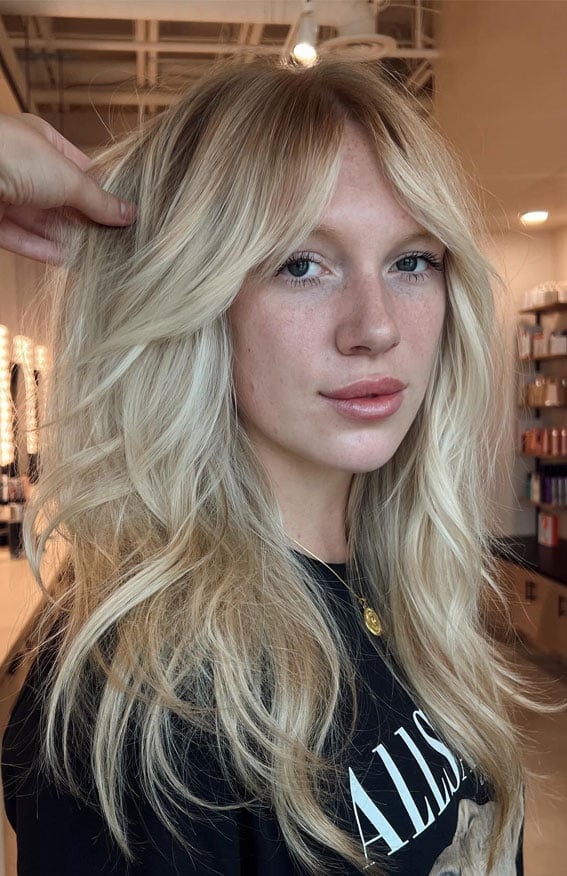
Ash blonde on a wolf cut is a deliberate choice: the cool tone reads modern rather than beachy, and the mid-back length keeps it from veering into grunge territory. Soft curtain bangs and face-framing layers break up the length so the cut does not look like a one-length grow-out with a few random chunks cut in. Ask your stylist for: mid-back wolf cut, soft curtain bangs, face-framing layers, ash blonde color. The honest drawback is that fine hair, which this texture appears to be, needs diligent styling to hold the loose waves that give the cut its shape. Without a texturizing spray and some heat, the layers can fall flat against the head, and the ash blonde can read as dull rather than dimensional. A trim every eight to ten weeks keeps the ends from looking see-through.
Brown Mid-Back Wolf Cut With Long Bangs
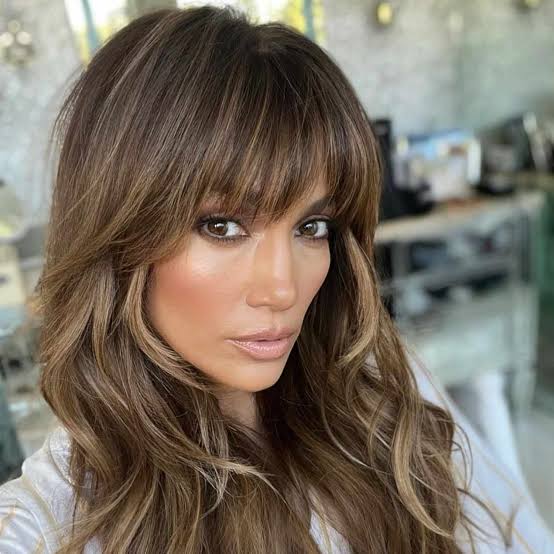
The long bangs here do not just frame the face; they anchor the whole cut, connecting the mid-back length to the shorter layers around the crown. Ask your stylist for a mid-back wolf cut with long bangs, layered texture, and brown base with blonde highlights. The middle parting and soft waves keep the volume distributed evenly, which suits thick hair that needs weight removed. The long bangs also soften a round face without losing the edge that defines this shape.
Blow-drying with a round brush builds the loose wave pattern and gives the layers their lift. A trim every eight to ten weeks keeps the long bangs from becoming a curtain and the mid-back length from losing its shape. The blonde highlights add dimension without requiring a full color overhaul every month.
Fiery Red and Black Mid-Back Wolf Cut
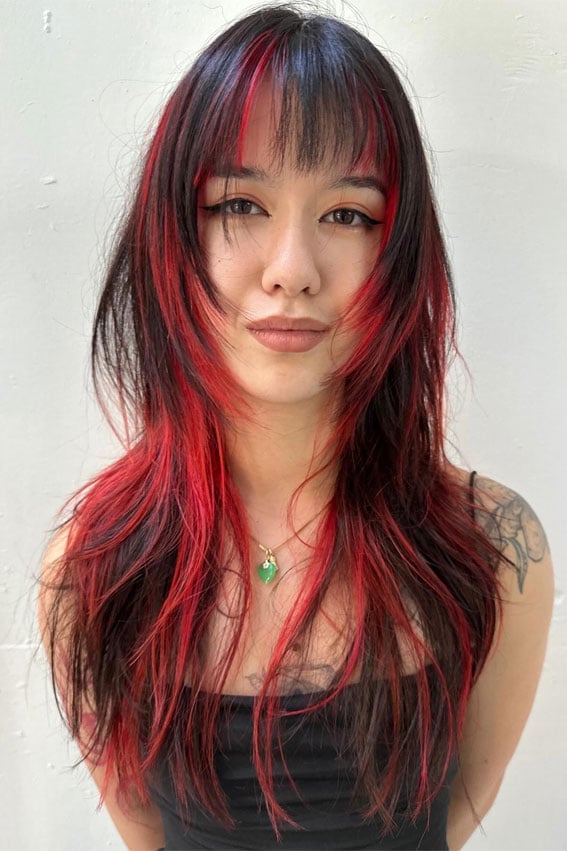
Where the previous section played it subtle with blonde highlights, this one goes the other way entirely, swapping lived-in dimension for a high-contrast statement. The fiery red and black combination hits hardest on thick, wavy texture, where each layer catches a different slice of color. Ask your stylist for a mid-back wolf cut with blunt bangs, long layers, and a fiery red and black color placement. The blunt bangs keep the bold contrast from reading as scattered; they give the eye a clean line to follow.
This cut suits oval faces best, since the blunt bangs shorten the visual length of the face while the layers add width at the sides. The middle parting and wavy texture prevent the red and black from forming a hard horizontal stripe, letting the color move naturally through the hair. A trim every eight to ten weeks maintains the blunt bangs and the layered ends.
Final Thoughts
The wolf cut lives or dies on its layers, which means the decision rule is simple. For fine hair, keep the baseline blunt and ask your stylist to avoid thinning shears near the ends. For thick hair, lean into the choppiness to remove bulk and let the natural wave do the work. The shape is forgiving, but only if your stylist knows where to stop.
- Trim the baseline every 6-8 weeks to maintain the shape.
- Refresh choppy layers as needed, typically every 10-12 weeks.
- Use texturizing sprays or sea salt sprays for the lived-in look.
- Air-dry or rough-dry with a diffuser to enhance natural texture.
The wolf cut offers endless possibilities for texture and shape.