Starter locs are the beginning of a journey, not a limitation. The early phases of loc formation offer surprising versatility, with styles ranging from playful buns to sleek updos, all while your hair settles into its new texture.
This collection of 16 ideas proves that the first months can be the most creative. From short, defined twists to longer, flowing styles, these looks work for a range of hair densities and textures. If you have fine coily hair that struggles to hold a shape, or a visible grow-out line that needs disguising, these starter loc styles provide practical, stylish solutions without the wait.
Starter Locs in Playful Two Buns
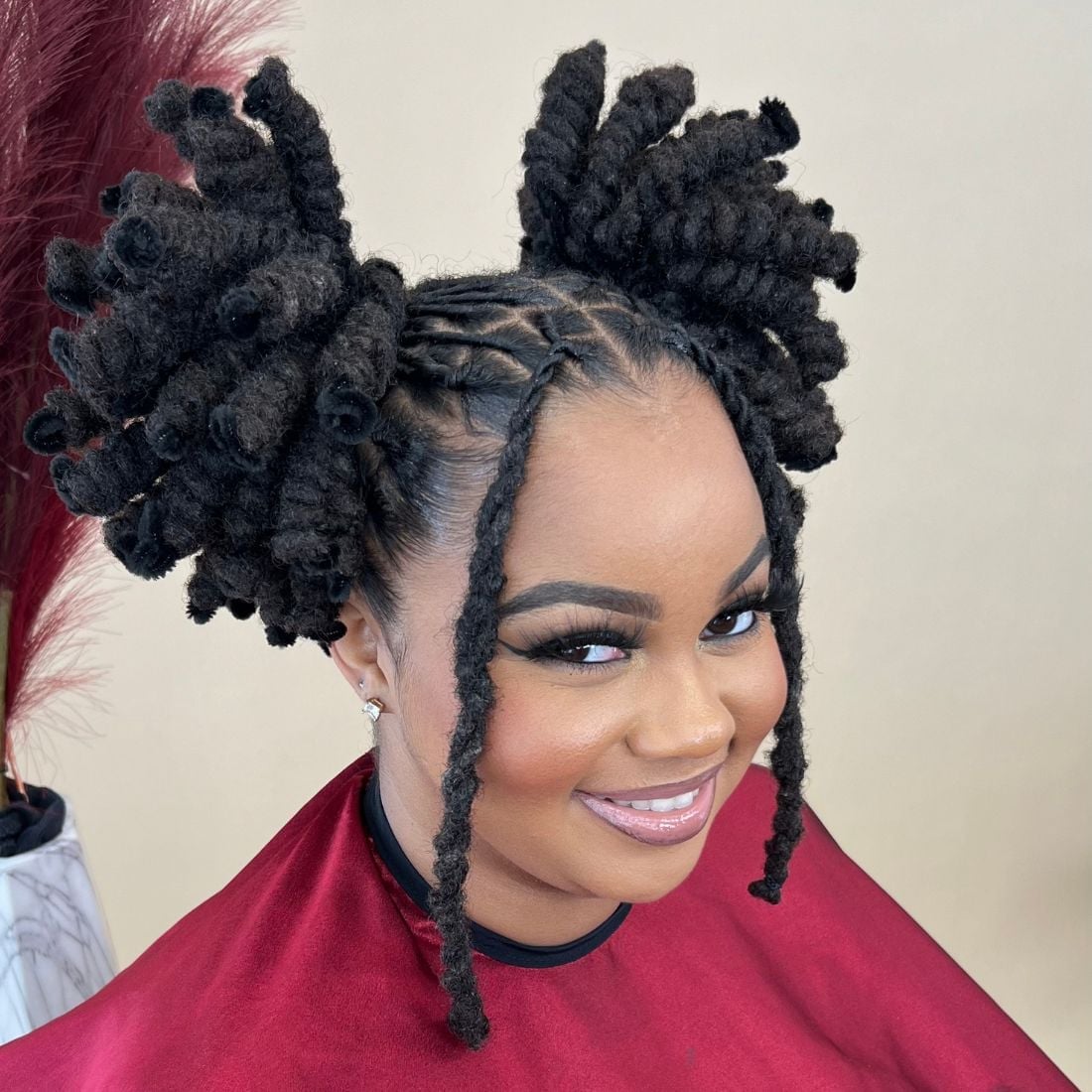
The two buns sit high enough to read as playful rather than severe, and the braided sections woven into each one give the style a deliberate finish. This arrangement works best for those with a round or heart-shaped face, since the shoulder-length tendrils left out around the hairline soften the width at the cheeks. Ask your stylist for: starter locs styled in two buns with braids and tendrils. Keep the buns loose enough to avoid tension on the scalp, and plan to have the parting retightened every six to eight weeks as the locs settle into their form.
Stylist Installing Short Starter Locs
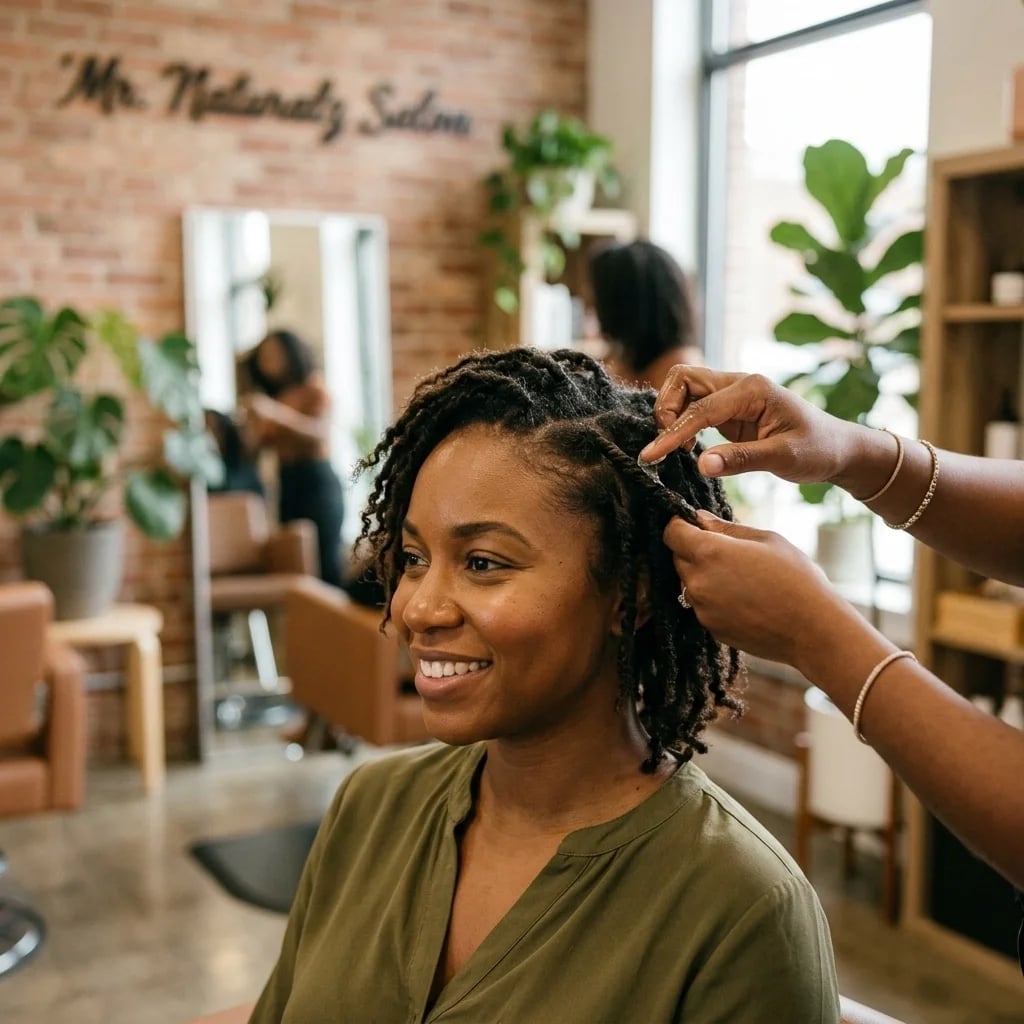
Watching a loctician section and palm-roll short coily hair into individual locs is a reminder that the process is as precise as the result. A middle parting keeps the grid even from the start, and the stylist’s hands work section by section to establish uniform tension. Ask your stylist for: short starter locs installation. This is strictly a salon procedure, attempting it at home on short hair risks uneven parting and inconsistent tension that can affect loc formation for months.
Vibrant Red and Black Braided Loc Updo
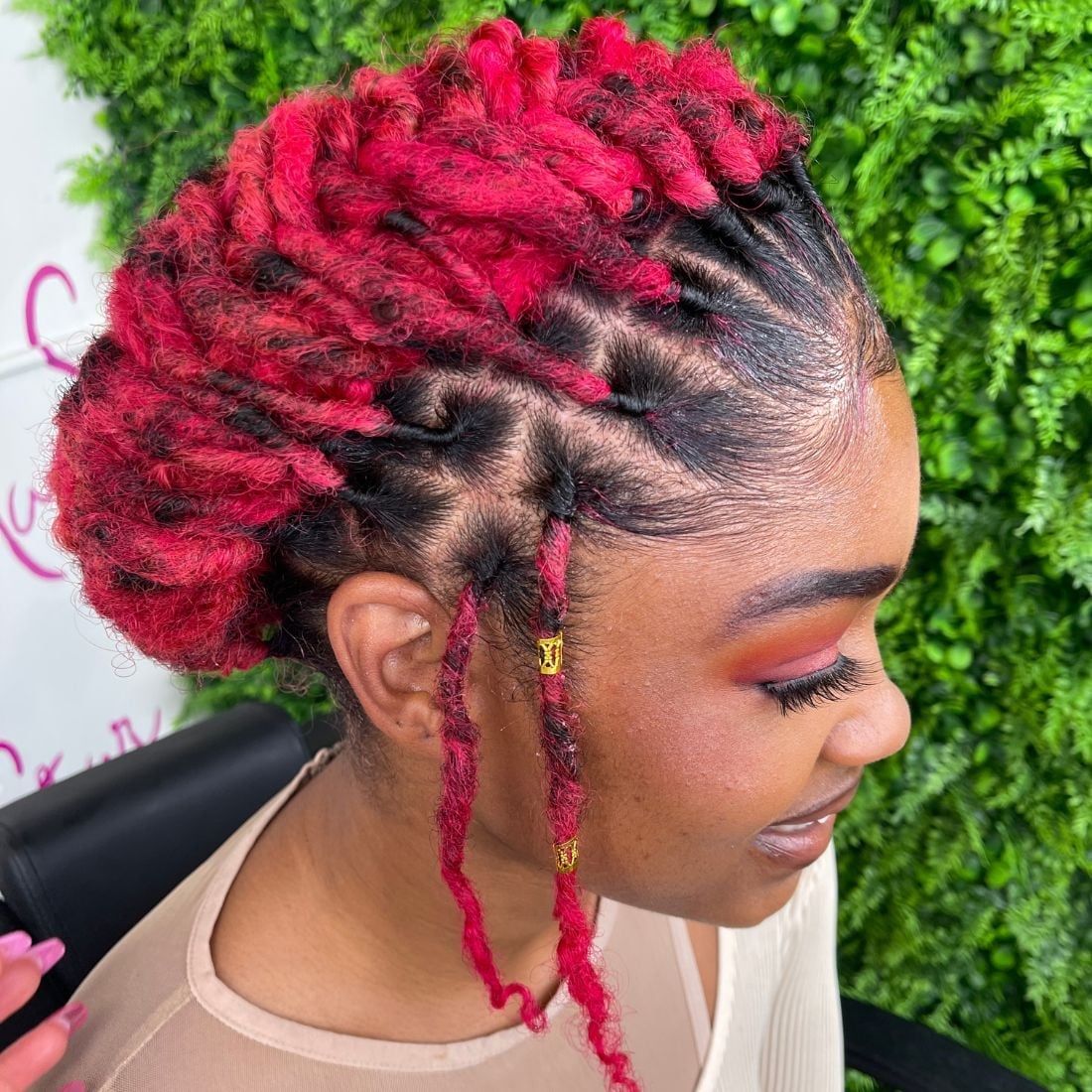
This is not a subtle shade of red, which is exactly the point for a holiday event or a festival where the hair does the announcing. The braided updo pulls the thick locs upward while the side-swept bangs break the symmetry, and the gold accessories add a metallic accent without competing with the color. Ask your stylist for: short braided loc updo with side-swept bangs. The style holds through a long evening because the braiding distributes weight evenly across the scalp.
Shoulder-Length Black Starter Locs in Grid Parting
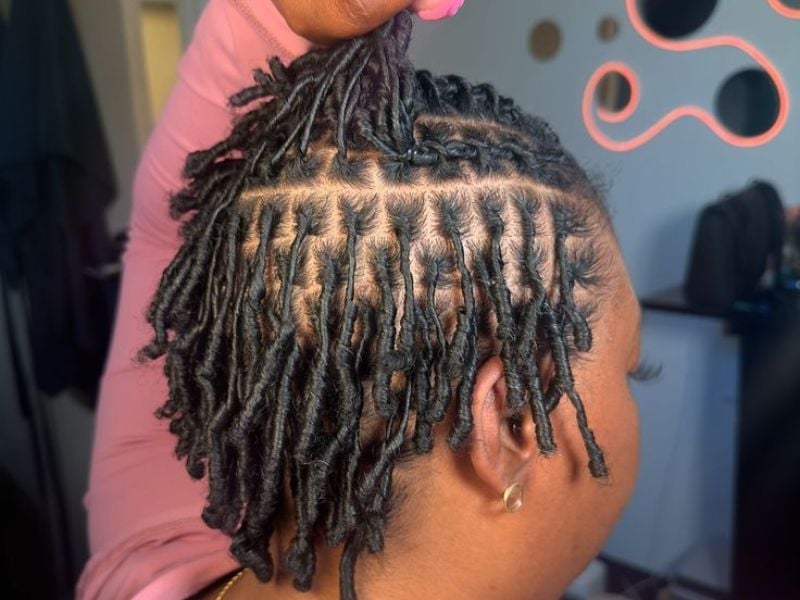
How do you ask for the kind of uniform parting that makes starter locs look intentional from day one? You name the grid. The parting here is a clean geometric pattern, with each loc occupying its own square of scalp real estate. Ask your stylist for: shoulder-length starter locs with a grid parting. To keep those lines visible as the locs bud, run a rat-tail comb along the partings after washing and before the hair dries. A trim every eight weeks at the nape prevents the back rows from lagging behind the front.
Loose Shoulder-Length Dark Brown Starter Locs
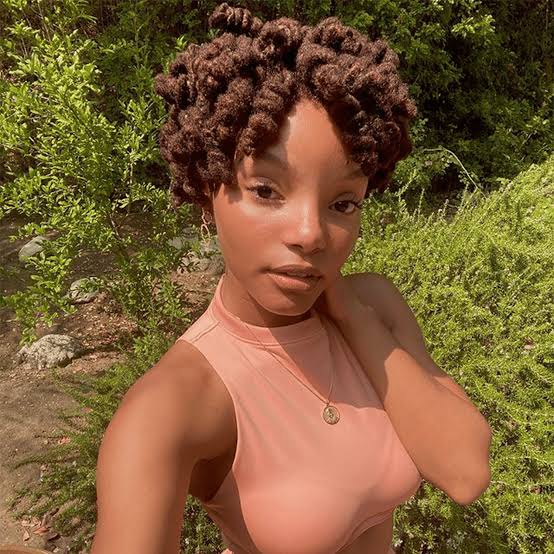
Not every starter loc needs to be pulled tight and uniform. The loose approach lets some ends coil naturally while others stay straighter, which gives the style an organic texture that gains character as it matures. Thick, coily hair at shoulder length takes well to this treatment because the density keeps each loc defined even when the tension is relaxed. Ask your stylist for: loose shoulder-length starter locs with coiled ends. Some locs will coil more tightly than others, so the overall shape shifts gradually over the first few months rather than staying fixed.
Short Twisted Black Starter Locs Back View
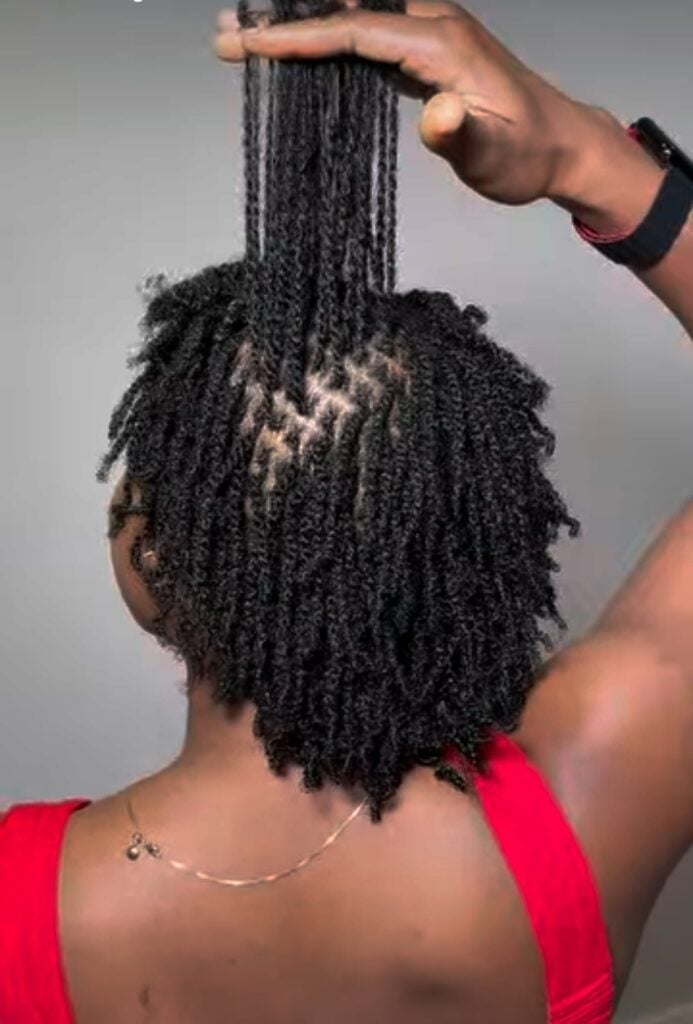
Thicker textures get all the volume hype, but fine, coily hair holds a twist pattern with a precision that coarser locs simply cannot match. From the back, these shoulder-length sections show a clean middle parting and uniform twist definition. Ask your stylist for: short twisted starter locs. The fine texture means less bulk at the scalp, so the shape stays tidy longer without needing frequent retwisting.
Defined Short Starter Locs With Bangs
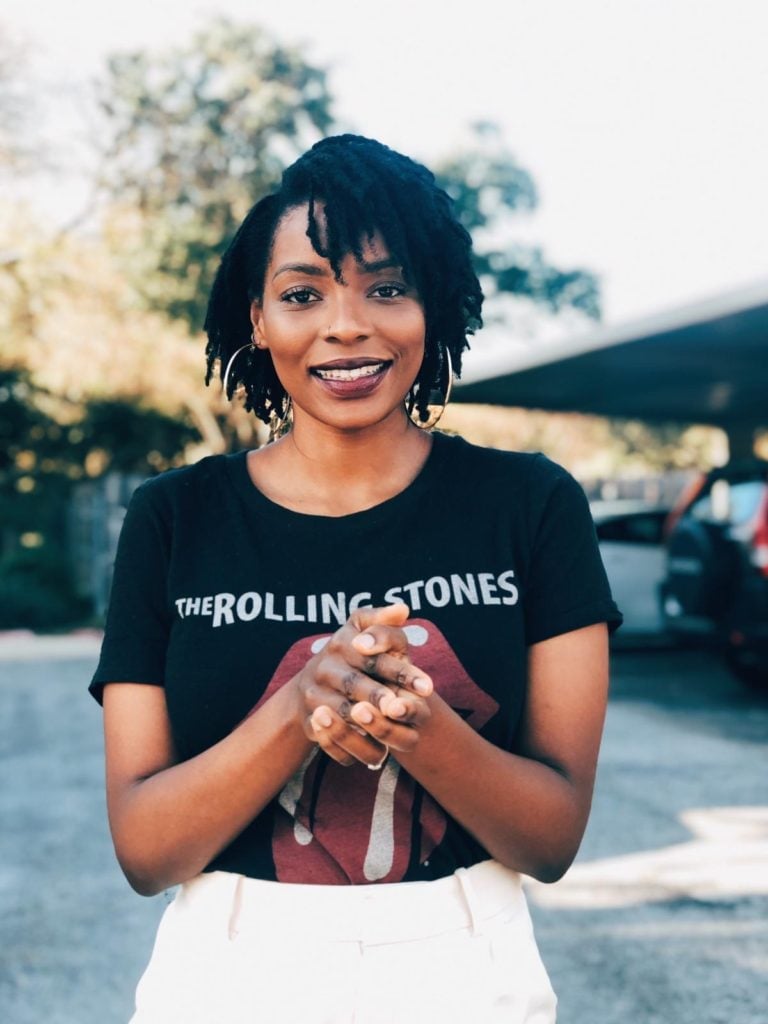
Can you add bangs to starter locs without the whole thing looking like an afterthought? Yes, if the locs are defined and the bangs stay short. These thick, coily locs sit at a short length with a middle parting, and the bangs cut straight across the forehead. Ask your stylist for: short starter locs with short bangs. The bangs frame the face directly, so round and square face shapes get the most from this setup. Keep them moisturized with a light spray to maintain definition, and trim the bangs every six weeks to keep them out of your eyes.
Micro Starter Locs to Collarbone
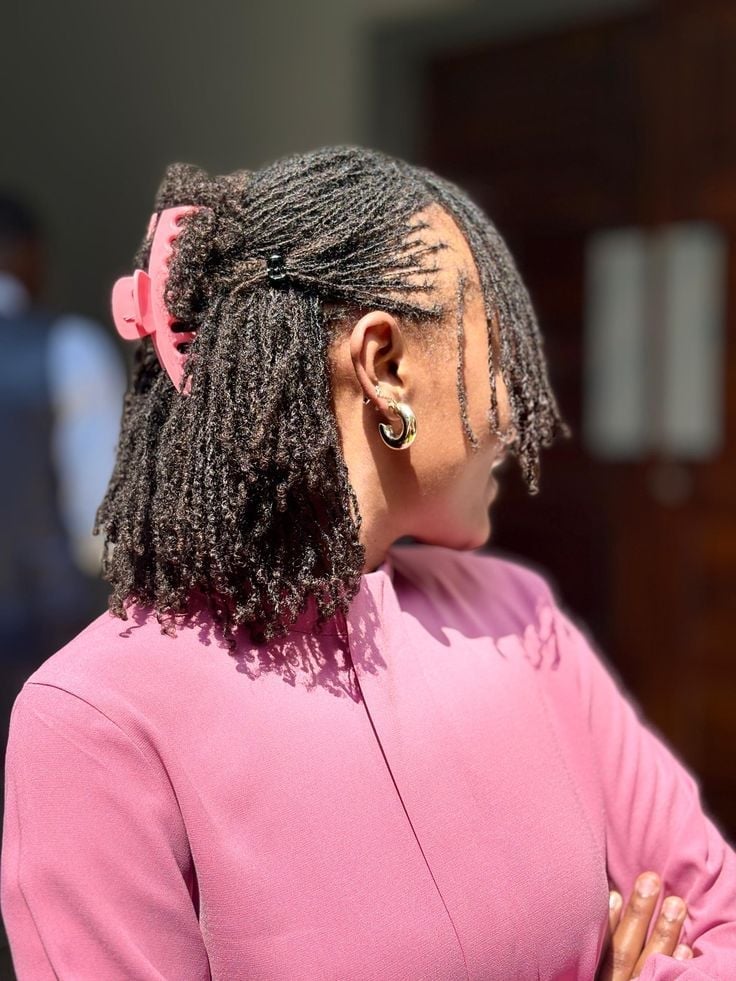
Micro locs require more sections than standard locs, which means more time in the chair and more patience during the early stages. These collarbone-length locs are built from fine, coily hair parted down the middle, with a few shorter pieces left loose around the face. Ask your stylist for: micro starter locs to collarbone with face-framing pieces.
- Part the hair into small, even squares before twisting each section by hand or with a tool.
- Work in a leave-in conditioner as you go to keep the hair pliable and reduce breakage.
- Plan for a salon visit; micro locs are not a weekend DIY project for most people.
Short Black Starter Locs With Subtle Highlights
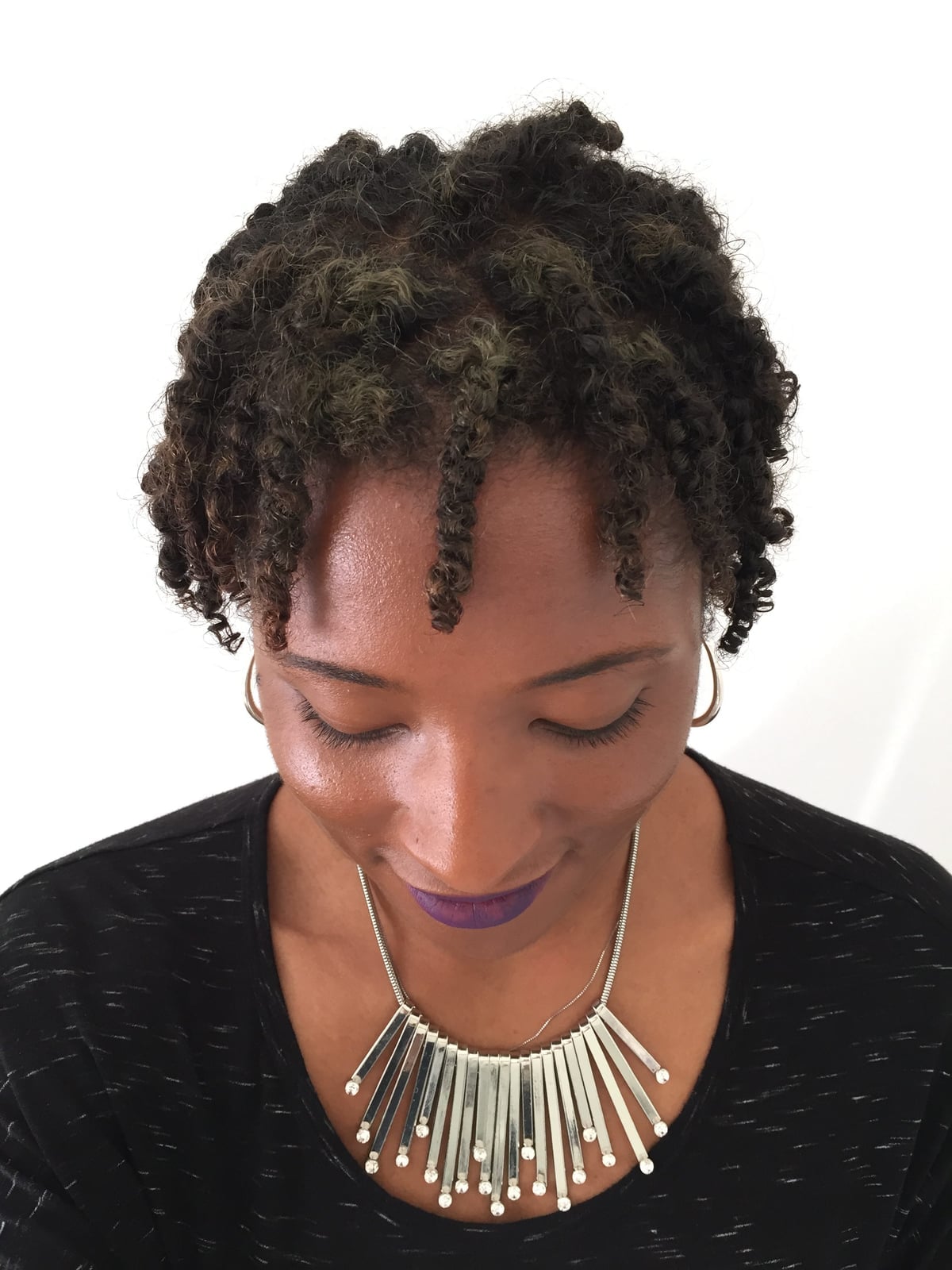
A black base with subtle lighter streaks adds dimension without the high-maintenance commitment of full color. These short, defined locs have a curly, thick texture that catches the lighter pieces naturally. Ask your colorist for: short starter locs with subtle highlights. The contrast is gentle, so the grow-out is soft rather than stark. Stick with color-safe shampoo and conditioners to keep the lighter streaks from turning brassy, and avoid harsh chemical treatments that could dry out the locs.
Starter Locs Styled into an Elegant Bun
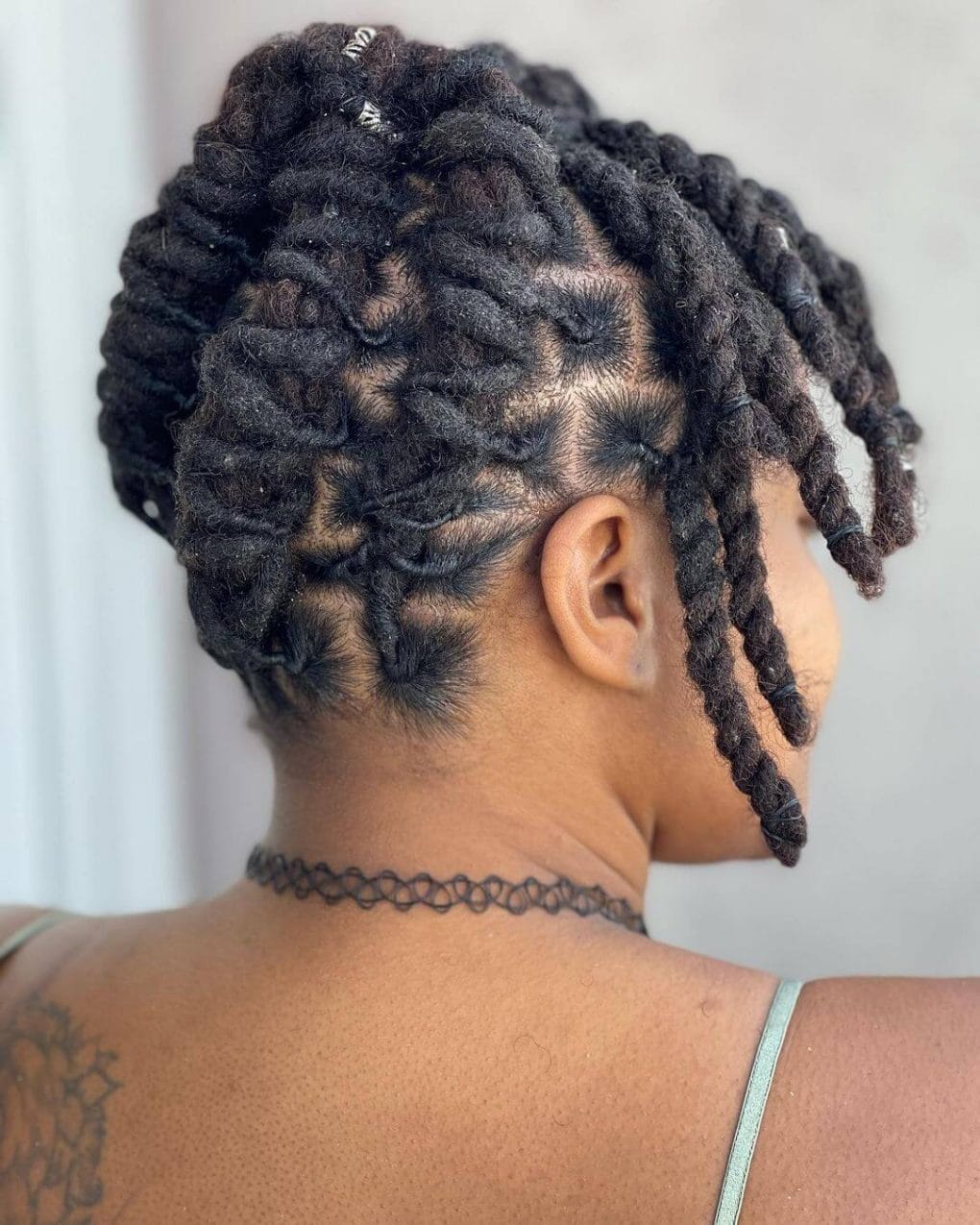
Need a style that works for a work presentation and a dinner out without a full restyle? A neat bun does exactly that. These shoulder-length, thick, coily locs are pulled back from a central parting and secured at the crown. Ask your stylist for: shoulder-length starter locs in a neat bun. The bun keeps the locs off your neck in warmer weather and works well for professional settings. Use pins or a fabric tie to secure it, and loosen the hold slightly at the end of the day to prevent scalp tension.
Long Mid-Back Black Starter Locs
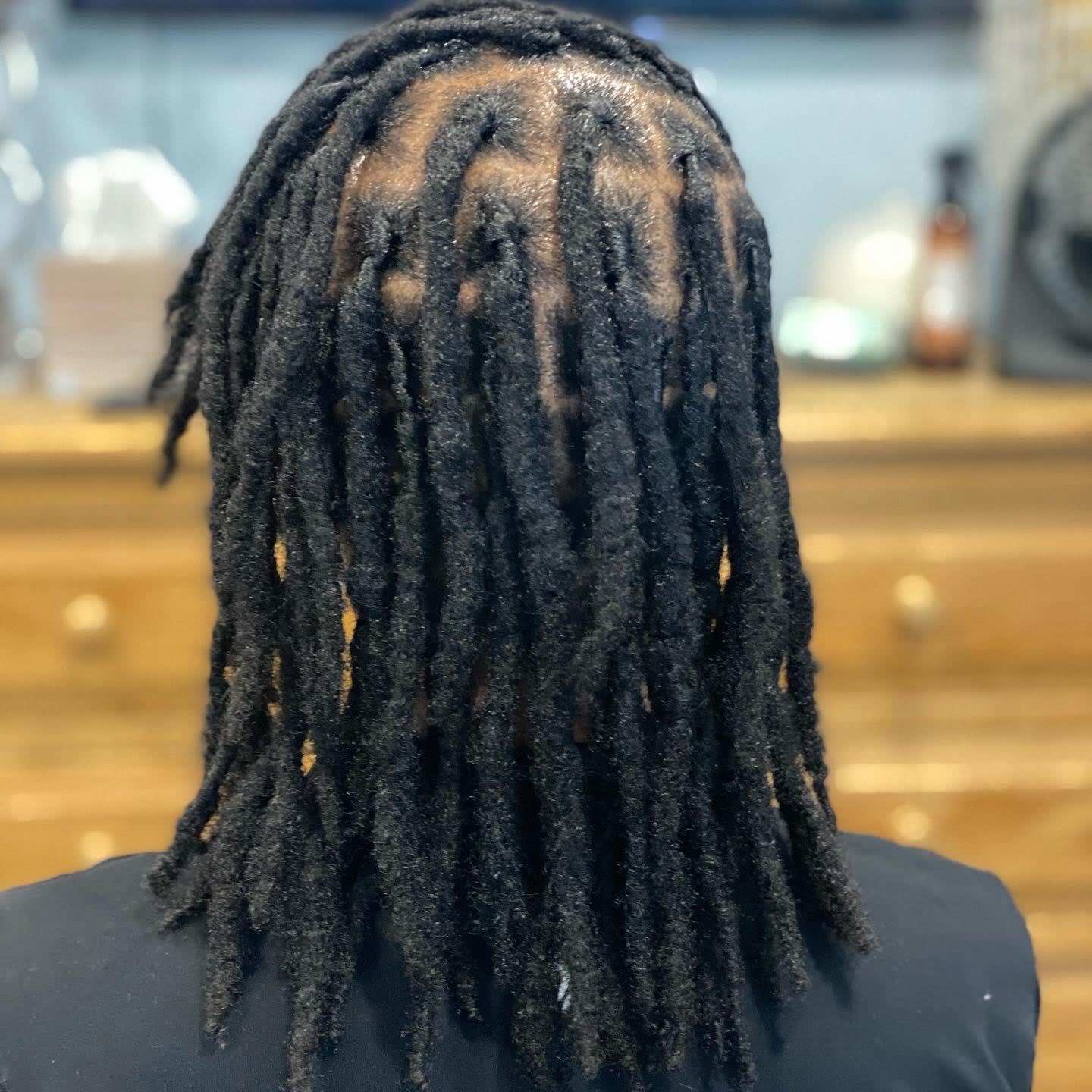
Thick, coily black starter locs reaching the mid-back make a strong case for patience. This length requires starting with hair at shoulder length at minimum, and the commitment shows in the density. Ask your stylist for: long mid-back starter locs. A middle parting keeps the weight balanced, and the loose styling lets the coily texture read clearly.
The trade-off is maintenance. At this length, nightly protection with a silk scarf is non-negotiable to prevent tangling, and regular moisturizing keeps the locs from drying out. Retightening sessions run longer as the hair grows, so budget extra time in the chair. The hold is solid once established, but the early months demand consistent care.
Mid-Back Twisted Black Locs, Coily
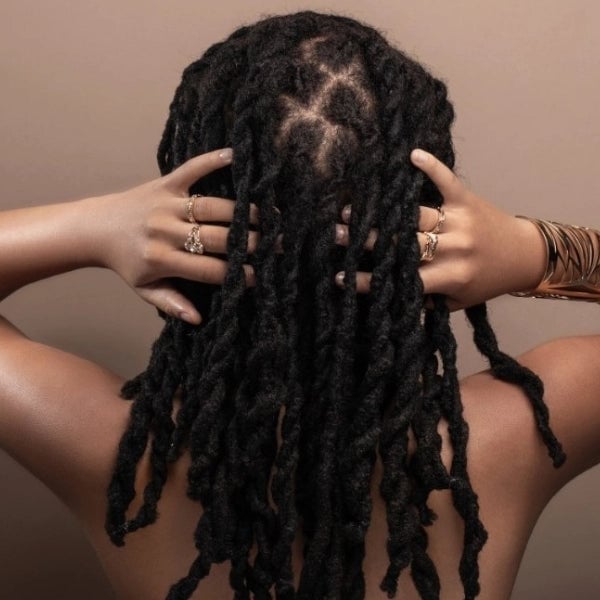
The diamond pattern at the crown is the first thing you notice on these mid-back twisted locs. That precise geometry comes from careful sectioning during installation, and it gives the dense, coily texture a structured rhythm. Ask your stylist for: mid-back twisted locs with a diamond pattern parting. The middle parting anchors the design, and the twisting technique creates uniform definition down the length.
Maintaining that pattern means avoiding over-manipulation at the crown during retightening. The twist method itself holds well between salon visits, and the black color stays consistent without toning. A back view like this one shows how the diamond parting breaks up the visual weight of thick hair at this length.
Short Thick Coily Black Starter Locs
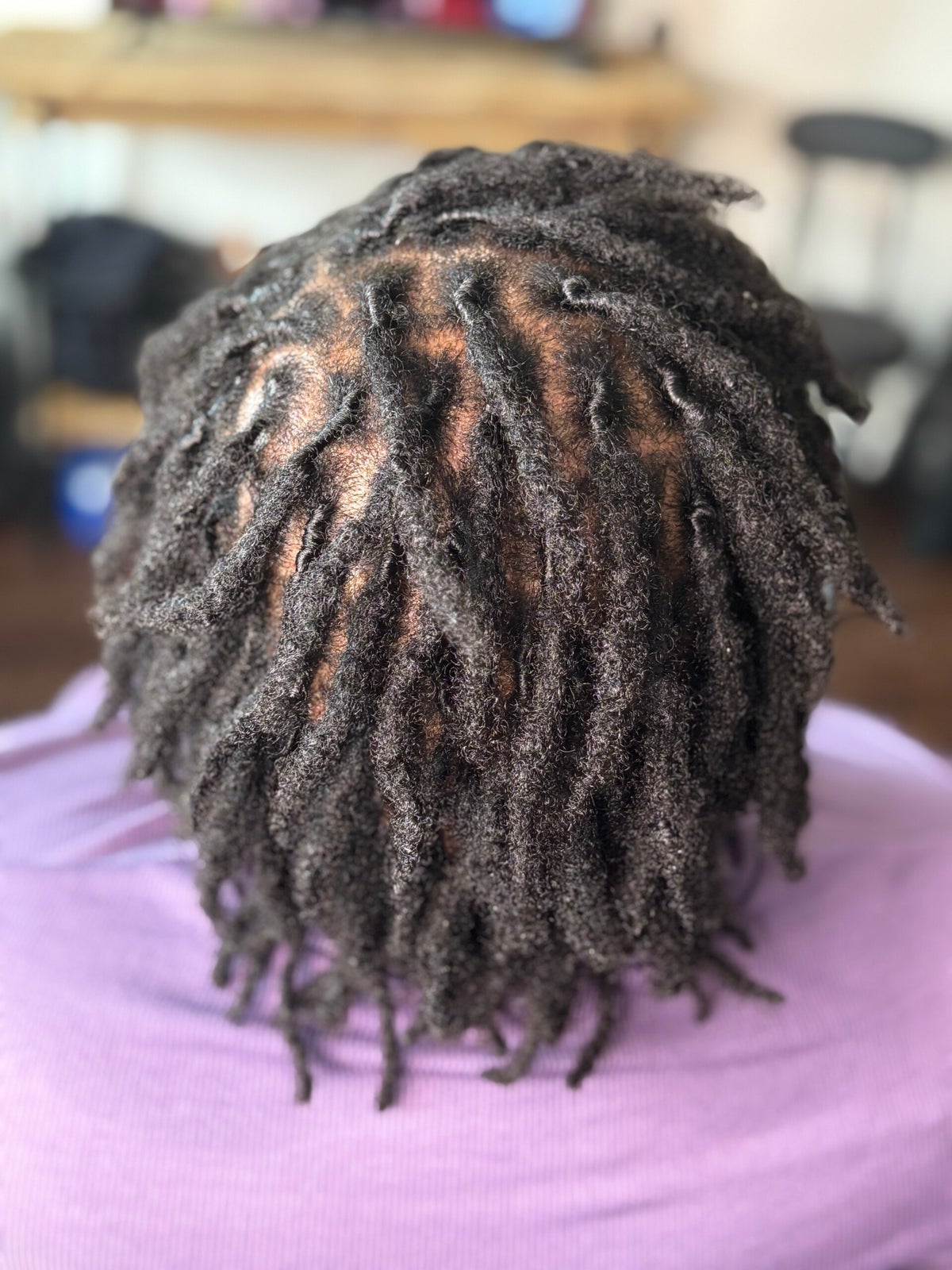
Short, thick, coily starter locs with defined parting lines show the formation process in its earliest stage. The consistent black color and clean scalp separation give the style a deliberate, tidy foundation. Ask your stylist for: short thick coily starter locs with defined parting. A middle parting works well here, and keeping those lines distinct during retightening helps the locs bud evenly. A soft brush defines the edges without disturbing the grid. This length is ideal for thick, coily textures that need room to expand without tangling.
Short Braided Starter Locs with Gold Adornments
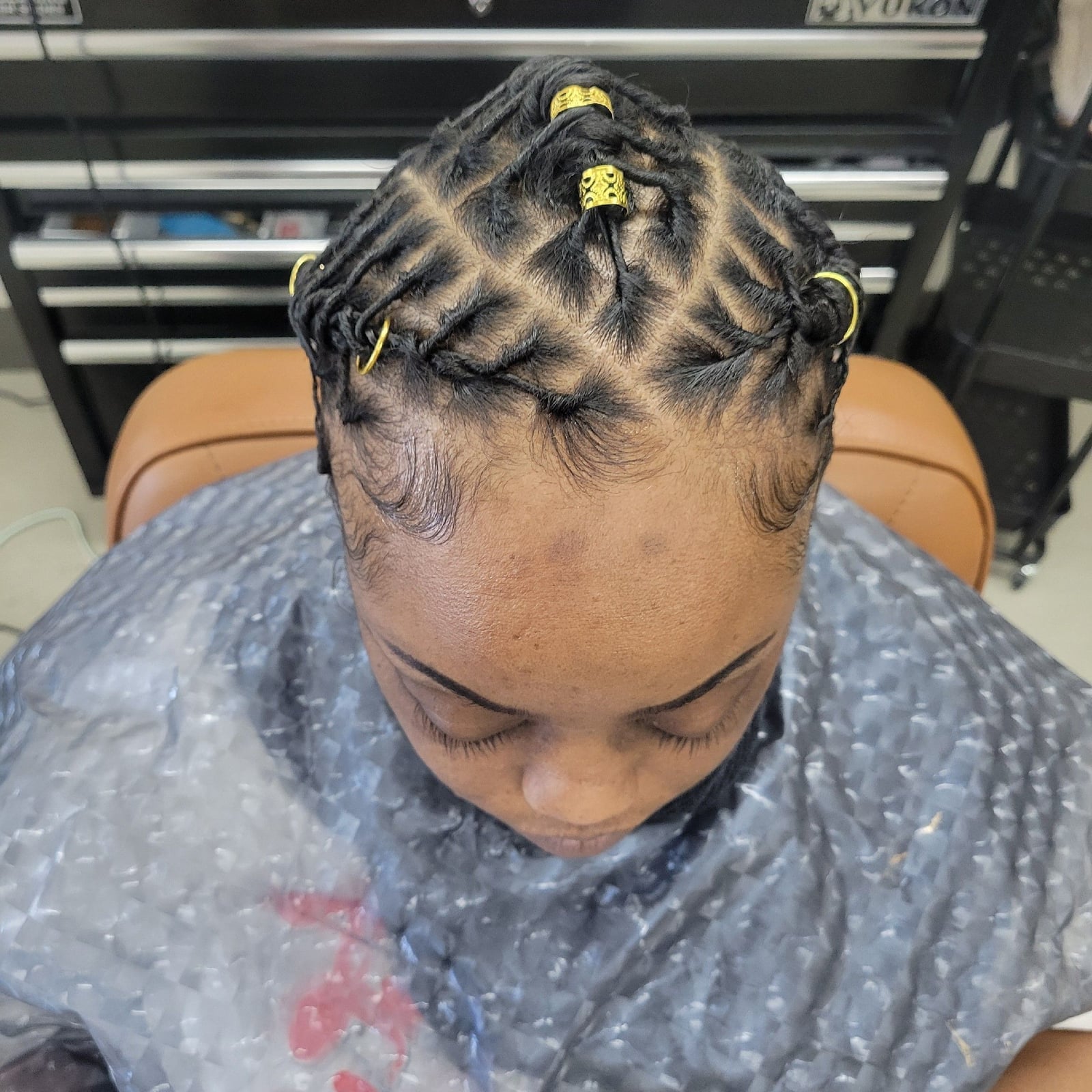
Grid parting or freeform? This one commits to the grid. Short black starter locs are sectioned into a precise geometric pattern, with braided sections and fine coily texture holding gold rings and beads. Ask your stylist for: short braided starter locs with gold beads. The geometric parting creates a visual structure that standard sections don’t, and the adornments add weight that helps the locs hang. This is a salon-only style: attaching beads without snagging takes skill, and removing them for cleaning requires patience. The result is a decorative look that stands out from every angle.
Collarbone Length Two-Strand Twists
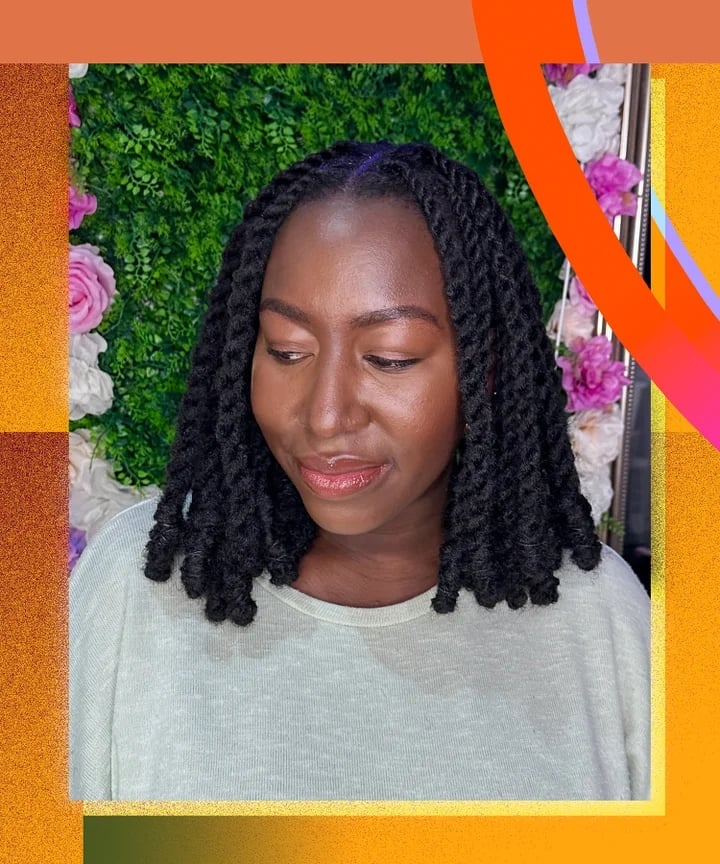
Neat two-strand twists at collarbone length offer a protective style that doubles as starter locs. The thick, coily texture holds the twist pattern well, and the middle parting keeps the look symmetrical. Ask your stylist for: collarbone length two-strand twists. The twists feel secure and don’t require daily restyling, though they do need moisture to stay supple. A retwist every four to six weeks maintains the definition, and sleeping with a satin scarf prevents frizz at the roots. The hold is reliable enough for everyday wear, and the length sits at a practical point between short and heavy.
Shoulder Twists With Blonde Tips
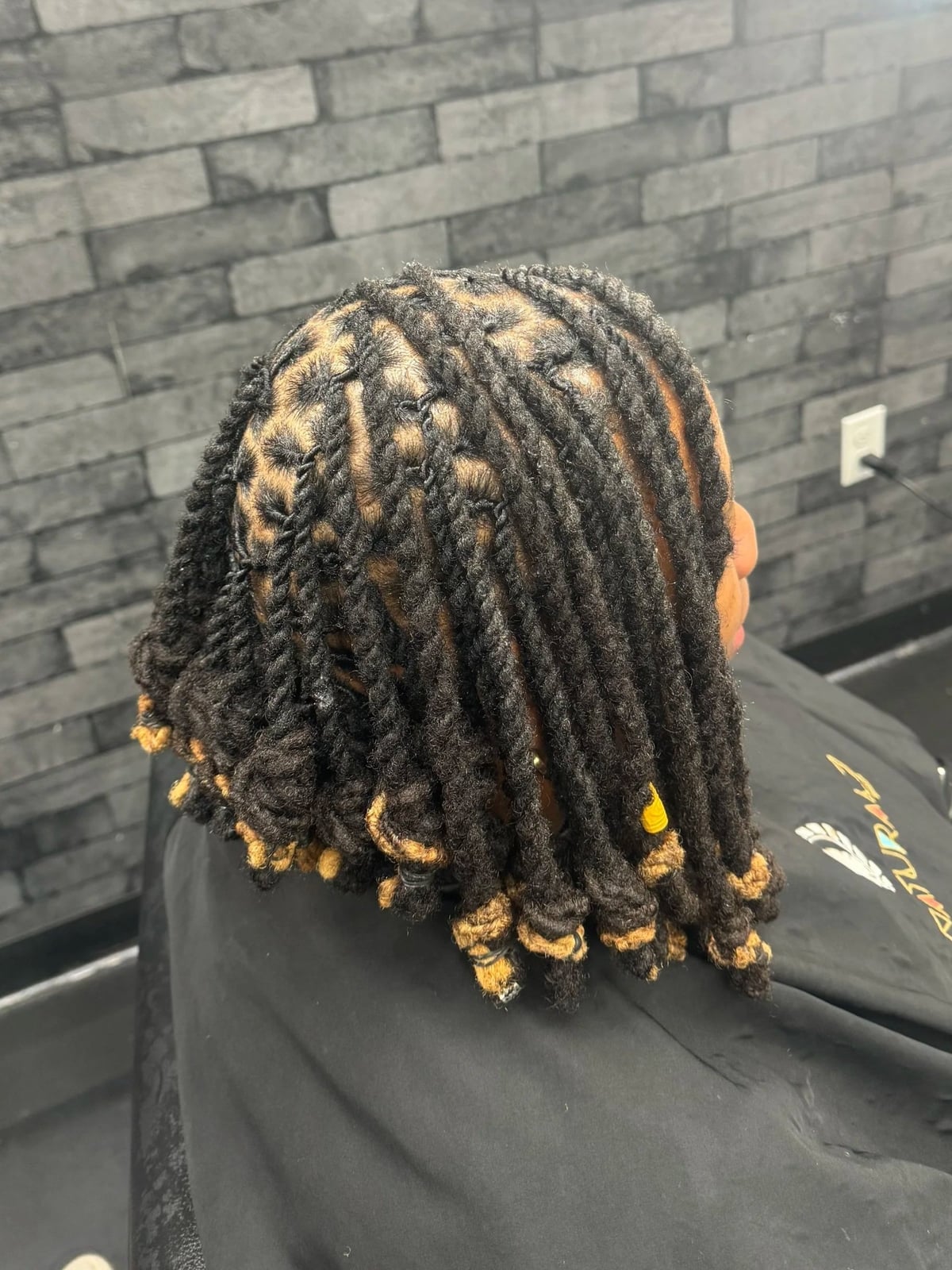
Black locs with blonde tips are a study in contrast, and these shoulder-length twists prove the point. The middle parting keeps the look grounded while the color change adds a deliberate pop. Ask your stylist for: shoulder-length twisted starter locs with blonde tips. This style suits thick, coily hair starting at shoulder length, especially if you want a color accent without full-light commitment. The honest drawback: blonde tips on dark locs require maintenance. Expect to use a purple shampoo to fend off brassiness, and plan for a toner refresh every four to six weeks to keep that contrast sharp. A trim at the same interval also helps the tips stay crisp and defined.
Final Thoughts
For fine coily hair, focus on styles that encourage definition and minimize frizz, like neat twists or smaller loc formations. For thicker textures, wider sections and looser twists can create a softer silhouette that still holds shape.
- Consult with a loctician for installation and initial retightening every 4-6 weeks.
- Maintain a clean scalp with gentle, residue-free shampoos.
- Avoid excessive manipulation to allow locs to form properly.
- Use a satin bonnet or pillowcase at night to reduce frizz and breakage.
- Allow locs to mature naturally without forcing them into specific shapes.
Embrace the evolving beauty of your starter locs.